Sometimes, we eat food and react to some components of the food but don’t really know what happened. This is because many people in this part of the world don’t know they are allergic to some food or food components. They don’t know their allergies, so they don’t know when they are reacting to them. Food allergies can be unpleasant, make life difficult and in the extreme cases, fatal. I will briefly explain what allergies are, give examples and discuss the main topic of this article.
Definition of Term: What Is A Food Allergy?
Food allergy is an abnormal response to a food, triggered by the body’s immune system. There are several types of immune responses to food. This should not be confused with Food Intolerance.
An example of food intolerance is Lactose intolerance – a condition when the gut has a reduced capacity to break down lactose. This usually happens when there is reduced lactase – the enzyme that brakes down Glucose. So when you take milk, which is high in lactose when you have very low lactase level, microorganisms break down your lactose for you instead. This causes formation of gas in your gut and consequently bloating, abdominal pain, and sometimes diarrhoea.
I will write a separate article to guide you on how to know if you are allergic to a particular food or how to know which food you are allergic to. The purpose of this topic is to show to you that these potential dangers are written by food manufacturers on their packs. The problem is that many people don’t just take time to read these things.
Common Allergens Found In Foods We Consume
Here are some allergies that are present in foods we commonly eat. Examples of foods are also given in each case with some picture proofs to show that manufacturers do make it clear. A statement telling you that the allergen is present or that a food or ingredient that may contain the allergen is usually printed on the pack or label of the food.
For example, you would normally see “May contain Gluten” appearing on a product of Wheat, Barley, Rye, Oat, etc.
1. Gluten – Present In Wheat, Barley, etc.
There are people that are allergic to this composite of protein that we find in wheat, barley and some other grains. As gluten is present in Barley, it may likely be present in products of barley such as malt drinks and some cocoa beverages. The same thing can said of products from wheat, such as wheat flour.

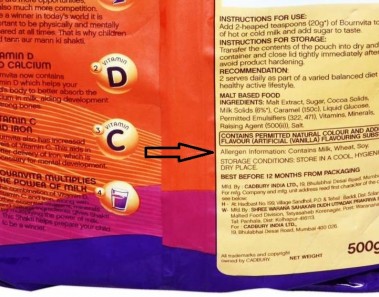
The image above is showing a declaration of gluten (the allergen) on a label of Milo – a cocoa beverage that also contains malt. The image below is showing allergen declaration on a Bournvita sachet. This one should also inform you that some people could be allergic to Milk and Soy.

2. Milk Present In Other Food Products
Milk is being consumed on its own by many people but also present as ingredient in many other food products. If you have noticed that your gut cannot tolerate milk, then you should avoid it totally by checking food labels. Thankfully, manufacturers will write it there for you that Milk is present in the ingredients list or under allergen declaration.
Milk is very rich in nutrients, hence many people just want to consume it. If you are lactose intolerant, you can still consume Yogurt. Yogurt contains all milk proteins and salts whereas the milk sugar (lactose) is mostly converted into lactic acid which gives yogurt a pleasant acidic flavour. So, it is more like you are taking milk without the lactose that you have problem with.
Other common food allergens include;
3. Crustaceans
4. Eggs
5. Fish
6. Peanuts
7. Soybeans
8. Tree nuts
9. Sesame seeds
Once you know which one you are allergic to, make sure you check the food package/label to see if the food contains any of them. If they do, you should forget about that food and if the allergen is not present, go ahead and enjoy your food.