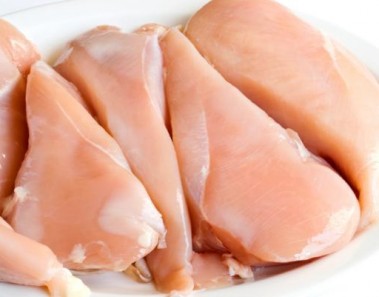
Broilers and Layers are both chicken types which can be consumed. In this era when there is serious campaign against consumption of imported chickens, the sales of farm reared live or freshly slaughtered chickens have sky-rocketed but it has not gotten anywhere near its peak.
The market is still large enough for tens of thousands of farmers to maximise. In my little spell as a poultry farmer in the past two years, I have come to the realization that very few consumers know the differences between these birds and their meats. This had made many people to make wrong choices only to later find out their errors.
Differences Between Broilers and Layers Chicken Meats
When these chickens (layers and broilers) are yet to be slaughtered and de-feathered, it is quite easy to identify them. Broiler birds are usually white in colour while layers are commonly brown or black. However, this is not the rule as there are layers that are white in colour too, the brown and black are just more common.
In many situations when consumers are about to purchase the meat of birds for consumption in the open market, they cannot tell the differences between the chickens that meet their preference in terms of taste, texture and flavour.
Let me start by explaining the background differences between the two types of birds:
Broilers are birds raised only for meat production while Layers are those raised mainly for egg production. In most cases, after layers are low in egg production, they are sent into the market as meat birds. Now lets see the differences between the meats from both birds.
(1.) Broilers meat are usually juicier and softer compared to that of layers. This is because broilers are market ready when they are between 8-12 weeks old since they are only grown for their meat value. They contain higher values of fat and protein due to their diet composition.
On the other hand, layers meat are tough and are usually sold into the market when they are about 2years old. They start laying in 24 weeks and many of them lay for more than a year before their eggs production begins to reduce until they no longer lay eggs. That is when the birds are sold out.
(2.) Layers are usually enjoyed by those who love tough meat. It is important to state that the nutrient value in these birds are lower compared to that in broilers. During cooking the meats from both birds, mild and low heat is required for broilers while high heat can be deployed for layers.
For a good number of eateries and restaurants, broiler meat are fried directly without cooking them unlike the layers meat that compulsorily needs cooking before frying. They are also grilled and roasted easily.
In many parts of the world, people find it quite difficult to distinguish between crayfish, prawn and shrimp. A large population of people don’t care what they are called and they don’t feel the need to go the extra mile to find out. They all look alike, so they use those names interchangeably. It doesn’t matter to some whether they are calling shrimps as prawns, they just want to eat it.
Generally in America, both shrimps and prawns are called shrimps while they are referred to as prawns by Brits and Australians. This has further confused so many people, including natives of those countries.
What Is The Difference Between Prawn, Shrimp & Crayfish
In this short article, I will try my best to highlight what and what set these crustaceans apart. In some cases, it is quite easy to notice, especially for crayfish. The major confusion usually arises when it comes to differentiate between prawn and shrimp.
Crayfish
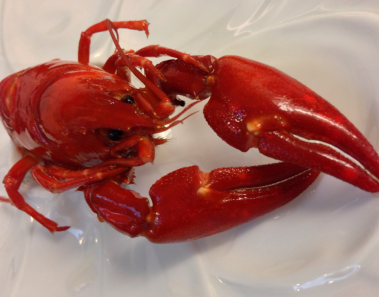
When comparing their physique, crayfish can be easily distinguished from prawns and shrimps. Crayfish are bigger than prawns. Even a 6-year old can differentiate between the two. It only gets tricky when it comes to prawn and shrimps; they look very much alike.
Differences Between Prawns and Shrimps
Here is where it can get confusing because prawn and shrimp look very much alike. If you ask some people how they distinguish between the two, they can tell you that one is bigger in size than the other. This is actually wrong. They belong to the same family and therefore look very much alike.
Body Structure/Shape of Shrimp VS Prawn
When you look at the body structure of the two, you would notice some differences. Prawns have claws on three of their five pairs of legs while shrimp have claws on two of their five pairs of legs.
Also, you will observe a marked bend on on the shrimp as against the prawn, which has its bend in form of a curve. There is no marked or sharp bend on prawn (see illustration below).
Generally, they are easier to distinguish in live form or freshly after being cut. After they are cooked and processed, it is very difficult to separate prawns from shrimps.
If you have any other contribution to make to help us all, please drop a comment. Thank you.
The square color codes at the end of toothpaste tubes and their meaning are something that has circulated on the internet for some time now. People make these into pictures (see below) and share on the internet with the aim of enlightening people. I have seen this on Facebook, Instagram and people’s display pictures on BBM and WhatsApp.
Below are the color codes they claim to be available on toothpaste and what they say they mean. They talk about the composition of the toothpaste. The color marks come in square and rectangular shapes.
What The Colour Marks At The End of Toothpaste Means According to Them
They try to tell people that the colours at the bottom of the toothpaste tube shows the composition of the toothpaste itself. Below is one message I got as broadcast on WhatsApp. The person also used the following as the display picture to press home her point.
Pay attention when buying toothpaste, at the bottom of the toothpaste tube there is a color bar. And do you only know the original meaning of the color bar! Try to choose green and blue, there are four kinds:
Green: natural;
Blue : Natural + Medicine;
Red : Natural + Chemical;
Black : pure chemical.
In fact, there are different versions of this and they sometimes contradict one another.
The intentions of those spreading this news are good because they aim to educate the “ignorant” customers about these things so that they make the right choice while buying. The problem with this, however, is that the they have got the facts really wrong.
Colour Codes On Toothpaste Tubes; What They Truly Mean
The colour marks on the toothpaste tubes are in no way indicating the composition of toothpaste. In fact, when you are saying that something is natural and something is medicine, cant you have something that is both natural and medicine?
You might be very surprised to find out what these marks are. If one thing is sure, it is the fact that these marks do not tell us anything about the composition of toothpaste.
So, what do they stand for then?
There are different colors as you might have seen. There are red, blue, red and black colors and they are nothing but eye marks. As someone who has worked in a multinational production factory — packaging development to be precise — I know that these are eye marks.
So what are Eye Marks on Toothpaste packaging tubes?
According to bestpkg, eye mark is a machine-recognizable mark, printed on web-fed packaging materials. The eye – mark is the reference point from which the machine will register other operations such as further decorations, heat sealing, or package cut-off.
In clearer terms, when products already filled in tubes or sachets are to be sealed, the eye marks are there to tell the machine the point at which the particular tube or sachet ends. The machine, depending on what it needs to do would then either seal the package and/or cut it off that point.
If you look at other products like creams, milk sachets and beverages packed in sachets, you might just see them there too.
Okay, while writing this article, I quickly looked around my room and my kitchen and I saw some items with eye marks on their packages. So, I am going to use them as examples and correlate the color of the square or box-shaped marks on them with what is being circulated.
They say that black color means that the product is a pure chemical. How wrong could this be? I have black marks on all the products I am going to show you here.
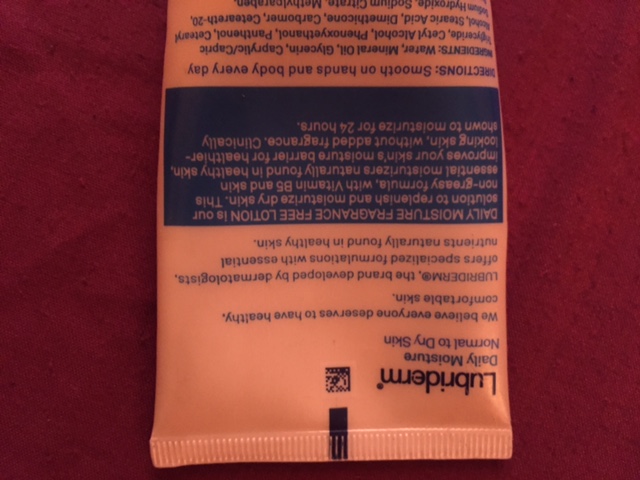
Here is a Lubriderm Cream Tube that I found in my room;
It has a colored black mark at the end.
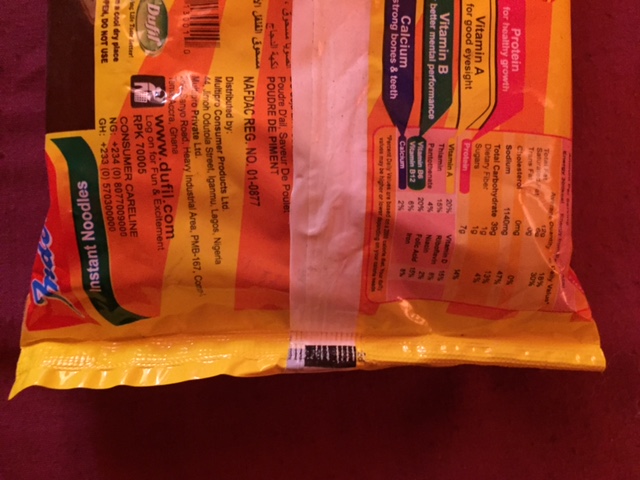
Here is an Indomie (Noodles) sachet with a black mark like that too.
Is this Noodle purely from Chemicals?
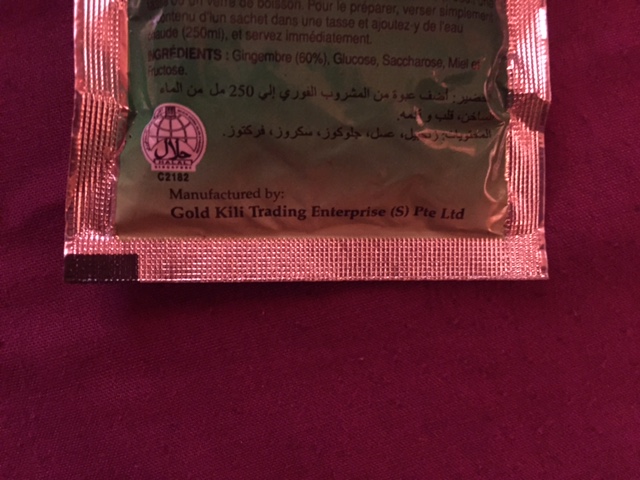
Okay, look at my natural Ginger Drink sachet.
According to those that made those images, this ginger drink is a pure chemical.
Okay, one could argue that a cream could be made from chemicals as well as natural ingredients. The same argument could hold for the ginger drink too but what about the Noodles?
What about the products I am listing below here too?
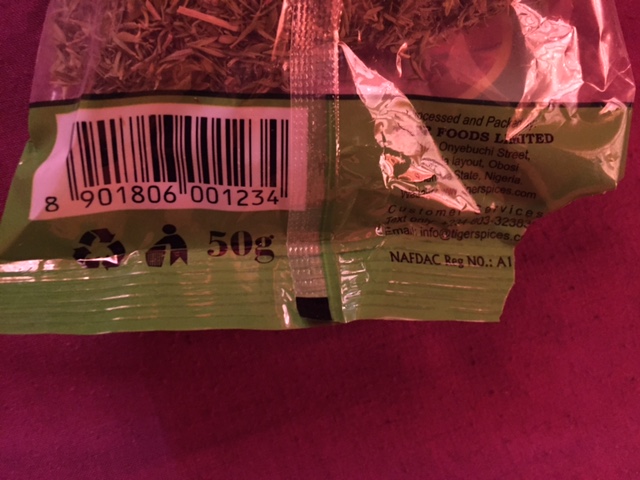
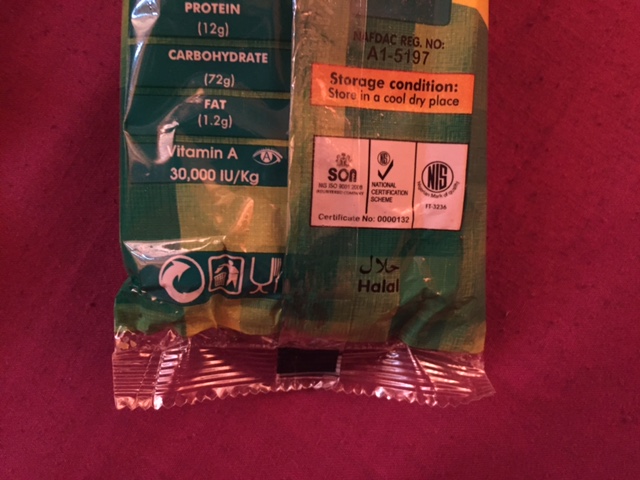
This is a thyme sachet. Is there a way thyme could be made from chemicals?
Below is a Spaghetti sachet with the eye mark too.
I am still looking for that research that confirms this Spaghetti could be made from pure chemical compounds.
Before we believe some claims, let us do some research about it. Even if the person making the claims has backed it up with facts and evidence, let us still confirm them.
This is not purely a food article but it’s something that enters our mouth and since these marks are available on foods too, it’s only a matter of time before they start labeling foods as natural, medicine and pure chemical because of the marks.
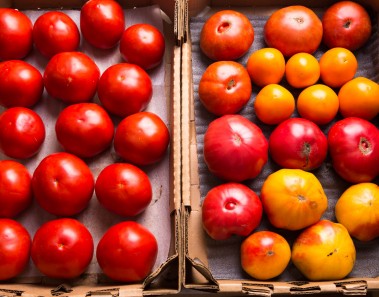
Some people don’t like buying tomatoes and keeping because of the damages they are susceptible to. Yes, when you buy almost or fully ripe tomatoes, they will get spoilt in no time if you don’t keep them appropriately. So, how do you keep your tomatoes to keep them fresh for a longer period?
How To Store Tomatoes To Keep Them Fresh
At this point, I know some people would say, “just keep it in the refrigerator”. No! In fact, I would say that is one of the worst ways to store ripe tomatoes. Remember that we also mention them as one of the foods you should not keep in the freezer.
Photo: seriouseats.com
You should only store tomatoes that are not ripe (green) in the refrigerator. When you keep tomatoes that are ripe in there, the low temperature halts tomatoes’ flavor-producing enzyme activity. Tomatoes stored in the refrigerator also end up with poor flavor development, coloration, and mealy texture.
Tomatoes need to stay at room temperature (even the almost ripe ones), out of direct sunlight. It is also advised that you should store them stem side down while for a number of reasons.
Why Should You Store Tomatoes Stem End Down?
Simple, to make them last longer. Storing a tomato stem-end down (room temperature is best) prevents air from entering and moisture from exiting its scar, prolonging shelf life. So, now you know. Share this with your friends on Social Media.
There are just some foods you should not keep in the freezer. I have friends that think the only way to keep the leftover of foods is by putting them in the freezer. God, this always makes me sick and I try every time to correct them but it just keeps repeating itself.
From bread to fruits, vegetables, and soups, they keep anything that remains of those foods in the freezer. Yes, I know cold storage is an effective way to keep and preserve foods to last longer but I can tell you it is not suitable for every type of food.
In this article, you will see some food materials you should not freeze or even refrigerate. You will also get to know the reasons why you should not freeze them.
Foods You Should Not Keep In The Freezer And Why
Onions:
Placing uncut onions in the refrigerator makes them mushy and soggy by the time you take them out. When you remove the peel, you see that there is only one thing such onion is good for — bleeding with other types of foods.
You can no longer slice and dice such onions into foods because they would have lost their traditional colour (they have different colours). So, it’s best to keep your onions in an open, cool and dry place.
Watermelon:
It’s really an unpleasant sight when you bring a frozen watermelon out of the freezer. Apart from the fact that it no longer looks good, the flesh becomes fibrous and not easy to bite.
If you have ever tried eating a frozen watermelon that was thawed, you would know that such watermelon loses its kind of crunchy texture. They become fibrous and tough in the mouth. Also, research has shown that keeping them at room temperature might even help preserve the antioxidants present.
Tomatoes:
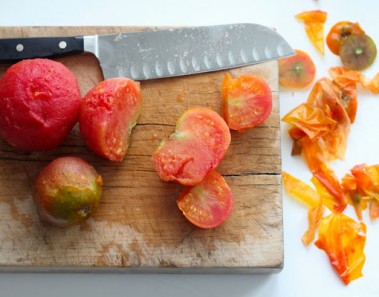
One of the things freezing does to your tomatoes is to damage its tissues — just like it does to many other foods. The only way most foods can be kept frozen is by using a rapid and uninterrupted freezing process.
Photo: pbs.org
When you freeze your whole tomatoes and bring it outside, what you have is nothing more than the juice and flesh of the tomatoes with the skin peeling off. You can no longer slice this kind of tomatoes. All you can now do is to blend with other foods.
Potatoes:
You cannot put potatoes in the freezer for more than one reason. You should not even refrigerate your potatoes because the cold temperature makes them develop a sweet taste to the level that it becomes unpleasant.
This happens due to the conversion of starch in the potatoes to sugar. This increase in sugar will cause potatoes to darken when cooked. It is usually recommended to let your refrigerated potatoes cool totally — if you refrigerate them before you cook them. This will help reduce the level of discolouration.
Even though freezing damages some food materials, its benefits outweighs those damages caused. If you still want your food to remain safe to eat over a long period, then freezing is a very good option.
I am one of those people that always say “Never Say Never”. So, let me do a little adjustment to the title of that post right here. Let’s just call it a list of foods that almost never get spoilt. Many of them will last forever if you leave for that long. The list contains some obvious ones to some that you will find unbelievable.
6 Food Ingredients That Almost Never Get Spoilt
Okay now, let us get to business and share some of these with you. Of course, the list is not exhaustive, so you can share anyone you know with us using the comment box below.
1. White Rice
We cook white rice as it is and eat with several sauces and stews. We also cook food such as Jollof Rice, Fried Rice and many more, using white rice as the major ingredient. It might interest you to know that this white rice might never ever get spoilt.
If you keep white rice in an in a sealed container kept in a cool, dry place, it will not get spoilt. This is unlike brown rice that can go rancid because of the fat content.
2. Vinegar
When the idea of Vinegar came to my mind, I did some search about it and I saw an article that wrote about Vinegar. Somewhere on the page, the author wrote — Vinegar Expiry Date: Never.
Well, this is true because it has been reported that white distilled vinegar won’t taste any different on the first day of production or 7-10 years from now. Other kinds of Vinegar last a long long time too but often lose some of their taste after a few years.
3. Wine & Alcohol
Yeah, that sounds a bit more like repetition because wine contains alcohol. I did this just to separate them because the foods people add the wine and pure alcohol to are different. There are several soups people add wine to just to improve the taste.
Most strong alcohol like vodka, gin, rum, whiskey, tequila will remain drinkable forever, even after they have been opened. I found a bottle of Vodka that has been in my apartment for over 5 years when packing out of the apartment. Those that tasted it said it tasted just like new.
4. Pure Vanilla Extract
This is a very common baking ingredient. Pure vanilla is a baking ingredient that does not get spoilt. The secret to the longevity of pure Vanilla extract is that it contains a considerable amount of alcohol. And did I mention why alcohol is used as preservatives for foods? No!
Alcohol makes any environment inhabitable for most spoilage microorganisms and many microorganisms in general. Often, it kills them. It’s the reason the nurse wipes the area they want to inject before injecting you — to get rid of microbes around.
5. Honey
Yes, the same honey that you are thinking about. So honey doesn’t get spoilt? Experts say even thousands-of-years-old honey found in ancient Egyptian ruins is still edible.
If honey is left somewhere untouched, after a while, it dries out and crystallizes. When you need to eat this honey or use it as an ingredient in a food, all you have to do is reheat to restore its viscous liquid consistency.
Finally, let us share this note of caution. This post is just for your information and does not recommend that you consume a product after years of keeping it. You might think you have a similar pure product but the manufacturers might have added some other ingredients.
So, the best thing to do is to check the expire date printed on the label by the manufacturer. They probably already added something and also considered that you might not store those food ingredients properly. These factors and more con contribute to food spoilage.
People have started digging for the meat that falls under the category called red meat and which ones are white meat. The queries increased recently when the WHO revealed that processed meat has been found to cause cancer and there is a possibility that red meats cause it too.
So, many people want to know what red meat is, so that they can avoid it and what white meat is so that they can eat more of that and reduce the risk of cancer. This post is going to list the meat of animals that fall under white and red.
Photo Credit: gab.giggle.com
What Is Red Meat, What Is White Meat?
There are actually two definitions that may be used — the common definition and the nutritional definition, if I may call it that way.
The common definition refers to red meat as meat that is red when raw and not pale in color when cook. White meat is pale before and after cooking.
As fas as nutritional science are concerned, red meat is any meat that has more myoglobin than white meat, white meat being defined as non-dark meat from chicken (excluding leg or thigh) or fish. So, choosing white or red meat depends on the definition you choose.
According to the USDA, all meats obtained from mammals (regardless of cut or age) are red meats because they contain more myoglobin than white meat chicken or fish. Another difference is that white meat is a leaner source of protein (lower fat) but contains lesser heme Iron, Zinc and Vitamins A, D, E and K (fat-soluble vitamins).
In one article, in which we talked about the red juice that drips out of meat when you buy them fresh. We mentioned in that article that the red fluid is myoglobin and explained the relationship it has with blood.
Examples of White Meat and Red Meat
This largely depends on the definition you decide to follow, which ultimately depends on the purpose of searching for examples of red and white meat. Some types of meat can be classified under one definition and red, under another.
If you are digging for health reasons, I think it is best to just follow the USDA approach. Meats obtained from mammals with the red color prior to cooking are considered red meat because they contain more myoglobin.
To use examples that we are familiar with, white meat is generally classified as poultry (chicken and turkey), while red meat typically refers to beef, pork, and lamb.
Are you in doubt? What class particular meat falls under? Ask in the comment.
Many people have always wondered why they “purge” whenever they eat leafy green vegetables, especially the Celosia argentea var. argentea or Lagos spinach (Efo Soko) and Amaranthus hybridus (Efo Tete). For me, the former makes me really purge the day after consuming it and since when I was in high school, I knew the reason for this because I read about it after finding.
I was chatting with a couple of girls last week when one of them informed me that she no longer eat leafy vegetables because they make her go to the toilet and produce watery stool. These leafy vegetables are very rich in nutrients and are not foods one would give up on. This is one of the reasons we advised that people should avoid chopping their vegetables in the market.
Why Do I Purge or Stool After Eating Vegetables (Efo)
When we eat leafy vegetables, which by the way are very rich in minerals, they pass through the digestive tract and end up at the small intestine. Nutrients are absorbed by the inner walls of the small intestine into the blood stream, so it is faster and easier when the food touches the wall of the intestine. In the small intestine, the fiber, which is abundant in the vegetables absorb water and swell up. This makes the food to touch the walls of the small intestines and makes digestion faster.
This fiber also ensures regular bowel movements by preventing toxic buildup in the digestive tract. This can make you visit the toilet more often than you normally do. This also prevents the development of digestion problems, including constipation.
If you have read our article on constipation and how to manage constipation at home in the past, you would recall that one of the foods we mentioned for managing constipation is leafy vegetables. They are really very important in our diet.
Even if they make you “purge”, leafy green vegetables are foods that you should eat often because they help digestion of foods and make the absorption of the nutrients in the food you have eaten easier. This “purging” is an “unavoidable evil” you have to embrace. This case is different from the way you purge when you eat beans and that is why we share ways by which you can cook beans to prevent farting or purging after eating it.
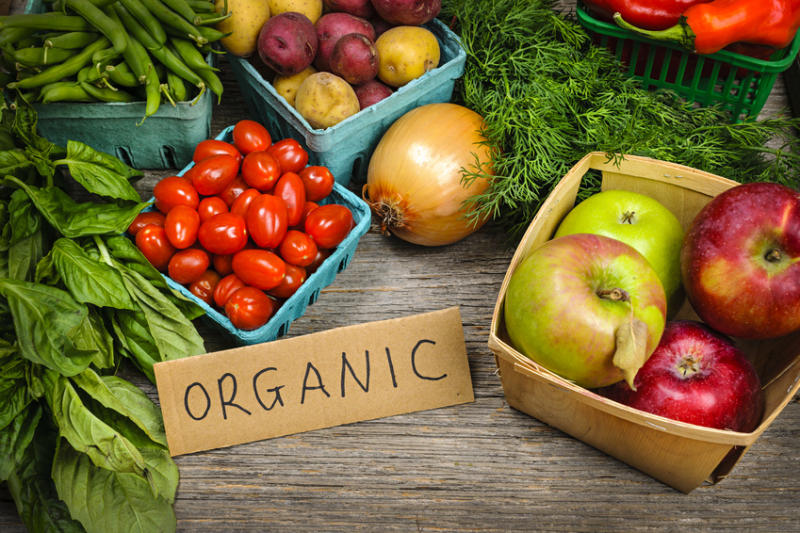
There is growing misconception even among food professionals who assume organics foods and natural foods mean the same thing. I have sometimes read in some articles using the terminologies interchangeably but clearly there are distinct differences between both.
For the singular reason of educating readers and teeming consumers, it remains expedient to explain what the two categories of foods are. Many researchers have taken time to find out if the nutrients in both categories of foods defer but the argument is unending. Let’s check out some of the differences
Some Differences Between Organic Foods And Natural Foods
Certification:
For any food to carry the label organic foods, the food products must have met the strict government standard laid down by The U.S. Department of Agriculture (USD). These standards regulate how such foods products are grown, handled and processed. Once these products carry the USDA seal, then customers can be rest assure that the foods are produced or processed in the organic method. For natural foods, there is no need for certification of any kind. There are no special stores for them unlike the organic products.
Pesticide usage:
Natural food growers tend to use synthetic pesticides to protect their crops from molds and insects infestations. The used pesticide can leave residue on the farm produce. For organic foods, the seed used in planting are those that are resistant to diseases from fungi. In fact, the growers use predator insects to control damaging pest.
Environment:
Due to the fact that organic foods are produced without the use of pesticide and some certain types of herbicides, the foods are being regarded as more environmentally friendly. This is because they reduce pollution, conserve water and soil quality than natural foods that contain most of these chemicals with residues on them.
Price:
Organic foods have been seen as the healthier option in many quarters and due to the method of planting and strict restrictions as to food additives and method of production, the price of organic foods are more expensive than natural foods or convectional foods that do not have a major federal legislation.
You can actually make your bananas last more days — in fact for another one week if you store them in some particular ways. This is not just a an article that will tell you to store your banana in the refrigerator to make it last longer. If that is what you thought you would see here, you are wrong because these are just some tricks that I learnt about, tried them out and found to work.
Making Banana Last More Days By Delaying Ripening
First, let us quickly run through what makes bananas (and in fact all our fruits) ripen in two paragraphs. When fruits are mature, they are harvested or plucked from the trees and kept where they can now get ripen for consumption. Fruits that are not mature before harvesting will just stay that way and not become ripe — no matter what you do to it.
When bananas get detached from their parent or damaged in some way, it commences ethylene production and ripening starts. Ethylene causes the banana cells to make all the changes involved with ripening — Chlorophyll (the green color pigment) is broken down, causing color changes; starches are converted into sugars, making the fruit sweet; acids are broken down, causing it to taste less sour; and pectin is broken down, making it softer.
So, how do you delay this ripening? Prevent all the agents of ripening from getting to your banana. How can you achieve this?
Buy Greener Bananas
Since banana ripens at a very fast rate — unless you want to eat your banana in a couple of days, get those bananas that are greener toward the stems (where the fingers join together) and more yellow on the fingers (not too yellow though).
When you get them, make sure they have no bruises on them as this will accelerate ethylene production and lead to quick ripening of your banana. So, even when they don’t have bruises when you buy them, ensure you handle with care such that they don’t get bruised as you take them home in your shopping container.
DO NOT Refrigerate The Bananas
As against what many would be expecting, do no refrigerate the banana that you have bought in the state recommended in Tip number one. Why? When you put the banana in the cold temperature of the refrigerator, it causes the cell walls of the banana to break down prematurely.
This breakdown allows the production of melanin (the pigment that gives us the color of our skin), turning bananas completely black. However, the inside flesh of the banana will still remain unripe because the cold would have prevented ethylene production, and hence ripening.
Let these bananas ripen under room temperature, then store in the refrigerator.
Keep your bananas away from other fruits
It may surprise you that just like some diseases, ripening is also contagious. So, if you don’t want your banana to ripe too fast, keep it away from other fruits (and vegetables) that you have. They produce ethylene and that can trigger ripening your bananas too.
So, the best practice is to take your banana away from other fruits and keep at room temperature (without putting them in any bag). If they are already fully ripen and you want to prevent deterioration, you can keep in the refrigerator.
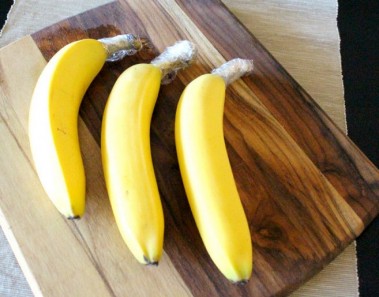
Cover the stem of the Banana with Nylon
This method can make your banana last for another five to seven days. When you get your unripe banana and you want to slow down ripening, get nylon and tie around the stem of the banana bunch to prevent passage of oxygen, hence delayed ripening.
Another way to do this is to separate the fingers, but care must be taken not to cause injuries to the banana fingers. After separating them, you can now tie nylon around their stem. This is way easier than thing them together as a bunch.
If you have any other method that you use to make your banana last longer, please share with us using the comment box.
Are you in any doubt if that sachet of coconut chips you are about to eat and open was truly registered with NAFDAC? Is the product and packaging too poor in appearance to have been approved by the National Agency for Foods & Drugs Administration and Control (NAFDAC)? Well, the good news is that you can easily verify this by using your mobile phone or laptop.
Many people I spoke to — prior to revealing the information to them, did not know that it was possible to verify the authenticity of NAFDAC product registration number some processors put on their food packages. NAFDAC has done a very good job in this regard, we have to commend them.
How To Verify NAFDAC Registration Number of Products
This is very simple to do. All you need is your mobile phone or any device connected to the internet. Log on to the official website of NAFDAC and search for the product or the NAFDAC registration number. I have three ways of verifying that I would want you to check out.
Use the Printed NAFDAC Number
For example, go to nafdac.gov.ng/product-registration, if you search 01-7188 registration number in the search bar, you should get FUN BITES PLANTITOS SPICY PLANTAIN CHIPS as the product name. Also listed are the applicant’s name (the company that applied for NAFDAC registration number) and the active ingredients that make up the food under check.
I was particularly interested in the plantain chips because I see many of them on Lagos roads and I do wonder if they were ever approved for production. If the package they use for them were appropriate and if they were ever approved? But since I was able to check, no issues.
Use The Product Name To Search
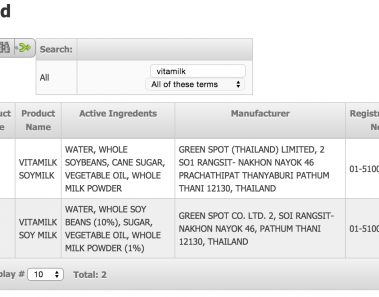
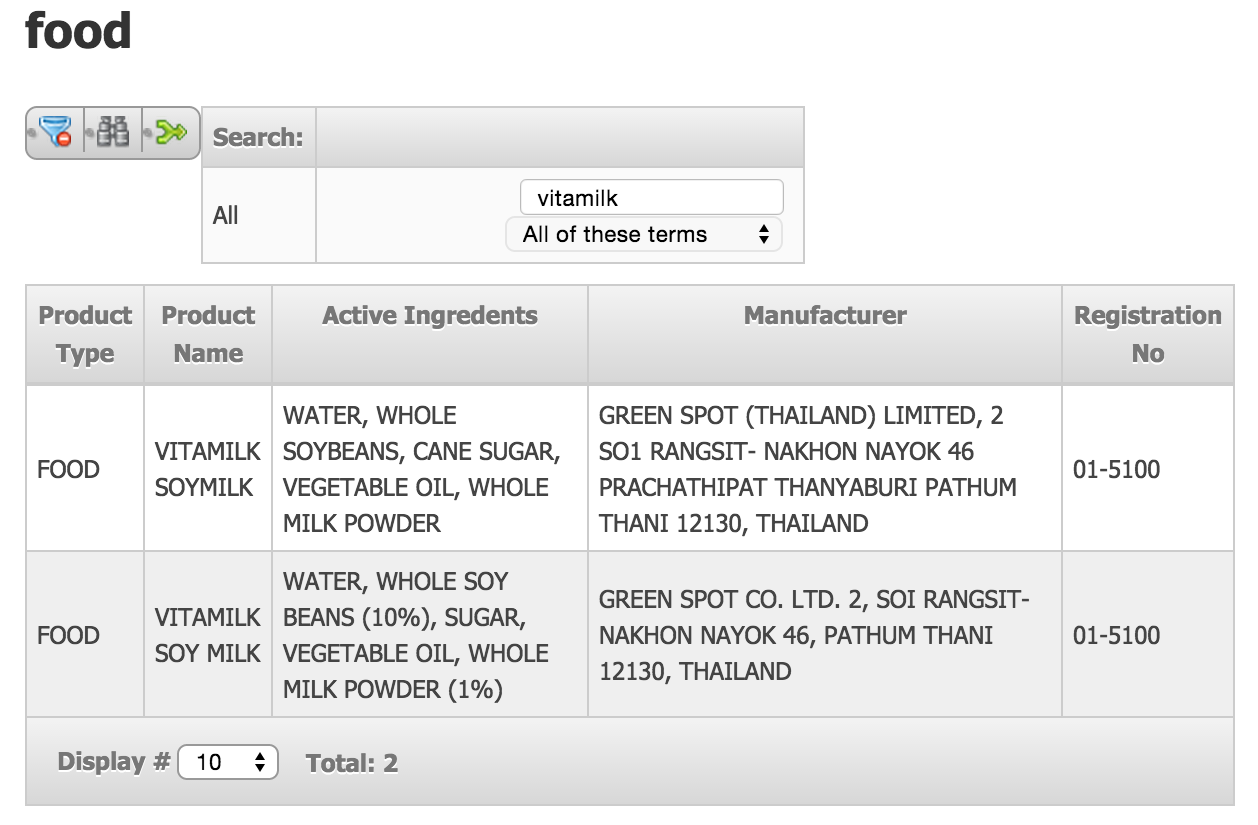
You can go to the registered products search portal of NAFDAC at nafdac.gov.ng/product-registration. and type in the product name deployed on the package of the food you want to look up. In the screenshot below, I used Vitamilk.
The problem with searching with name is that you can come up with results of similar products and you then have to compare all the names with the one on the package. It happens when you use NAFDAC number too but often, they are variants of same products from a manufacturer e.g. Coca Cola and Zero Coke.
I use that second method when the NAFDAC registration is not legible or has faded away.
What is really not clear is whether NAFDAC updates this database very often. If not, you might get to see a newly-registered product in the market that you won’t find information about it online. We don’t know this, but what I know is that I have been able to find every product I searched for on that platform.
We have also seen drugs and cosmetic products carrying numbers that can be sent to some special SMS shortcodes in order to verify if the products actually came from the company that was printed on it. This way, we can know products that were imitated and we hope we can see this on food products soon.
In recent weeks, we have discussed very serious food matters relating to food security, food safety, foods that help parts of the body and food recipes. Today, we are adding some sort of fun to our learning by talking about foods that look like the parts of the body they help.
Foods That Look Like Parts Of The Human Body They Help
I know you may be tasking your brain already, trying to think of one that you know already. Don’t worry, I am going to share some interesting ones with you here. You go through the pages to see all these foods and the part of the body that they help. Have fun while learning too.
1. The Carrot and The Eye
The cut section as seen in the image below has patterns of radiating lines that look like the pupil and iris of the human eye. It may not be a coincidence that the beta-carotene present in carrots help the eyes. The beta-carotene is good for our overall eye health.
When we eat foods that contain beta-carotene, our body converts it into vitamin A. The vitamin A ultimately gets converted into retinol that is being used by the eye for certain functions.
2. The Walnut and The Brain
This is the most striking of them all — the resemblance between the walnut and the human brain. Taking a look at the picture below, you would agree with me that they share this amazing resemblance between themselves and the former helps the latter — they (walnut) are often referred to as “the ultimate brain food”.
Walnuts have an abundance of with DHA, a type of omega-3 fatty acids, an essential fatty acid that helps keep the brain functioning normally. A large part of the brain is made up of what is normally referred to as “structural fat”.
It needs high-quality fats like the omega-3 fatty acids to function properly by keeping the brain fluid and flexible. Walnut is very rich in these omega-3 fatty acids.
3. The Ginger and the Stomach
Many forms of ginger that you will buy as a whole would have one part that has a shape looking like the shape of the human stomach. The resemblance is not as striking as that between the walnut and the brain but they sure bear some resemblance in their shape.
I grew up seeing adults using ginger ale drinks to help relieve stomach aches and upsets. Ginger on its own is also a helpful digestive that helps digest food. It is a known remedy that chewing on fresh ginger helps digest heavy foods.
4. The Celery and the Bone
Celery, when you remove the leafy part sure look like the bones of the forearm — ulna and radius. Celery, botanically known as Apium graveolens, is rich in calcium — the essential mineral for bone formation in the human body.
This is not just the end about how celery helps bone formation, it also contains vitamin K, which along with the essential minerals magnesium and phosphorus, helps make the proper absorption of calcium in the body possible.
5. The Avocado and the Uterus & Cervix
Cutting avocado horizontally as shown in the image below make sit shaped like the uterus and cervix together. It look like Uterus and helps the uterus in some ways — it has been reported to help with hormonal balance and work against the development of cervical cancer. The most interesting part is this…
Just as it takes 9 months for a baby to fully develop in the mother’s womb, it takes an avocado exactly the same 9 months to grow from a blossom into a ripened fruit! Isn’t that amazing.
There are more but these are the top 5 I found interesting and decided to share with you!
Thanks to the new breathe of fresh air in the recent regular supply of few hours of power provided to major towns and cities in Nigeria which is seemingly better than what it had been about a decade ago. Asides these few weeks, Nigeria is notable for constant blackout or incessant power supply, so the need for housewives and our mothers to preserve their foodstuffs lies in the use of other alternatives to prevent these items from deteriorating.
How To Store Some Common Foods Without Refrigeration
In this short post, you will be learning how best to preserve some of our common food items without necessarily affecting the quality to an unacceptable level.
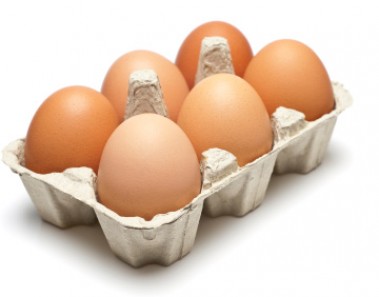
1. EGGS:
There has been a serious debate particularly between the Americans who believe eggs are to be refrigerated to prevent bacteria proliferation and the Britons who disagree and feel that eggs can be stored at room temperature long enough without leading to bacteria infestation.
As this argument continues, a research center took time to subject these claims to a test and found out that after a period, both storage forms of eggs were free from bacteria and safe to consume. In view of this, it is clear that you can keep your eggs at room temperature on the shelves of your kitchen particularly the Nigerian types that had been vaccinated against salmonella and other bacteria.
My simple advice is that without refrigeration, do not buy eggs you do not plan to consume within two weeks. Although, eggs stored at room temperature have been found to store longer than two weeks.
2. MEAT:
Staying at quite a distance to the market seems to make many households to imbibe the culture of storing meat as they can not dash out to the meat stores whenever they feel like to purchase fresh meat. So, they buy in bulk. While you cannot trust the electricity situation in Nigeria, the tested ways that can prevent meat spoilage are salting and drying.
As a young boy, my mum practices this method when we newly relocated to another environment. The salting inhibits the growth of microbes and pushes out more moisture while the drying eliminates the moisture which usually acts as a conducive environment for bacteria multiplication leading to spoilage.
The truth is, nothing tastes better than fresh food items. However, avoiding spoilage while still retaining some nutritive value is key. My advice is when you are ready to cook your meat, wash it well in water to remove or reduce the salt concentration. Usually, you do not need to add salt to the soups or stews.
3. VEGETABLES:
The way to follow in storing vegetables is quite broad and one needs to be extra careful. If you go to the grocery store and pick up any vegetable you find; then, you seem unserious in your quest in keeping vegetables as most of the vegetable displayed are either too ripe or have been infested. You have to be picky.
Also, particularly in the superstore where vegetables are sold, some of them have been refrigerated in the past. So, no form of other storage will help apart from refrigeration. It is advisable to choose your veggies with varying degrees of ripeness so that they can be kept at room temperature and last a week or two.
It should be noted that vegetables store differently. For leafy veggies, it is smarter to remove the coloured ones to avoid the spread of the colouration. Aerating them will also help in moisture loss and this method can keep them from a few days to a week.
Do not hesitate to share how you preserve your food items asides from refrigeration.
There are several ways of knowing if an egg is good after you have cracked it for frying or other purposes. The colour of the egg white and the yolk, the smell and other factors can be determined the level of freshness or how bad an egg has gone.
Never attempt to consume egg that had changed colour or smells — you don’t want to witness the consequences, let alone experience if first hand. That said, what if you want to boil your egg? Is there or are there ways for checking the freshness of eggs before you boil them.
Sometimes, you go to the open market where eggs are stored at normal ambient temperature instead of the refrigerator and you want to know if the eggs are still good before you spend your hard-earned money to buy them. You don’t want to buy them and get home to discover they have gone bad.
I am going to share with you, tips that I have used, and that I still use to know if eggs are still good before I buy them. They have always worked for me. Try them out and share your experiences with other readers of this article.
Tips for checking the freshness of egg before cracking it open
1. The Shake shake test!
You have to be careful when doing this when you are buying in some markets if you don’t want to receive showers of abuses from the sellers. With this test you just need to take some samples randomly from the crates and shake lightly. When you do that, you can tell if the content is still very viscous or gone watery.
I usually don’t take the watery ones because I believe it is an indication they have been around for a longer period, even if they are not spoilt yet.
Another important thing to do when using this method is to make sure you select your samples randomly. This is to make your samples representative of the whole lot. Take from the front, middle and back — you know sellers can mix fresh ones with the not-so-fresh ones.
2. The Egg-in-Water Test or The Float Test
This test cannot be performed in the market. I doubt if any seller would allow you to perform this test on eggs before you purchase them. So, this is only suitable for checking egg freshness at home. You might want to ask, “why do I need this test after buying?”
Okay, let us say you want to fry 3 eggs or mix an egg with other ingredients like flour to make cake or something, you have to be sure each egg is fine. What if you have cracked and mixed two fine eggs together and the third one you crack inside turns bad? You have wasted 3 eggs!
Fill a bowl with cold water and place your eggs in the bowl and allow them to stay for some seconds. Then observe how the eggs behave in the water. There are three possibilities.
Float Test Continued
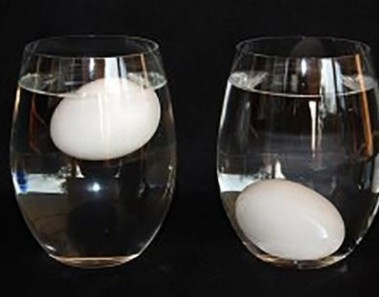
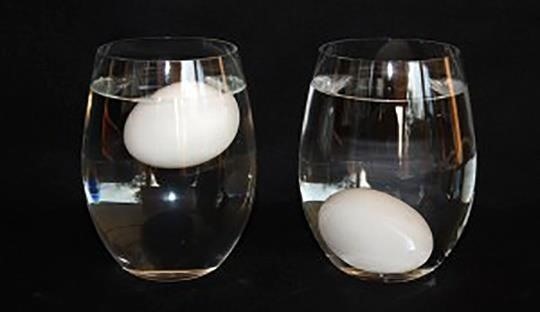
If they sink to the bottom and lay flat on their sides, then you have bought very fresh eggs. If they have been stored for a few weeks but still good to eat, they’ll stand on one end at the bottom of the bowl.
Photo: SturgisJournal.com
However, If they float to the surface, they’re no longer fresh enough to eat. So, you may not want to risk cracking them open. The smell can be pungent and very repulsive if they have really changed the smell and color. I’ve been through that before — I couldn’t eat eggs for months after.
3. The Candling Method
The Candling method is not really straightforward as the others and it is the method that should normally be used for testing egg quality before putting eggs for sale in the market. It can, however, be used to determine the freshness of eggs too.
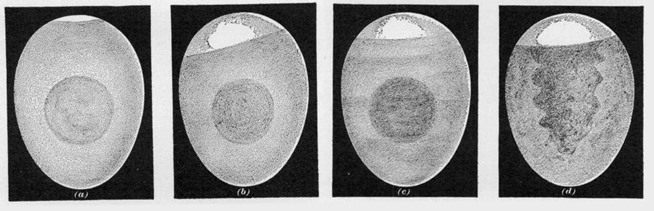
To do this, just put on a flashlight and hold right next to the eggshell to light up the inside. Although a sort of pinhole camera is normally used, the flashlight works fine for home use. When you flash the light, you can see the air space to determine if the egg is fresh or not (image below).
Photo: Woman’s Institute Library of Cooking (1918)
With the candling technique, you could have any of the following; a fresh egg (little air space, slightly visible yolk), a slightly old egg (larger air space, slightly darker yolk), a nearly bad egg (really dark yolk, spotty), and a spoiled egg (mixed in yolk, lots of dark).
Finally, let me say this that no matter which tests we try to carry out on eggs before cracking them, the best will remain cracking them open to check the colour and odour. Those listed here, however, will ensure that we get eggs that are still good and can be consumed.
Let me quickly use this first paragraph to explain the title of this post to you. Like I have mentioned in two of my articles in the past — every thing that we eat and consume could be viewed as a poison, the amount (dose) that we have taken in is what determines if it would cause disease or become lethal (cause death). Almost every food I have seen has a component, that can cause adverse health effect in everybody or some specific group of people.
If this is not really clear, let me use this analogy of a drug called Indocid. When I mentioned this name, what would come to the mind of many people here in Nigeria is its use in killing mice and rats in the house. Well, the drug was actually designed to help relief the painful condition involving inflammation of joints or muscles. It could be arthritis. When rats take that amount we put in foods for them, it is lethal but not for human.
This analogy is true for every food component that has been labelled ad dangerous or risky — they all have a dose at which they are lethal in the body. We only have to eat enough of it to see adverse effect in our body. This is not to say that we should not care about the dangers every food pose, in fact we have to endeavour to find out about them. This way, we can know the hazards posed by the food component, at what quantities it becomes dangerous and the problems it causes when its adverse effects start to manifest.
Did you know that if you put Tonic Water under black light, it would glow azure blue? Also, it would interest you to know that the red food-coloring carmine — used in Skittles and some other type of candies — is actually extracted from boiled cochineal bugs and boiled in ammonia.
The cochineal bug is a type of beetle. These are just some of the facts that will wow you and even make your jaw drop about some of the foods we eat. We’ll share many with you here in graphics and text.
Some Facts About Foods That Will Shock You!
Let’s get it started by sharing a simple and interesting one about fruits with you. At the end of this article, you can share any interesting but surprising facts that you know about some foods with us using the comment section. Let’s get things started…
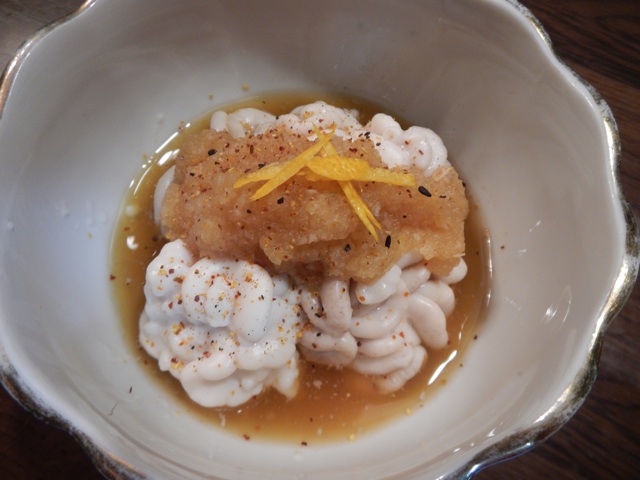
1. Milt, a delicacy around the world, is fish sperm
Milt is the seminal fluid of fish, mollusks, and certain other water-dwelling animals who reproduce by spraying this fluid which contains the sperm, onto roe (fish eggs). In Japan, it is called Shirako.
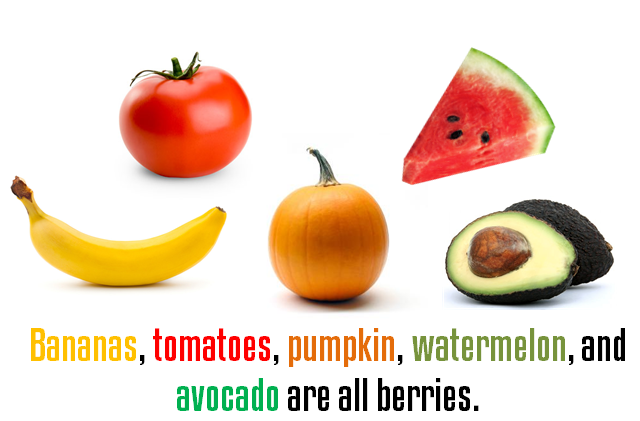
2. Tomatoes, Banana and Watermelon are berries? huh?
There are definitely some fruits and vegetables that we only classify based on how they are consumed. Botanically, these fruits and vegetables actually have different identities.
For example, Tomato is botanically a berry, a subset of fruit. However, the tomato is regarded as a vegetable for culinary purposes. True berries are simple fruits stemming from one flower with one ovary and typically have several seeds. Tomatoes fall into this group, so also are pomegranates, kiwis and — surprisingly — bananas.
Others that are in this group include watermelon, pumpkin and avocado.
Photo: leanitup.com
3. Omega-3s and Cattle Fed With Grass vs Those Fed With Grains
Here is another very interesting fact about beef that we eat. Some nutrients and composition of the meat depend on the type of foods the cattle were fed on. A research has suggested that grass-fed cattle usually have between 2-5 times omega-3s in their meant than their counterparts fed with grains.
The research which can be found here reported that;
Several studies suggest that grass-based diets elevate precursors for Vitamin A and E, as well as cancer fighting antioxidants such as glutathione (GT) and superoxide dismutase (SOD) activity as compared to grain-fed contemporaries. Fat conscious consumers will also prefer the overall lower fat content of a grass-fed beef product.
In addition, the fat from grass-finished beef may have a yellowish appearance from the elevated carotenoid content (precursor to Vitamin A). It is also noted that grain-fed beef consumers may achieve similar intakes of both n-3 and CLA through the consumption of higher fat grain-fed portions.
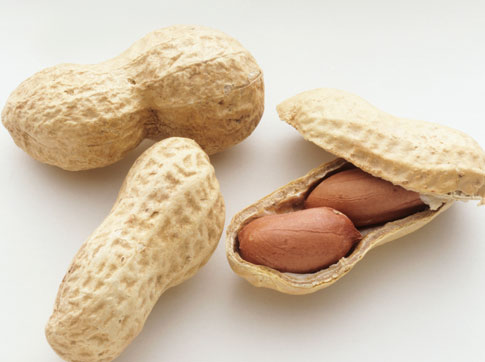
4. Peanuts or Groundnuts are not nuts, they are legumes! Really?
Just like some fruits that have their names ending with berries are not truly berries, peanut is not a not too. It just has NUT attached to its name. If you didn’t know about this before now, don’t feel bad about it because you are not alone – there are so many people who don’t know too.
If you are still doubting is this is true or not, you can quickly check Wikipedia for details on peanut. The following is what you are going to find there:
The peanut or groundnut (Arachis hypogaea) is a species in the family Fabaceae (commonly known as the bean, pea or legume family).
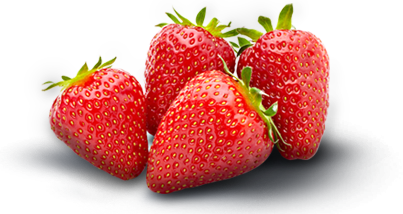
5. A strawberry isn’t an actual berry, but a banana is
Isn’t this interesting too? Just like peanut has nuts at the back and is not a nut, blackberries just have berries in their names – they are not actual berries. Why? Well, it is due to the same reason that banana is a berry. They have the same technical definition.
A berry is a fleshy fruit produced from a single seed. Strawberries, unlike cranberries and blueberries do not fall under this classification of fruits.
See the most expensive fruits in the world. It costs $23,500!
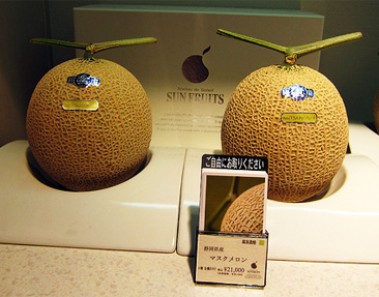
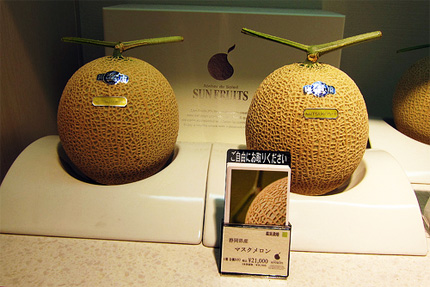
6. The Japanese Yubari King Melon is the most expensive fruit in the world!
If you had $23,500, would you spend it on buying one fruit? Well, this depends on what your bank account balance looks like. The most expensive fruit in the world is the Japanese Yubari cantaloupe, and two melons once sold at auction for $23,500. Yeah, a whooping $23,500!
The melons are grown in greenhouses and even given “hats” to prevent sunburn. You now wonder why they are that expensive.
Photo: iheartjapan.ca
Walk into a normal store on a good day and ask for this melon, you would probably get it for a price around $225 for two.
Would you eat the vomit of another animal? I guess not but I am sure you do, and even like it.
7. Honey is made from nectar and bee vomit!
Honey is actually bee vomit. It takes at least 100,000 vomits to make 453 grams of honey. The bees that go out to collect nectar have a gland that secrets enzymes in their mouth. When the bees collect the nectar, it is mixed with the enzyme in the bee’s mouths.
The nectar plus the enzyme is then taken back to the bee hive where it is dropped (vomited) into the honeycomb. The honeycombs are hexagonal shaped cells that the bees make themselves out of wax. When I found out about this I was taken aback but then I though, “what if honey is being made out of bees excreta? Who cares?” It is sweet, nutritional, medicinal and we love it.
You can see the video below to see how the bees actually make honey!
8. Canola oil was INVENTED in a biotechnology laboratory
Canola oils is not from a plant called Canola as many people I spoke to thought. In fact, there is no plant called Canola and this oil that is common in everybody’s home was actually invented in a biotechnology laboratory in 1976, using radiation bombardment techniques to destroy parts of the plant’s DNA.
Here are some key facts on growing genetically modified (GM) canola in Canada.
GM or transgenic canola varieties have been modified to be resistant to specific herbicides. They are called herbicide-resistant varieties. The plants are modified, but the oil is not modified. It is identical to canola oil from non-modified or conventional canola.
Herbicide-resistant GM canola is grown on about 80% of the acres in western Canada. GM canola was first introduced in 1995.
They are usually made from the oil from rapeseed!
These are just some interesting facts we have brought together for your reading pleasure. We eat all these foods and we enjoy them. Many of them have high nutritional value and beneficial to our body.
Which of these facts actually thrilled or surprised you the most? Share your thoughts in the comment section!!!