Categories
Food & Body

Foods You Should Avoid During Examination Period

I am writing about foods you should not eat during your examination period or when your examination is approaching because some curious readers of one of our sister websites, who are preparing for Post-UTME screening asked. They want to know if there are foods that can hinder their concentration, brain cognitive functions and exam performances.

I thought that their questions make sense because we know alcohol can damages brain cells, so it would be wise to stay away from alcohol and foods/drinks containing them during if you would like to make the best out of your brain.

Brain Foods: Foods That Boost Brain Power & Memory

Now, let us talk about those foods you should stay clear of when you are getting close to your exams. Some of them are even foods you should not indulge too much in because if a food affect brain functions, for example, avoiding it during exams would not undo the damages it had done before that time.

Below are some of the foods you should not consume or consume less just before and during your exams;

1. Alcohol of Foods Containing Alcohol

During your examination period, you should stay away from too much alcohol. It has negative effects on many organs in our body, even the brain. When your drink much alcohol and it gets to the brain, it disables function by damaging the connective tissue at the end of neurons, called dendrites.

We have billions of these dendrites in our brains and what they do is to conduct electrochemical stimulation from one cell to another cell body in in the brain.

no alcohol sign

With some of these dendrites damaged, there is the disruption of communication among neurons, it becomes difficult for cells to talk to one another and makes it harder for an individual to focus or complete minor tasks including reading and understanding. However, our bodies do a good job by repairing this if we stay off alcohol for some period afterwards.

Categories
Food Safety

Allergies/Dangers Associated With Eating Peanut

Few years after I was posted to Ketu Special Children Center; my present place of work, the nutrition department which I am part of, was faced with the challenge of raising the weight of our severely malnourished children. The idea of fortification popped into one of my colleagues and we decided to fortify the children’s meals with peanut butter. Without doubt, as professionals, we are aware of the allergy and numerous health benefits of the legume. We kick-started with a fact-finding mission to determine the level of tolerance in the children. Fortunately, none of the children showed any sign of allergies or intolerance.

Not quite long, one of our care givers who was on annual leave during the implementation period of peanut butter resumed duties. A diligent woman that she is, she did not waste time to start her work. She quickly picked one of the non ambulatory children’s meals in order to feed one of them. After feeding this young boy, the caregiver started scratching her body. Within few minutes, her entire skin had swollen. Then, we rushed her to our clinic. The long story was that she was allergic to groundnuts and was unaware that groundnut had been included into the children’s diet before she resumed. Else, she would have avoided it. This incident triggered the need for me to write on this article.

peanut allergy symptoms
Photo Credit: au.news.yahoo.com

Let me make it clear that the woman did not taste out of the blenderized meal, she only fed a child. What if she had tasted?

If I am not making any error, peanut allergy is perhaps one of the most serious and dangerous food allergies one can have. In some severe cases it has been found to be life threatening (Anaphylaxis). You cannot leave these reactions to chance. Once you discover you are allergic to any form of nut, do yourself a favour by visiting a Medical Doctor for further medical checkup. Let’s go ahead to describe some terms.

Short Description of Peanut Allergy:

According to WebMD, peanut allergy is a reaction that occurs when your body mistakenly identifies peanuts as harmful substances. When you eat peanuts or food containing peanuts, your immune system —the body’s natural defense system that fights infections and diseases —overreacts and can cause a serious, even life-threatening response. I am sure you can relate this definition with the scenario narrated earlier in this article.

So, What Causes Peanut Allergy?

The immune system determines the type of response your body will give based on the toxicity or otherwise of ingested items. In this situation the immune system overreacts and releases chemicals into the blood. Once they get into the blood, the chemicals have the ability to affect different organs in the body such as skin, nose, lungs etc. In most cases, it is unclear why these reactions occur in some individuals.

What Are The Symptoms Peanut Allergic Reaction?

The symptoms of peanut allergy can be a mere tingling sensation in the mouth followed by swelling of the face, throat, skin and mouth. This can also lead to difficulty in breathing, an asthma attack, anaphylactic shock and death. Less severe reactions include rashes, itches and stomach upset.

ADVICE: Once you have noticed any of the above symptoms any time you consume peanut, you will do yourself a great favour by avoiding all other nut products, including pressed nut oils and any products processed on the same equipment as nuts. This allergy is so severe that even minute amount of peanut can trigger a dangerous allergic reaction. Also, check the labels of packaged foods to see if nuts have been included in any form.

It is also in record that some people outgrow peanut allergies while others do not. For individuals who were diagnosed with peanut allergy at infant, they stand a chance to get over it than those who developed it from age three and above who might live with the allergy forever. Whichever way, speak to a medical professional.

ALSO SEE: Simple Method For Making Peanut Butter At Home

Allergic to peanut? STAY CLEAR!!!

Categories
Knowledgebase

Signs And Symbols On Food Packs And Their Meaning

Many people just want to eat and do not care to know about what they are eating. This is one of the reasons people gain weight and later wonder why they are accumulating fat. We need to know the composition of the foods we eat so that we choose what is good for us and what is not. Some people have eaten foods that landed them in hospitals because they have refused to check the precautionary statements written of food packs.

Food laws have made correct and complete labeling a very important part of food manufacturing. Manufacturers are required by law to add labels to food packages to be a source of information that consumers like and trust. Since 2006, the major food allergens are required to be specifically noted on the Information Panel of the food label (i.e., fish, milk, soybeans, wheat, eggs, shellfish, tree nuts, and peanuts).

There are symbols that are printed on food packs to pass information to the consumer but often we either don’t check them or simply disregard them. This article will show you ten symbols or signs that you may have come across on food packages in the past. If you have not seen any of them before, you would likely come across it in the future. If and when you do, you would know the meaning.

11 Signs And Symbols On Food And Their Meaning

1. Microwavable or Microwave Safe Symbol

Manufacturers may use any of the above terminologies as they both mean the same thing. In one of my previous articles where I answered the question of “if microwaved foods are safe to eat or not“, I mentioned that there are plastics that are safe for use in the microwave. These plastics do not have toxic components that migrate into the food during microwaving.

microwavable symbol

So, how do you know if a plastic container is microwavable? The easiest way to confirm that a plastic container is safe for the microwave is to look for the Microwave Safe symbol on it. This stamp of approval, which includes three wavy lines to symbolize radiation (image above), basically says that the container can withstand the heat of the microwave without melting or releasing harmful amounts of chemicals.

2. Nutritional Compass or Nutritional Facts

Apart from the list of ingredients that make up a food product, most packaged food must have a listing of nutrients and related information on the Information Panel that is usually on the side or rear of the package. These would normally include such information as serving size, calories, fat, carbohydrates, sodium, protein compositions.

nutritional compass or facts

Claims such as “low fat,” “high fiber,” “reduced calories,” and “cholesterol-free” are also included on food packages as information to consumers who may have concerns about these components.

3. Suitable for Vegetarians Symbol

The Vegetarian Society defines a vegetarian as ‘someone living on a diet of grains, pulses, nuts, seeds, vegetables and fruits with or without the use of dairy products and eggs (preferably free-range).’ Having defined this, you should know that vegetarians try to stick with their veggies without adding animal foods to eat.

Since they are not part of the manufacturing of some of the foods they eat, they want to be sure that what they want to buy or eat is suitable for vegetarians’ consumption.

vegetarian label

However, the ‘Suitable for Vegetarians’ logo is not regulated. It is a ‘voluntary claim’, which means it is illegal for the labeling information to include anything that is false or likely to mislead. The symbol is shown above.

4. Treated with Irradiation (Radura logo)

For foods that have been treated with ionizing radiations, the Radura symbol comes along with the statement “Treated with radiation” or “Treated by irradiation” on the food label. With this, identifying irradiated food has been made very easy by binding food laws. These laws are also very strict.

There are many concerns over the consumption of irradiated foods and one of such is this that I shared on one of my recent posts assessing the safety of irradiated foods;

It states, “When food is exposed to high doses of ionising radiation, the chemical composition and nutritional content of food can change. Radiolytic by-products are often formed in irradiated food. Very few of these chemicals have been adequately studied for toxicity. One such chemical – 2-DCB – can cause DNA damage in rat colon cells at high doses.”

radura logo

Whether irradiated foods are safe or not is not the subject of this article, you can read further on that by clicking here. Whatever decision you make for yourself on irradiated foods – whether to eat it or not, identifying irradiated foods is easy with the above logo.

5. Allergen declaration

Allergen declarations are mostly precautionary statements on food informing consumers that the food may have a component that one could be allergic to. I wrote on allergies not long ago and also mentioned some of the common allergens in food.

Gluten in wheat flour could be an allergen, people could be intolerant to lactose and find it difficult to digest milk. Other common food allergens include Crustaceans, Eggs, Fish, Peanut, Soybeans, Tree Nuts, and Sesame seeds. You can read more about that here.

gluten free logo

There are instances where symbols are used to declare the absence of an allergen. For example, gluten-free symbol (above) is relatively common.

6. Organic labelling

These are used on organic foods and its use is totally voluntary. The food must be organic up to a particular percentage before an organic claim or statement could be made on the label. For example, In Canada the use of the organic logo is only permitted on products that have an organic content that is greater than or equal to 95% and have been certified according to the requirements of the Canada Organic Regime.

organic symbol

Above, is the organic food label! There are food that the manufacturer will want you to keep frozen. There is a logo that indicates that. See on next page.

7. Keep Frozen symbol

This symbol tells you to keep food frozen in order to keep the quality and shelf life for longer period. Some food materials will deteriorate rapidly if stored at normal room temperature. This symbol usually looks like the one below.

keep food frozen

Food such as butter and margarine can be frozen for 3 months. Grated cheese can be frozen for up to 4 months and can be used straight from the freezer. These are examples of common foods that we may see the symbol on.

8. Waste Disposal Symbol

This symbol is used on many products other than food packages also. It is usually called the Tidyman. It tells you to dispose of this packaging carefully and thoughtfully. Do not litter. Throw them in thrash cans after you and not litter the ground with it.

waste disposal logo

Above is the symbol telling you to properly dispose of your food packaging.

9. The Mobius Loop (Recycle)

The Mobius loop can be used for two different terminologies that should not be confused with each other because they both refer to recycling. I will explain the two briefly and put the symbol too.

recycle symbol - mobius loop

The Mobius loop indicates that an object is capable of being recycled – not that the object has been recycled or will be accepted in all recycling collection systems. Sometimes this symbol is used to indicate that the packaging is a product of recycling. It could come with a percentage figure in the middle to explain that the packaging contains x% of recycled material.

10. Halal logo

According to the Codex Alimentarius (Food Laws) of the Food and Agriculture Organization (FAO), Halal food means food permitted under the Islamic Law. The animal to be slaughtered should be lawful according to Islamic law. The food should be prepared, processed, packaged, transported and stored in such a manner that it complies with the Codex General Principles on Food Hygiene and other relevant Codex Standards.

Muslims don’t eat pork, Halal logo may also indicate that the food does not contain pork or a product of it such as fat. It generally tells Muslims that the food does not contain anything they are prohibited from eating.

halal logo

When a claim is made that a food is halal, the word halal or equivalent terms or symbol (as above) should appear on the label.

11. Bar Code on Food Pack

Just about every package of food you have ever purchased or seen has a bar code printed on it but we just don’t bother to check them or see the information they contain. The bar code has more information beyond what many people think.

barcode on foods

When the barcode is scanned, the computer system automatically determines if the product need re-ordering. This is a piece of information that could be very useful to supermarket owners. The price of the product appears when the barcode is scanned. It can also be used to determine if the product is genuine.

These are some of the important and relatively common symbols on our food packages that we should pay more attention to.

IN THE NEWS: Scientists Found A Way To Cook Rice To Reduce Calories In It
Categories
Knowledgebase

How To Check Potential Dangers Written On Food Packs

Sometimes, we eat food and react to some components of the food but don’t really know what happened. This is because many people in this part of the world don’t know they are allergic to some food or food components. They don’t know their allergies, so they don’t know when they are reacting to them. Food allergies can be unpleasant, make life difficult and in the extreme cases, fatal. I will briefly explain what allergies are, give examples and discuss the main topic of this article.

Definition of Term: What Is A Food Allergy?

Food allergy is an abnormal response to a food, triggered by the body’s immune system. There are several types of immune responses to food. This should not be confused with Food Intolerance.
An example of food intolerance is Lactose intolerance – a condition when the gut has a reduced capacity to break down lactose. This usually happens when there is reduced lactase – the enzyme that brakes down Glucose. So when you take milk, which is high in lactose when you have very low lactase level, microorganisms break down your lactose for you instead. This causes formation of gas in your gut and consequently bloating, abdominal pain, and sometimes diarrhoea.

I will write a separate article to guide you on how to know if you are allergic to a particular food or how to know which food you are allergic to. The purpose of this topic is to show to you that these potential dangers are written by food manufacturers on their packs. The problem is that many people don’t just take time to read these things.

Common Allergens Found In Foods We Consume

Here are some allergies that are present in foods we commonly eat. Examples of foods are also given in each case with some picture proofs to show that manufacturers do make it clear. A statement telling you that the allergen is present or that a food or ingredient that may contain the allergen is usually printed on the pack or label of the food.

For example, you would normally see “May contain Gluten” appearing on a product of Wheat, Barley, Rye, Oat, etc.

1. Gluten – Present In Wheat, Barley, etc.

There are people that are allergic to this composite of protein that we find in wheat, barley and some other grains. As gluten is present in Barley, it may likely be present in products of barley such as malt drinks and some cocoa beverages. The same thing can said of products from wheat, such as wheat flour.

allergen declaration on Milo

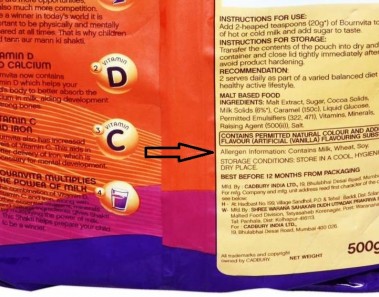
The image above is showing a declaration of gluten (the allergen) on a label of Milo – a cocoa beverage that also contains malt. The image below is showing allergen declaration on a Bournvita sachet. This one should also inform you that some people could be allergic to Milk and Soy.

Bournvita allergen declaration

2. Milk Present In Other Food Products

Milk is being consumed on its own by many people but also present as ingredient in many other food products. If you have noticed that your gut cannot tolerate milk, then you should avoid it totally by checking food labels. Thankfully, manufacturers will write it there for you that Milk is present in the ingredients list or under allergen declaration.

Milk is very rich in nutrients, hence many people just want to consume it. If you are lactose intolerant, you can still consume Yogurt. Yogurt contains all milk proteins and salts whereas the milk sugar (lactose) is mostly converted into lactic acid which gives yogurt a pleasant acidic flavour. So, it is more like you are taking milk without the lactose that you have problem with.

Other common food allergens include;

3. Crustaceans

4. Eggs

5. Fish

6. Peanuts

7. Soybeans

8. Tree nuts

9. Sesame seeds

Once you know which one you are allergic to, make sure you check the food package/label to see if the food contains any of them. If they do, you should forget about that food and if the allergen is not present, go ahead and enjoy your food.