Which is more Nutritious? Is it Ofada rice or the common imported, parboiled, polished rice? The saying that “Rice feeds the world” after all might not be an overstatement as virtually all homes in the world would have some quantity of rice. It is a major staple across all races on different continents. Loved by children, embrace by the old, rice remains a food that cannot be deleted in the diet of many particularly Africans and Asians.

In this light, it is important for people to consume rice types that will help improve their nutrition rather than those with no or low nutritional benefits. With this in mind, one local rice called Ofada rice is one of those varieties that can deliver maximum benefits to consumers of rice.
Ofada Rice VS The Common Imported Parboiled & Polished Rice
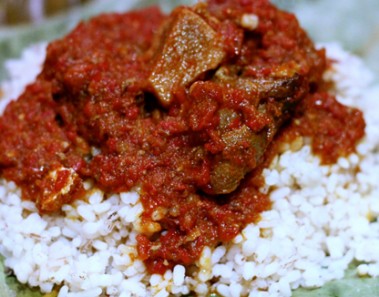
It is a short, robust and brown rice planted mostly in Ogun State and some other states in western Nigeria. The Ofada rice delicacy is very popular in the South-west region of Nigeria, but those who eat it, are certainly unaware of the numerous health benefits of the rice. When it comes to rice quality, looks can be really deceiving as those attractive looking white rice do not stand a chance in comparing their nutritional status with Ofada rice.
One particular selling point of Ofada rice is the quantity of both soluble and insoluble fiber found in it. It has more than twice the quantity of fiber found in regular polished or white rice and the difference is due to the way both types are processed. The common white rice is brown rice that had gone through some changes in the milling process.
With Ofada rice, only the husk is removed. White rice is polished and pre-cooked or parboiled. The bran is also removed. The bran is kept intact in Ofada rice, and it is the bran that gives you a healthy dose of dietary fiber. The fibre helps in proper digestion and in the cleansing of the colon.
Ofada rice Nutritional Compositions & Effect On Weight Loss
Ofada rice has also been critical and necessary in the diet of those who are hoping to lose some pounds of flesh. The soluble fiber slows the rate at which food leaves the stomach and promotes a sense of satiety, or fullness after a meal. This helps to prevent overeating and eventually helps you lose weight, especially when combined with some leafy vegetables.
White rice is usually fortified with some vitamins due to the low amount of nutrients but in the case of Ofada rice, it is loaded with nutrients like magnesium, manganese and zinc, potassium and some traces of vitamin E.
Rice, Blood Sugar Level and Diabetes
There have been reports linking the consumption of white rice to a high level of blood sugar and many dieticians advise their patients not to indulge in white rice. But with Ofada rice, food researchers and experts have advocated replacing white rice with brown rice if you have diabetes.
A study team at the Harvard School of Public Health discovered that eating five servings per week of white rice increased the risk of diabetes. They also found that replacing white rice with brown rice lowered the risk.
The benefits of Ofada rice over popular processed ones cannot be completely itemized. I do hope you will try to include Ofada rice into your diet.
ALSO SEE: Should Rice Be Washed Before Cooking? Must Read!