Categories
Food Processing

What Is Processed Meat?

“What is processed meat” has been a question on the lips of many after the World Health Organization (WHO) announced that it has confirmed the link between processed meat and cancer development. Many people who were confused, perhaps scared started asking questions to know if they have been eating too much processed meat unknowingly.

So, What Is Processed Meat?

To answer this questions simply, there is not strict definition for processed meat. It is often used to refer to meats that have been preserved by smoking, curing, salting or adding chemicals such as sodium nitrite.

corned beef sandwich
Photo: seriouseats.com

Processed meat include such meat as corned beef, salami, bologna, pastrami, hot dogs, ham and bacon. This, by any way does not exhaust the list because, in some countries there may be several hundred different processed meat products. They all have their own product names and taste characteristics.

For example, we have Suya in Nigeria – one which we have warned people of its dangers in a post.

In the report published by WHO, it was indicated that red meat can also increase the risk of cancer, but to a lesser extent. It was also emphasized by one of their top ranking officers that scientists who issued the report were split on their decision to make an explicit link between red meat with cancer.

ALSO SEE: The Differences Between Red Meat & White Meat (Examples Included)

Categories
Food Processing

What To Do When You Add Too Much Salt To Food!

From simple errors to nonchalant culinary skills, many people have added more salt to their foods making the meals out rightly inconsumable. When this happens, a lot of people are unaware of simple methods or tricks that can be followed during the cooking period to reduce the saltiness of the foods before the meals are served.

In one of our previous articles, we have talked about the adverse effects of adding too much salt to foods. We also provided answers to the question of “how much salt is actually too much. Another post also showed us the best time during cooking to add salt to food to avoid over-salting of the food.

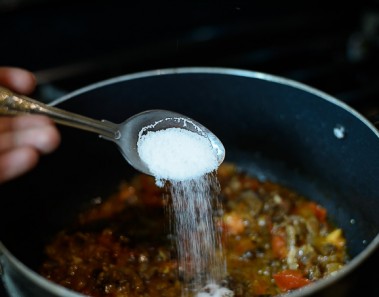
adding salt to stew

In many of the cases, water is usually added to the foods in a bit to reduce the salt concentration but this seems not to produce the desired result. To adequate remedy over saltiness, the following tricks could be adopted depending on your meal.

Add Some Slices Of Sweet Potatoes

This has been helpful and a few people who had tried it can attest to it. Have your potatoes sliced into big parts, rinse them and add into a salty soup. As the potato cooks, it will help absorb the salty water or solution of the soup thereby helping in balancing the saltiness. The potatoes can be removed after they had absorbed enough salt solution.

Add Some Liquid Milk

In fact, instead of adding some quantity of water particularly to soups and porridges, milk solution has been reported to perform and produce a better result in reducing the saltiness in the soups than water.

Rinse With Plenty Water

For boiled rice and yam, your best bet is to rinse the food over and over again to reduce the salt content before serving. In the case of meat, if you would eventually be adding them to a soup, you could avoid adding salt or cube seasonings to the soup. The salt in the meat might just be enough.

Add Some Quantity Of Sugar

This has to be carefully done to avoid excessive adding of sugar. Add sugar in small quantities and taste the food or soup to ascertain if there is a reduction in the level of saltiness. Once there is a remarkable reduction, it is advisable for you to stop adding sugar because excessive sugar in some types of food can ruin the original flavour of the food. The sugar to be added can be honey or white sugar.

Although the above-bulleted points are some of the tricks you can do to reduce saltiness in your meal, the most important thing is for you to remain careful as regards the quantity of salt you intend adding to your meals. That way there would be no need for these tricks.

ALSO SEE: The best time during cooking to add salt to food when cooking

Categories
Food Processing

(VIDEO) Tricks I Use To Remove Boiled Egg Shell Smoothly

Removing the shells of boiled eggs can sometimes be a pain. If you cook and eat eggs often, you would instantly understand what I am talking about. Nobody really likes an egg that has been bruised all around while trying to remove the eggshell. I have tried several tricks recommended by people in the past to smoothly remove eggshells but they all did not work every time.

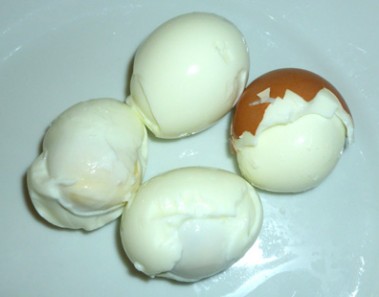
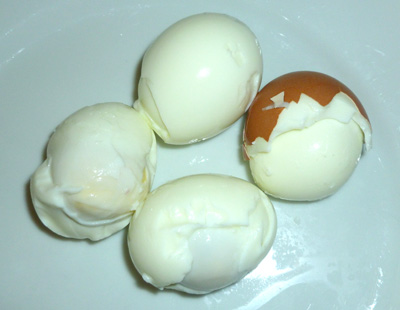
how to peel egg easily

This trick I am going to share with you works 100% of the time. I have used it over and over again but I never thought of sharing with you here on FoodsNG until some days ago when a friend visit and said “Wow, this is cool”, while I was trying to remove the shells from two eggs I boiled. This was when I realized I should share it with more people.

So, how do I smoothly remove the shell from my boiled eggs?

Steps for smoothly peeling boiled eggshells!

First of all, you must have at least two boiled eggs to remove shells from. Boil your eggs and make sure they are hard enough before you take them off the burner.

Take a bowl of cold water and put these eggs in there, immediately after taking them out of the cold water.

Now, get a glass cup and fill about half of it with cold water

Put the two eggs in the glass cup and use your right hand palm to cover the open end

Place your left hand palm below the cup and shake the cup as seen in the video above

Now, remove your eggs and smoothly peel of the shells flawlessly.

How To Easily Peel Eggs With Iced Water

It is advisable to use older eggs for boiling. If the eggs were previously in the refrigerator, bring them to room temperature before boiling. Now it is time to boil your eggs, make sure they are boiled enough and then turn the stove off.

Leaving the cooking pot on the stove with the eggs still inside the water. After 14 minutes, place the eggs into ice water and it should peel easily inside.

There is also the microwave option but this does not come without its own dangers. It is one of the reasons we are not going to talk about it in this article.

If you like this and try it out, share the outcome with us. Also, if you have any Food Recipes, Food Tricks and Hacks, share them with us by sending to foodsng2015@gmail.com and we shall post them on FoodsNG.com, BBM Channel and give you credit for it.

Categories
Food Processing

Differences Between Food Roasting, Baking and Grilling

Many people cannot differentiate between food roasting, grilling and baking, therefore, they use them interchangeably. This has led to the inappropriate use of these words — some know that they are different but just don’t care to know the differences while some others don’t know they are different food processing methods and mean different things.

In this article, we are going to explain the meaning of each in cooking and outline their difference. Maybe that “roasted corn” you say every time isn’t a result of roasted after all. While these cooking methods involving the use of dry heat are nearly identical in today’s kitchen and usage, there’ are still some few things that set them apart.

What are the differences between Roast, Bake and Grill?

I know this might come to many as a surprise, even though many people confuse grilling and roasting, it is actually roasting and baking that have more similarities. Grilling is very easy and should not be confused with any of the other two.

On the next pages, you will see the differences between grilling, roasting and baking of foods and examples of foods that we use each one for.

What is Grilling?

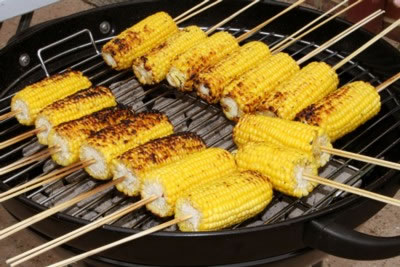
The grilling of food involves the application of dry heat from either below or above in order to cook food. Now think of those foods that you process this way — you are grilling them and not whatever name you have been calling it before. The heating of the food is by radiation.

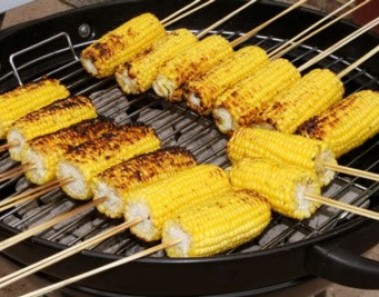
grilling maize

A very common food we apply grilling to is meat where the meat to be cooked with dry heat is provided with high and direct heat from below with the help of smoking wood or hot coal or charcoal.

In countries like the United States and Canada, if the heat used to cook the food is provided from above, the process of cooking is called broiling. It is important to note that grilling pans are now used these days. The method of heating here is by conduction.

Common foods that we grill include meat and corn. So, do you think calling “roasted corn” by that name is right?

Roasting Vs Baking

The structure of the foods and the type of foods are the major factors that distinguish these two processing methods. Roasting involves cooking foods that already have a solid structure and shape outside the container before the cooking process starts at all e.g. meat and vegetables. Baking, on the other hand, involves foods that lack the definite structure before heating, then become solid during the cooking e.g. cake and bread.

Foods that are roasted are done in an open, uncovered pan, while food items that are baked may be covered and done inside an enclosed oven area or equipment. Also, the temperature for roasting is higher than involved in baking — about 205 degrees Celcius compared to about 175 degrees Celsius.

Now don’t get roasting and grilling confused because roasting is done in front of or over a fire or bed of coals while grilling involves placing food on a grill situated a few inches over the charcoal, where the intense heat cooks foods quickly. Roasting takes place at a slower pace since the food is not that close to the heating charcoal.

roasting chicken

Since grilling is fast, it is possible to end up with a food that is ver brown outside and a bit uncooked inside, this is not the case with roasting as it makes use of slow heat over a long period of time.

Categories
Food Processing

Meat & Soup: At What Point of Cooking Should Salt Be Added?

Chefs all around the world have contradictory views as regards the timing of adding salt to foods during cooking. In fact, there is no record of any research that has shown and proven which time of salting is healthier or appropriate. Based on the controversies, I have decided to join the chain of food professionals to share my opinion in line with my training and experience as a food scientist.

adding salt to stew

Salting For Different Types of Food

I have also discovered that the process of salting actually differs for different foods but this time, my decision is only to write on these two meals (Meats and Soups) since they are regularly cooked in most house holds on daily basis. Before the emergence of refrigerator and other forms of preservation of foods, historically, the primary reason for adding of salt to food was for preservation. Flavour and taste was a secondary purpose. Lets see the appropriate timing to add salt to the two meals.

When, During Cooking Should You Add Salt To Meat?

I do not know if it is because we want to get things done quickly or it is the better way; what I see mostly is people adding salt to meat from the very start in addition to other additives like onions, MSG and other. When this is done, it tends to harden the meat. The addition of salt raises the boiling temperature thereby reducing the cooking time but less natural meat flavour is released as salting closes the pores of the meat.

Hey friends, I am particularly interested in the flavour of the meats when I am cooking. For me, I have adopted adding salt to my meats almost at the end of cooking. It provides an opportunity for the natural flavours of the meat to be produced. It also helps in reducing the amount of salt to be added which is healthier for high blood pressure patients.

ALSO SEE: Effect of too much salt on the body!

Salting of Soups and Stews:

The idea of adding salt at the start of cooking soups is fairly common among students but gradually creeping into the method of cooking by many house wives. In fact, it was in the University that I first notice this. Students are always in a rush. When you add salt at the start, as the soup thickens, only water is evaporated not salt, so you might likely end up with a slightly salty food as you would have added salt based on the initial volume of the soup.

It would be smarter to add salt much later into the cooking when the soup is almost at your desired thickness. That way, you will avoid salty food. Remember the daily requirement of sodium should not exceed 2300mg per day which is an equivalent of about 10grams of salt. To much salting due to adding at the start of cooking could raise your daily sodium level above 5000mg which is unacceptable.

ALSO SEE: How much salt is too much to consume per day?

I do believe some of you have contrary opinions and methods you have adopted for many years that have made your food a delight to your family. Please share with us if you agree or disagree with this write up.

Categories
Food & Body Food & Nutrition Food Processing

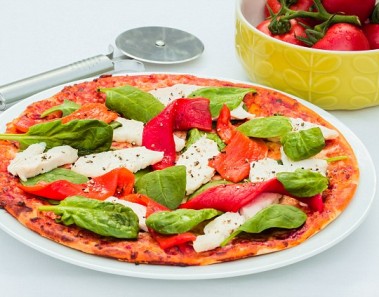
Behold! The Super Pizza That Burns Body Fat

How would you feel to eat as much Pizza as you want and not be scared of getting fat? Well, this seems a reality now as musclefood.com has come out with a Pizza recipe that does not only help burn fat, but also contains as much protein as three chicken breasts and 5 times less carbs than a standard slice. Should we call this a “SUPER PIZZA”?

This new development in Pizza processing has been making the rounds for some weeks now and I had to wait to see a lot of information about it before deciding to share with you. The manufacturers of this Pizza claim that you can now get slim by eating this pizza. I am waiting for more testimonies from people as much as you are. However, looking at the ingredients and composition of this pie, I would say their claims make sense.

pizza burning fats
Photo: dailymail.co.uk

This chicken and peppers pizza has 73 calories and 2.4g of fat per slice

One of the that have eaten this Pizza said:

I was a bit sceptical at first as I was expecting a dry and crumbly base but I was pleasantly surprised.

You can’t actually taste the difference from a regular pizza even though there’s protein in the base.

Composition of the Pizza

The online retailer, musclefood.com claims that the high protein pizza contains just 82 calories per slice. This is way below the calories of more than 300 in some fast food alternatives.

They also claim that it contains the same amount of protein as three chicken breasts and five times less carbohydrates making it perfect for people on a weight loss plan or those body building.

Darren Beale from Musclefood.com has the following to say:

High protein isn’t just for bodybuilders and fitness fanatics, it’s for those wanting to lose weight – increased protein keeps you feeling fuller for longer – and for those wanting to lead a much healthier lifestyle.

He continues;

We’re expecting these pizzas to be popular. Products like our high protein cookies and bread have flown off the shelves as soon as they’ve gone on sale and we’re expecting these to be the same.

The gluten and soy-free pizza comes in two different toppings, Chicken and Pepper, and Ham and Mushroom, with the pea protein base adding approximately 10g of protein to the pizza.

Here is a video from MuscleFood that teaches you how to make such low carb meat pizza. Click here to watch it now!

Categories
Food Processing

Some Funny Cooking Practices Done By People

Poor eating habits has been the major topic of discussion among many nutrition gatherings and symposia while neglecting the various cooking practices that many individuals have personalized thereby making them remain in the path of unhealthy living. It would even interest you to know how unconcerned these people are regarding their method of preparing certain meals and they keep neglecting whatever health issues this can result into.

Few days ago, I kick started a discussion in this area and I was completely shocked with the words spewing out from the mouth of some people, expressing the cooking practices performed by them. Let’s see some the very funny ones.

1. Adding Seasoning Like Maggi, Knorr To Beans

I was in a friend’s house, as we were discussion about football teams and matches, we heard a louder conversation from his neighbours in the ground flat. One of them who is a Hausa woman said with clear boldness that she can not cook beans for her family without adding 4 to 6 cubes of seasoning such as Maggi, Knorr, etc., with many containing Monosodium Glutamate. The other said she uses just two cubes. Immediately, we both became completely speechless. My friend later said she (Hausa woman) only has three children all below age 10.

Friends, food condiment like this does not have any nutritive value it supplies to our body. It is best to reduce the amount we add to our meals. Instead, use natural food condiments like ginger, garlic and onions that have been found to be helpful in human health.

2. Adding Sugar To Yam

Growing up in a family where we never used sugars in tea, pap, custard and garri, it became culture shock when I recently discovered that many house wives add some table spoons of sugar to yam when cooking in their quest to make it sweet. I can only laugh in Ijebu.

Yam is a calorie dense food. Adding some sugars to it will only increase the calorie. No wonder the sudden rise in the cases of diabetes. For me, it is only a bad cook who does this. I stand to be corrected.

3. Frying Two Eggs With A Whole Bottle of Oil

This apparently sounds like an exaggeration but the truth has to be told. During my undergraduate days, a friend of mine appeared to have made a joke out of this – he was serious. He explained how a lady fried 2 eggs for him with close to a bottle of vegetable oil. Then, I never believed him until something of same extent happened to myself and a friend when we both visited a lady who obviously wanted to impress us. Sincerely, it was in the ratio of two eggs to 1 bottle of vegetable oil. We managed to eat three slices of bread each. As she steps out to pick her clothes when it was drizzling, I quickly rushed to drain the oil. No wonder she is overweight.

4. Adding Salt To Garri

This does not taste nice at all. I cannot fathom why anyone would do this. You would probably think this is an habit for the young children but as I surprised to hear of individuals who still do this. There has been a lot of campaign concerning the effect of consuming high amount of sodium. Yet, some people still indulge in this habit of soaking garri of all foods with pinches of  salt. Haba…..Take am easy.

No doubt, some of you are practicing some or all of the above listed habits. The need to avoid them is critically important as they can lead you to unwanted debilitating health conditions. As a practicing nutritionist, the conditions I see and hear of on daily basis are scary and some of these unhealthy habit could be the leading cause.

You could share some other ones you do or you are aware of.

Categories
Food Processing

[REVEALED] How You Slaughter Animals Makes Meats Tender or Tough

Did you know that the way you slaughter your animals contributes to how tough or tender the meat would end up? Did you also know that if you slaughter your animals the proper way, you end up with meat with good quality that lasts longer. Well, now you know.

There are other factors that contribute to the quality and toughness of meat – some of which are, the age of the animal before slaughter, how the carcass is handled after slaughter and the part of the animal the meat is cut from. Some parts have more specialized muscle because they were used very much more than others. I will talk about these in other posts.

Beef is the meat from Cattle, see names for goat, sheep, others

I am emphasizing on this slaughtering because, as consumers, it may be the only thing we could control; that is even if we buy the live animals to slaughter ourselves.

man eating tough meat
Photo: bootsnall.com

So, let’s explain what causes toughness of meat?

In this post, I am going to be showing to you, how the slaughtering method you adopt can affect the quality of your meat. I will try to put up an article on the proper methods of slaughtering that we should adopt very soon.

Firstly, stress before slaughter in particular causes meat to be tough. The best meat cuts on an animal can be made tough by stress, and an older animal can have relatively tender meat if it is docile, handled and slaughtered without it becoming stressed. If we could reduce the stress we subject the animals to during transportation yarding, handling and slaughtering, we will end up getting a meat that is not only tender, but also has a longer shelf life.

If we still remember our high school biology very well, we would recall that the energy required for muscle activity in live animal (including humans) is sourced from stored sugars (glycogen) in the muscle. In any healthy and animal that is not stressed, the glycogen content of the muscle is high because it was not used up. Animal that is stressed will require sugar for movement activities, using a lot of stored glycogen.

After the animal has been slaughtered, the glycogen in the muscle is converted into lactic acid, and the muscle and carcass becomes firm (rigor mortis). This lactic acid is necessary to produce meat, which is tasteful and tender, of good keeping quality and good colour. If the animal is stressed before and during slaughter, the glycogen is used up, and the lactic acid level that develops in the meat after slaughter is reduced. This meat is of inferior quality because it has less pronounced meat taste and dark in appearance.

This kind of meat is less acceptable to consumers and has a shorter shelf life due to the abnormally high pH-value of the meat (6.4-6.8).

To conclude, when next you want to slaughter any animal for whatever purpose (festivals, parties, etc.), make sure you rest the animal well enough and give it water to drink before you slaughter.

See why you should stop buying meat the way you presently do…

Categories
Food Processing Knowledgebase

Should Rice Be Washed Before Cooking? The Myths & Truths

Many people have had this questions on their mind for a very long time. I have even seen some arguments about it among my male friends who try to know if it makes sense to wash or rinse rice before cooking. Those that wash rice prior to cooking try to explain that it is the right thing to do while those that don’t think it does not make sense but they have all been lazy to do a Google search on it at least to see what experts are saying. We are going to address this topic in this post today to make things clear to us.

So, Is It Necessary To Wash Rice Before You Cook It?

This is not a straightforward questions, so I would answer YES and NO. You ask why? Often, we only do things because that is the way it has always been done and do not bother to ask, “why?” Such is the case with the issue of rinsing of rice in water before we cook. Some people even soak or parboil the rice and change the water after some minutes of cooking – like we recommended you do with beans if you don’t want it to make you fart after eating.

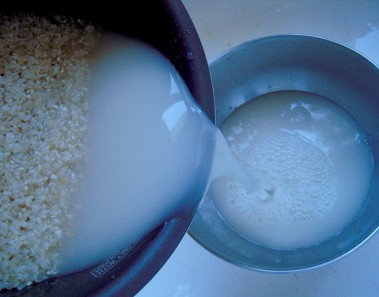
washing rice before cooking
Photo: blog.umamimart.com

To explain my YES to prior washing of rice...

Rinsing rice has been done for ages to rid the grains of surface starches, prevents clumping, and yields a clean, fresh taste. If you rinse rice very well, the cooked rice will have a reduced likelihood of clumping together because you have removed some of the total starch present (surface starch).

Some types of rice from some parts of the world are processed with talc -a mineral made up of hydrated magnesium silicate in order to give it a whiter and cleaner appearance. These types of rice need a rinse to remove this talc. Sometimes when rice has been packed and stored for long, you see some kind of dust on their surface when you take them out, washing will get rid of dusts like these and sometimes few weevils in the rice.

To explain my NO, which also answers “if you wash nutrients away when you wash rice”…see page 2 (click 2 below).

Categories
Food Processing

Solution For Yams Turning Yellow, Brown When Peeling

Without doubts, I have also been bothered by this scenario each time I find myself in the kitchen to cook Yam. It was always dissatisfying noticing the discolouration that suddenly happens under my very eyes within seconds (they turn yellow, brown and sometimes black). Yam had been a major staple for centuries providing energy and other nutrients for the African people and beyond.

With its more than 600 documented species; edible and inedible, it remains a difficult task to identify which one would turn yellow, dotted green, brown or black during peeling.

Popular species of yam include Dioscorea alata (Water yam), Dioscorea rotundata (White Yam) and Dioscorea bulbifera (Aerial Yam). Many mothers and women have been forced to opt for other tubers or avoid yam in their diet because of this sudden reaction. Before writing this piece, I took the time to carry out a simple finding by speaking with mummies and grand mummies on the best ways to avoid discolouration of Yam during preparation and all the women gave their opinions about it. Quickly let’s check some of their advice.

"Photo

Advice: Preventing Yam From Changing Colour While Peeling, Cutting

1. A few of the women said the best way to avoid yam discolouration during peeling is to “shine your eye well” when buying. They insisted some Yam types are naturally coloured and so there is nothing you can do to avoid obtaining a coloured yam. An example is a yellow yam with botanical name Dioscorea cayenensis which is a result of carotenoid in it. Try to peel the yam slightly with your finger and see if any discolouration quickly occurred when you are still at the market. If it does do not buy the Yam. It is best to buy only white yam.

2. The common one that more than 70% of them subscribed to is peeling the yam and submerging quickly underwater immediately. Some of them said they go further to peel the Yams beneath the water. I am aware that once yam is peeled and exposed to air, it is bound to undergo oxidation which causes discolouration. This, however, depends on the specie of the yam as some species do not change colour rapidly on exposure to air. White Yam remain same after exposure to hear

3. Some of the women then insisted that over the years they do not bother keeping their yams in store to be prepared when they want to eat it. They went further to say that once they had purchased the Yams, on getting home; they slice and peel off the entire yam tubers, quickly cut them into sizable portions under water, place them in a plastic container and keep them in the refrigerator to be picked whenever needed. They said keeping Yam tubers on bare floors and staying longer period before consumption may affect their colouration when peeled. Those fresh yams do not discolour like others that have stayed longer periods in storage. There is no scientific proof to this but if you do not mind, give it a try, it does not hurt.

When you look at the second opinion scientifically, I would opine that it really makes sense and it’s something I have tried myself too – it works but not 100% most times. There are times that the discolouration would just be mild but remains white at other times.

Yams contain enzymes that, on exposure to atmospheric oxygen react to give a brown colouration. When you immediately put yam underwater after peeling, you minimize the exposure time for this reaction. I have used warm water with great success.

You may want to ask, “What is different with warm water?” Let me tell you how using warm water has a place in science – oxygen dissolves in water and the amount of dissolved oxygen that the water can hold depends on the temperature and salinity of the water (how much salt there in the water). Coldwater can hold more dissolved oxygen than warm water and freshwater can hold more dissolved oxygen than saltwater.

I am certain a reasonable number of you would have other methods you practice to avoid yam discolouration. Do not hesitate to share those ideas. Thank you!

ALSO SEE: Prevent Your Cut, Leftover Yam From Growing Mould

You should subscribe to our FREE updates if you don’t want to miss any of this information!!!

Categories
Food Processing

How To Cook Beans So You Don’t Fart After Eating

Let me first of all make something clear before I start discussing about the topic of this post. We all call the common bean (Vigna unguiculata) that we eat beans, beans – but beans is a is a common name for large plant seeds of several genera of the family Fabaceae (alternately Leguminosae) which are used for human or animal food. The common one that we eat is called Cowpea. It has a number of common name such as crowder pea, blackeyed pea, southern pea.

Beans generally are rich in protein, while many of them are high in fiber and antioxidants. Beans are good for reduction of our waistline as well aid in disease prevention. Despite all these benefits, which many people are aware of, a lot people want to stay clear of Cowpea because they start farting or passing out gases after eating it. This does not have to be so because there are ways that you can cook your beans, such that you won’t have to be clearing the room hours after.

cooked beans
COMING SOON: Many Benefits of Beans That Make Them Superfoods

Before I talk about the methods that you can use to cook beans to prevent farting after, let me explain in clear and concise terms what causes this flatulence. Beans contain a class of carbohydrates called Oligosaccharides (e.g. raffinose and stachyose), some of which cannot be processed by our digestive system.

When we eat beans and they get to our intestine, the Oligosaccharides remain there as we do not have the enzymes or any other thing whatsoever to digest the. After the Oligosaccharides pass into our large intestine, the bacteria present there start to break them down. During the process, the bacteria release several different types of gases, mainly hydrogen, nitrogen and carbon dioxide. About 33% of these bacteria also end up producing methane and this is the one that smells.

Click below to pages 2 and 3 below to see the tips for cooking beans so that you don’t pass gas after eating…

Categories
Food Processing

3 Tricks That I Use To Cut/Dice Onion Without Crying

I like eating onion in foods a lot but I just always had difficulty in enduring those eye stings and keeping the tears from rolling. It’s really really hard. I have know about this delicious and nutritional onionegg recipe for quite a while now but it was always a struggle to cut all the onions needed. This stopped being so when I discovered these three tricks that help me cut and dice onions without tears. I am going to share them with you in this short article.

Suggestions On Cutting Onions Without Crying

I have read a lot of recommendations on various articles on the internet – some were as dumb and whatever you could think to be the dumbest but I did them anyway with no success. I was the one looking for something. I even read articles where several people claimed the recommendations worked for them while some said it worked but only felt slight stings.

onion dicing


At a point, I started feeling different things might work for different people and with different varieties of onion, so I kept reading and experimenting.

Some of the tips I know you must have come across before include “cut the onion while holding your tongue to the roof of your mouth”, “light candles before cutting the onion”, “chew gum while cutting the onion” and many more like that. The second one appears dumb right? I feel so too.

How I Cut Onions Without Crying/Feeling Sting In My Eye

I did not get lucky with any of those recommendations but I kept trying until I stumbled upon these three that I now use till today. You can give them a try too and see if they work for you.

1. Freeze or Refrigerate The Onion

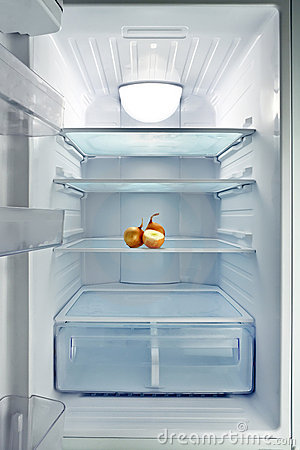
I noticed that whenever I pick onion out of the freezer and cut, I never felt the stinging sensation that happens in the eye and there were no tears. I though this just happened by accident, then I did an experiment on it. I took the same type of onion, put one in the freezer and cut the other immediately.

I cried when I cut the onion like that but when I brought the other one out of the freezer and cut, it was painless and tear-free.

onions in refrigerator

When you want to do this, do not allow the onion to be too frozen to make it hard. This will make it hard to cut and even destroy the tissues.

Another interesting tip on page 3 (click below) …

2. Keeping The Onion In Water

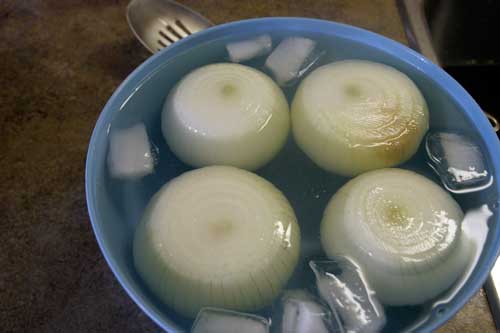
I noticed this one when I used the vegetable grater for a period of time. During this time, I grate pepper, tomatoes and onions to make my rice stew; and to garnish when cooking spinach. When I want to do this, I get a bowl and put all the pepper, tomatoes and onions in the water and put one by one in the vegetable grater. I would take the onion last because I was scared of what would happen to my eye.

RECOMMENDED: See What Causes Us To Cry When Peeling Onions

The I would notice that nothing happened or I simply just felt little pain in the eye towards the end of grating.

onions under water

Later, I started putting the onions in the water like 30 minutes before I grate and it has been working for me ever since.

3. I Cut It Under Water

I actually read about this one online and I gave it a trial, it worked. If I don’t really have the 30 minutes luxury to soak the onion in water, I simply adopt this method. What I do is to get a big bowl of water, get my knife and onion, dip both my hand in the bowl full of water and cut the onions therein.

Some have argued that useful components of the onions are leached into the water. I think that there are prices to pay when you do stuffs like this. If you want to get all the nutrients and other components of your onion, then be prepared to cry for it.

Finally, some women have told me that they have noticed that tears do not come out and their eyes don’t burn when they wear contacts and cut onions. I have heard this from more than six women. I have not tried this but I think it is worth giving a shot.

Tips and tricks recommended by FoodsNG readers…

Bethel:

Chewing gum while peeling onions also stop someone from crying

Frances:

First cut out a small onions and put in ur mouth before cutting d rest. Close ur mouth while cutting others. It works like magic

Teresita Cunanan:

Wipe the chopping board with vinegar before you slice the onions

Uby:

Rub salt round the onions and cut it. No drop of tear will come out. It helps

Please, if you have any other trick that you use with success, please let us know by dropping us a line in the comment section. You can also check what others have written there too. Thank you!

ALSO SEE: Onions And 4 Other Foods That Help Reduce Belly Fat

Categories
Food Processing

The Unknown Dangers of Fried Foods & Re-using Oil

Hello friends, it is really my delight to write on this topic as I have had loads of families, friends and clients call me to find out what the real truth is about fried foods. There had been contradicting views from different professionals in the field of nutrition and body health on the benefits and dangers of consuming fried meals. While an ample of information is readily available for you to digest on the internet, a few of them are people and region specific which might be completely wrong for you to apply.

Are there healthy fats, which ones are dangerous?

Fats in the past few years had been labelled as a complete terror which have cause many illnesses and diseases. While these claims are true in a sense, it is clear without doubt that healthy fats exist and should be included in your diets. Omega 3 and Omega 6 fats found in fish, fish oils and some plant based foods need to be included in your diet at recommended daily intake. Usually at least 20 percent of your daily meals should include healthy fats.

frying chicken

For individuals who cannot give up on fried foods, it is important to make use of healthier oils. Unsaturated oils like canola, corn, peanut, soya bean oil should be used to fry your foods. These oils add fewer calories to the food than the regular hydrogenated oils which is commonly used especially in developing countries.

Categories
Food & Nutrition Food Processing

How To Maximise The Nutrients In Your Vegetables

It is no longer news that including two to three servings of vegetable into your daily meals is the way to follow as regards good nutrition. The need for this kick started when the pattern of people’s diet is being monitored and had been found to be void of vegetables which is a super detoxicant. In fact there had been some unhealthy trend recently noticed among others who include vegetables into their diets.

Most of them do not prepare these veggies appropriately such that the nutritive values inherent are not lost. While a few vegetables can be eaten in their raw state, others had to go through some certain food processing before they are ideally edible. It will interest you to note that a meal loaded with vegetables has been found to reduce the risk of debilitating diseases such as heart attacks, high blood pressure and some degenerative cancers due to its abundance in vitamins, minerals, fibre and phytochemicals. The benefits of a vegetable in diets cannot be over emphasized.

vegetables all

Learn How To Minimize Loss Of Nutrients In Vegetables

There are some vegetables that should be cooked in order to maximize their nutritional benefits while others are quite susceptible to heat especially those containing loads of Vitamin C and some other B Vitamins (Water Soluble Vitamins). If you can identify these vegetables, it will help you identify which you can eat raw and those to subject to low heat treatment.

The argument has been on for a while among nutritionist and food scientists about the best method to adopt. For example, the lycopene in tomatoes is more bioavailable when it is cooked than in its raw state. Also, the beta carotene in carrots becomes more released if it is cooked. While all the water soluble vitamins may have been diminished, other phytochemicals will be released. The best way to ensure retainment of nutrient is to slightly cook them to avoid complete loss of water soluble vitamin while bringing about the release of antioxidants and phytochemicals.

When you cook your vegetables ensure the water is used. For instance, it is better to cook your potatoes in porridge form while utilizing the water since some micro nutrients could have been leached into it. In fact a few others prefer cooking it with the peels after it must have been properly washed. The water is discarded but the peels keep most nutrients within.

For fruity vegetables, juicing them up could be a good idea but one must ensure minimal loss of fiber which is helpful in proper digestion. On the other hand, leafy vegetables should be blanched (placed into hot water 60°C for 45 seconds and scooped out) to enhance release of phytochemical. Mistake should not be made to overcook them as you will completely lose the nutritive values. You should also avoid chopping them before washing. More nutrients will be lost in the dirty water.

Quick Hints On Proper Vegetable Preparation

  • Avoid overcooking them; ensure they still possess their qualities like colour and a bit of crunchiness depending on the vegetable.
  • For most vegetables avoid peeling them if possible. Some micro nutrients are loaded in the peels.
  • When making a pot of vegetable, be certain to cut them all about the same size so they cook up in the same amount of time under low heat.
  • Learn to wash your vegetables immediately after return from market or grocery stores before they are chopped.
  • Blanching is a good method to heat-treat your vegetables in order to make them retain more nutritive values.
  • Cook only vegetables that will be enough for one time servings. If excess remains, keep in a refrigerator not for more than 36hours.

ALSO SEE: Why Don’t You Just Stop Eating Vegetables (Efo)?

Categories
Food Processing

Why Don’t You Just Stop Eating Vegetables?

Two of the most commonly eaten and cooked vegetables in Nigeria are Celosia argentea var. argentea or Lagos spinach (Efo Soko) and Amaranthus hybridus (Efo Tete). These vegetables are very rich in nutrients and they do a lot in our body.

efo riro
Photo: lohiscreations.com

For example, 100g edible portion of Celosia argentea contains; water 83.8g, energy 185KJ (44kcal), protein 4.7g, fat 0.7g, Carbohydrate 7.3g, fiber 1.8g, Ca 260mg, P 43mg, Fe 7.8mg. This vegetable also contains micronutrients and is especially rich in Iron, vitamin A and Vitamin C. It also contains phytic acid. These figures are telling us that this vegetable is very rich in important vitamins and minerals.

The benefits of eating vegetable with these nutrients

Calcium is essential for blood clotting and stabilizing blood pressure. It contributes to normal brain function and it is critical for communicating essential information among cells. Calcium is needed in our body for the release of chemicals that transmit a signal from a nerve cell to a target cell (e.g., when a nerve tells a muscle to move). Many people may not even know that calcium helps in reproduction/fertilization by assisting the movement of sperm into an egg to fertilize the egg.

I am not going to talk about what each and every one of these nutrients do in the body as that is beyond the scope of this topic. The benefits above are just those we derive from consumption of Calcium alone; and Calcium is just one of the nutrients available in vegetables.

These vegetables, Celosia (Efo Soko) and Amaranthus (Efo Tete) are very rich in minerals and some vitamins and we eat them a lot. The unfortunate part is that we don’t get these nutrients by the time we eat them – that is the case in this part of the world. Why is that?

Why we lose all nutrients in vegetables

Vegetables such as Celosia and Amaranthus are not to be overcooked but that is exactly how we cook them. Some of the nutrients listed above here are heat-labile (lost when subjected to high temperature), so overcooking them means they are gone before they even get to your table.

Boiling vegetables in water at high temperatures is not a good practice, nutrients are lost in the cooking water and since you are not going to drink the water, the nutrients are wasted.

How Should Vegetable Be Prepared?

If you want to cook Celosia and Amaranthus, the best practice is to boil your water and pour on your vegetable just to blanch it. This will kill many microorganisms on the vegetable, inactivate enzymes that could cause spoilage and soften it to make it edible.

If you want to add your vegetables to pepper, tomatoes, and onions, make the stew separately and add your blanched vegetable to the stew. Mix them together and you would notice it even tastes better than the one you overcook.

This is the best way to enjoy the taste and nutrients in your vegetables. If you cannot prepare it this way…why don’t you just stop eating vegetables totally? Am I angry? Yes, I hate when people overcook vegetables.

ALSO SEE: How To Maximize The Nutrients In Your Vegetables

Categories
Food Processing Food Safety

Is It Safe To Consume Irradiated Foods? Answers!

“When food is exposed to high doses of ionising radiation, the chemical composition and nutritional content of food can change. Radiolytic by-products are often formed in irradiated food. Very few of these chemicals have been adequately studied for toxicity. One such chemical – 2-DCB – can cause DNA damage in rat colon cells at high doses.” This is just one of the numerous claims I came across in an article titled “Food Irradiation – the problems and concerns” on www.foodcomm.org.uk.

I am a graduate of Food Science & Technology and I studied Food Irradiation a little extensively at Masters level. I read a lot of reports and I know that consumer perception of foods treated with irradiation is more negative than those processed by other means. As a Food Scientist, I know that every food processing method changes the composition of our food material, loss of nutrients, binding of different components and/or formation of toxic substances in food.

irradiated foods
Photo Credit: doctorfeelgood.co.nz

The Important Benefits of Irradiating Food Materials

Before I address the issue of whether irradiated foods are safe or not, let me tell you why we irradiate foods and what advantages it comes with.

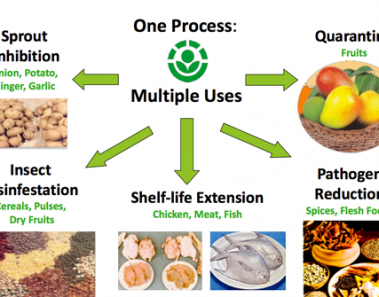
  1. We irradiate our foods to prevent food-borne illness. During irradiation, the genetic materials of illness-causing microorganisms in our foods are destroyed.
  2. Irradiation is being used to destroy or inactivate organisms that cause spoilage and decomposition of food. This extends the shelf life of foods.
  3. Irradiation can effectively replace the use of pesticides to get rid of insect pests in tropical fruits. Irradiation destroys insects and their eggs in fruits, thereby preserving the food material.
  4. Irradiation can also be used to prevent sprouting in food such as yam, potatoes, onions and delay ripening of fruit to increase longevity.

Irradiated food is a cold process unlike pasteurization and other thermal processes: hence the food is still essentially “raw or fresh”, because it hasn’t undergone any thermal process.

To cap it all, food can be subjected to irradiation to make them sterile for people with very poor immune system to consume. People who have poor immune system would have complications when they consumed food with even mild contamination. Irradiation can create the appropriate and essential foods for them.

Are irradiated foods safe or should you avoid them?

Let us get the the issue of whether it is safe or not. As far as people like me are concerned, food irradiation is a processing and preservation technique with similar results to freezing or pasteurisation. I have read many arguments for and against food irradiation – research has shown that when food are exposed to the right amount of dose, they are safe to consume. This is just like taking prescription drugs; there is dosage and when you take more than the right amount of dose, problem starts.

Also, the exposure time matters a lot. This is the length of time for which a food material was exposed to radiation treatment.

The opponents of irradiated foods have not been able to prove that irradiated foods will cause adverse health effects. What they all say is that “science has not been able to prove that irradiated foods do not cause adverse health effects after long term consumption”.

Studies have shown that foods are not significantly changed in nutritional value and they don’t become dangerous as a result of irradiation. For example, at irradiation levels approved for use on specific foods, levels of the thiamine are slightly reduced, but not enough to result in vitamin deficiency. This occurs in other forms of processing where heats destroys nutrients,  vitamins are leached when we cook in water and so on like that.

Let me use this opportunity to make it clear that irradiation does not make food radioactive. In food processing, the radioactive sources permitted do not generate gamma, electrons or x-rays of sufficient high energy to make food radioactive. Radioactive energy does not remain in food after treatment.

To conclude my argument for irradiated foods, the FDA website states on irradiated foods: “The FDA has evaluated the safety of irradiated food for more than thirty years and has found the process to be safe. The World Health Organization (WHO), the Centers for Disease Control and Prevention (CDC) and the U.S. Department of Agriculture (USDA) have also endorsed the safety of irradiated food.”

ALSO SEE: Click Here To Know If You Should Stop Eating Microwaved Foods

Your Own Take On Irradiated Foods…

You can tell me what you think about irradiated foods or ask any questions using the comment section on this page.

Please note that irradiated foods can easily be identified in the market and you can decide if you want to buy and eat them or not. How do you identify irradiated food? Just click here to see what they look like.