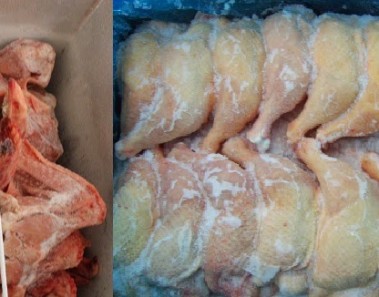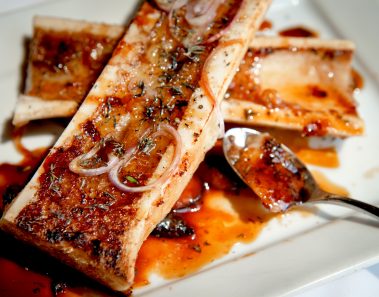
Bone marrow is the soft mushy stuff we find inside bones when we break them open. It is something some people in many parts of the world would not leave untouched after eating the meat attached to the bone.
In this part of the world, many would use their pre-molars and molars to crack open bones to get access to the bone marrow. Many people suck out bone marrow not because they think it has health benefits but just to get the taste of it.

While it is easier to crack the bones of poultry (chicken, turkey, etc.), it could be quite herculean to do the same for bones of animals like cow, sheep and goats. As hard as the bones of such animals can be, some people would stop at nothing to the marrow. However, the question poses itself, is it really worth the trouble?
ALSO SEE: Every Animal Meat Is Not Beef! See All Their Names
So, Are There Any Health Benefits To Eating Bone Marrow?
We asked in the last paragraph — is the trouble of cracking bones to eat the bone marrow really worth the trouble? Well, I think I would say yes. But cracking with your teeth? I wouldn’t be so sure. Below are the benefits you derive from eating bone marrow;
Bone Marrow Helps Build Immunity Against Diseases
For me, one of the most important benefits of eating bone marrow. Immunity to diseases is really a great blessing and something we strive to achieve every day. Bone marrow contains myeloid and lymphoid stem cells. The foundations for red and white blood cells, these cells build immunity and help provide oxygen to cells.
Blood Clotting & Healing of Wounds
Bone marrow assists in blood clotting. It contains Collagen, the protein-rich substance which when subjected to heat, cooks down to gelatin. This can also help repair the body.
ALSO SEE: Foods that help heal wounds fast!
Cindy Micleu, instructor at the Jade Institute complementary healing center says, Collagen deficiency can lead to poor wound healing, easy bruising and bleeding gums. Collagen in bone marrow can help the body rebuild itself.
Using Bone Marrow For Fighting Cancer
Dr. Astrid Brohult, a Swedish oncologist conducted extensive research on the administration of calves’ marrow to children with leukemia. In the initial stage of her test, she was hoping it would replenish white blood cells destroyed by radiation therapy.
Some of the children administered the bone marrow improved immediately with many experiencing increased energy and white blood cell normalization. After her extensive research, Dr. Astrid Brohult eventually isolated a group of compounds that are known as alkylglycerols (AKGs) in the calves’ marrow. She discovered they were the reason for the important process of normalizing white blood cell production.
Bone marrow contains conjugated linoleic acid which is known as a potent cancer inhibitor.
A Good Source of Essential Fatty Acid
Bone marrow is a good source of essential fatty acids. Thinking that bone marrow contains a high percentage of fat — about 96 percent. One would normally ask about the composition of the fat. What kind of fats are contained in the marrow? Ones with healthy fatty acids?
Bone marrow contains less amount of polyunsaturated fat. Bone marrow is a great source of omega-3 fatty acid which is essential for the proper functioning of the brain. Bone marrow is also a good source of glycine. Glycine is an amino used to make and repair other proteins in the body.
With all these said, one could conclude that cracking bones open and eating the bone marrow isn’t a bad idea after all.