Categories
News

Coca-Cola, Fanta Orange, Sprite Made In Nigeria Declared Unsafe In UK

A Lagos High Court sitting at Igbosere has ordered the National Agency For Food and Drug Administration and Control (NAFDAC) to order the Nigerian Bottling Company (NBC) Plc to put a written warning on Fanta and Sprite bottles stating that both soft drinks are poisonous when consumed along with Vitamin C.

The court also held that NAFDAC failed Nigerians by declaring, as fit for human consumption, products discovered by tests in the United Kingdom as turning poisonous when mixed with ascorbic acid (popularly known as Vitamin C).
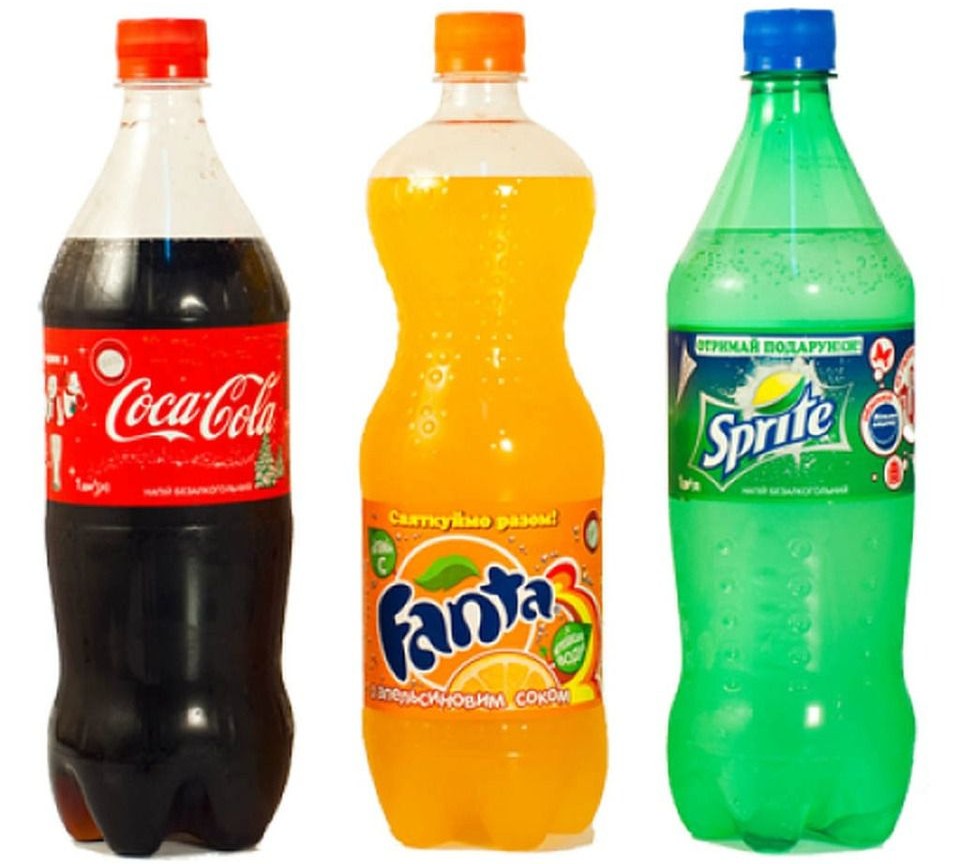
Coca-Cola, Fanta Orange, Sprite Made In Nigeria Declared Unsafe In UKIn the judgment given by Justice Adedayo Oyebanji, the court awarded a cost of N2 million against NAFDAC. The judgment was the outcome of a suit filed by a Lagos-based businessman, Dr. Emmanuel Fijabi Adebo, and his company, Fijabi Adebo Holdings Limited, against NBC Plc and NAFDAC.

Mr. Adebo, in the suit, urged the court to declare that NBC was negligent to its consumers by bottling Fanta and Sprite with excessive levels of benzoic acid and sunset additives.

The businessman also urged the court to order NAFDAC to carry out routine laboratory tests on all the soft drinks and related products NBC bottles to ensure their safety for consumption.

In the amended statement of claims filed before the court by Mr. Abiodun Onidare on behalf of Mr. Adebo and his company,  it was alleged that in March 2007, Fijabi Adebo Holdings Company bought large quantities of Coca-Cola, Fanta Orange, Sprite, Fanta Lemon, Fanta Pineapple and soda water from NBC for export to and subsequent retail in the United Kingdom.

But when the consignment arrived in the United Kingdom, health authorities in that country, precisely the Stockport Metropolitan Borough Council’s Trading Standard, Department of Environment and Economy Directorate, raised fundamental health issues on the contents and composition of Fanta and Sprite.

Findings by the United Kingdom health authorities were also corroborated by other agencies in European Union countries, which found the products to contain excessive levels of sunset yellow and benzoic acid, which are known to be carcinogenic.

On account of the irregularities and carcinogenic substances present in the drinks, Mr. Adebo and his company could not sell the Fanta and Sprite. This caused huge losses for the company, as the products were seized and destroyed by the United Kingdom health authorities.

The claimants equally alleged that NAFDAC did not carry out requisite tests to determine the safety of the drinks for human consumption. They averred that being registered as exporters with the Nigerian Export Promotion Council, they could legally export NBC products to any part of the world and that the bottling company was aware that the products purchased were meant for export.

In addition to other reliefs, Mr. Adebo and his company sought the sum of N15,119,619.37 as special damages and N1,622,000 being the money NBC admitted receiving from the claimants.

In its amended statement of defense, filed before the court by Mr. T. O. Busari, NBC admitted supplying the products, but contended that they are meant for local distribution and consumption, as it does not produce for export. It argued that Coca-Cola is manufactured and bottled by various Coca-Cola franchise holders in most countries of the world, including the United Kingdom.

The company denied that it was negligent, as it has stringent quality control procedures to ensure that its products are safe for end-user consumption.

NBC also rejected the allegation that the damages claimed by the businessman and his firm were caused by negligence or any fault on its part.  It argued that the levels of the chemical components in its soft drinks are safe for consumption in Nigeria and that the claimants are not entitled to the recovery of damages arising from their illegal exportation of products meant for local distribution.

NBC further contended that the  claims made by Mr. Adebo and his company were speculative, frivolous and vexatious and should be dismissed with substantial cost. NAFDAC did not file any defense.

To prove his case, Mr. Adebo personally testified. While being led in evidence by Mr. Onidare, he tendered 12 exhibits. NBC’s Sales Operation Manager, Mr. Micheal Nwosu China, and its Head of Central Laboratory, Mr. Abiodun Adeola Falana, both testified on the bottling company’s behalf and also tendered 12 exhibits.

In her judgment, Justice Oyebanji said: “It is imperative to state that the knowledge of the Nigeria Bottling Company that the products were to be exported is immaterial to its being fit for human consumption. The court is in absolute agreement with the learned counsel for the claimants that soft drinks manufactured by Nigeria bottling company ought to be fit for human consumption irrespective of color or creed.

“It is manifest that NAFDAC has been grossly irresponsible in its regulatory duties to the consumers of Fanta and Sprite manufactured by Nigeria Bottling Company. In my respective view, NAFDAC has failed the citizens of this great nation by its certification as satisfactory for human consumption products, which in the United Kingdom failed sample test for human consumption, and which become poisonous in the presence of Ascorbic Acid ordinarily known as Vitamin C, which can be freely taken by the unsuspecting public with the company’s Fanta or Sprite.

“As earlier stated, the court is in absolute agreement with the learned counsel for the claimants that consumable products ought to be fit for human consumption irrespective of race, colour or creed.”

Justice Oyebanji also held that by its certification as satisfactory, Fanta and Sprite, without any written warning on the products that it cannot be taken with Vitamin C, NAFDAC would have caused great harm to the health of unsuspecting Nigerians.

“The court, in the light of the damning evidence before it showing that NAFDAC has failed to live up to expectation, cannot close its eyes to the grievous implication of allowing the status quo to continue as it is.

“For the reasons herein adumbrated in this judgment, the court hereby orders as follows :

“That NAFDAC shall forthwith mandate Nigeria bottling company to, within 90 days hereof, include on all the bottles of Fanta and Sprite soft drinks manufactured by the company, a written warning that the content of the said bottles of Fanta and Sprite soft drinks cannot be taken with Vitamin C as same becomes poisonous if taken with Vitamin C.

“In consideration of the fact that this case was filed in 2008 and that it has been in court for nine years, costs of N2 million is awarded against NAFDAC. Interest shall be paid on the costs awarded at the rate of 10% per annum until liquidation of the said sum,” ruled Justice Oyebanji. Via: Sahara Reporters
Categories
News

iPhone To Detect Bacteria That Cause Food Poisoning?

The next impressive medical application on the iPhone could be a be a $250 organic chemistry laboratory. Yes, that is like having a food analytical laboratory in your pocket. This is very interesting and to those who might be doubting the possibility, I have this to tell you. Applications like this have been developed in the past.

There have been medical applications used to screen for skin cancer, manage diabetes, prevent blindness, provide eye examinations. We have seen applications on iPhones used to diagnose sleep apnea and even bipolar episodes. Isn’t this cool?

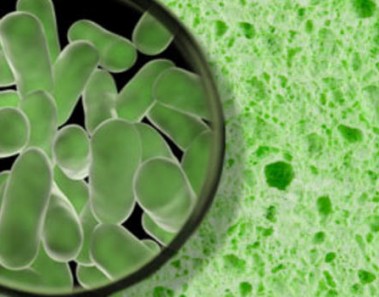
bacteria

So, What’s Up With iPhone Being Able To Prevent Food Poisoning?

It will interest you to know that 6SensorLabs already has a device that can detect whether a food is truly gluten-free. This you can do using a smartphone.

The Nima from 6SensorLabs is an organic-chemistry lab small enough to carry in your pocket. Right now it is only good for one thing: detecting gluten in foods at minuscule concentrations, as little as 20 parts per million, the FDA’s threshold for declaring a food “gluten-free.”

The company says that this could be just the start, with future versions able to detect the bacteria that cause food poisoning.

In the future, says 6SensorLabs co-founder and Chief Executive Shireen Yates, it could be adapted to recognize all manner of proteins—including ones that would allow it to recognize bacterial contaminants such as E. coli and salmonella.

SCiO from Consumer Physics of Israel says that it’s possible that its camera-based technology – used to identify substances by measuring the spectrum of light they reflect – could even be built into future smartphones. Via: [9to5Mac]

So, would you pay to get this application?

Categories
Food Safety News

European Union Bans Importation Of Nigerians Foods

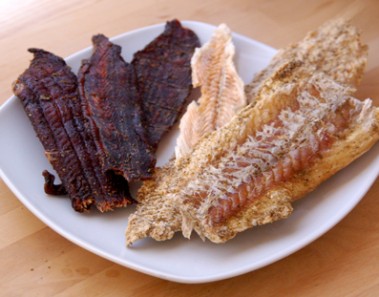
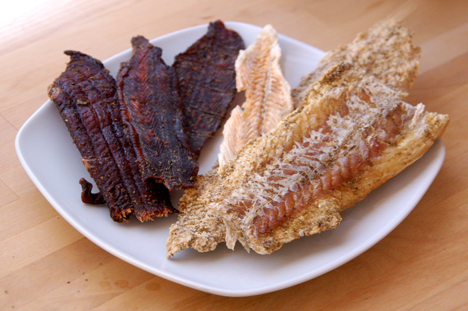
The European Union (EU) has banned some Nigerian foods from being exported into Europe, PunchNG reports. The food items banned from Europe till June 2016 are beans, sesame seeds, melon seeds, dried fish and meat, peanut chips and palm oil. This is a setback for a nation that desperately needs to expand its export basket to boost domestic agricultural activities and create jobs.

dried fish and meat

Why Did The European Union Suspend These Food Exports From Nigeria?

The first answer someone gave to is that “they hate us and don’t want us to prosper. They look for every opportunity to make us look bad.” I don’t know about this but what I know for sure is that they need these agricultural products for their own food too and would not want it to stop coming to them.

What is now the problem? Why did they ban these agricultural foods?

First of all, it is not that they hate us. They don’t!

According to the European Food Safety Authority, the rejected beans were found to contain between 0.03mg per kilogramme to 4.6mg/kg of dichlorvos pesticide, when the acceptable maximum residue limit is 0.01mg/kg. The embargo is a reflection of our inability to adhere to global standards, and this has come to haunt us at the international level again.

For some time, the EU has been warning Nigeria that the items constitute a danger to human health because they “contain a high level of unauthorized pesticide.” The pesticide is applied when the products are being prepared for export. The EU said it had issued 50 notifications to Nigerian beans exporters since January 2013. It is baffling that the Nigerian authorities didn’t take any significant steps to reverse the situation.

Likewise, the United Kingdom also issued 13 border rejection alerts to Nigerian beans exporters between January and June 2015.

The question on my mind is, “how do we preserve these foods for our own local consumption?” We really need to know this. Is it the same way as those we export? If so, don’t you think NAFDAC should ban the use of these pesticides too?

Paul Orhii, the Director-General, National Agency for Food and Drug Administration and Control said that exporters caused the problem by not complying with regulatory requirements for semi-processed and processed commodities.

What’s your take? Please share it with us! Thank you! ALSO SEE : NAFDAC Warns Against Eating Imported Chicken, Turkey

Categories
Food Safety News

NAFDAC Warns Against Eating Imported Chicken, Turkey

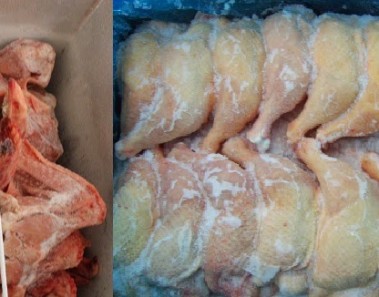
The National Agency for Food And Drug Administration And Control (NAFDAC) has issued a strong warning to people who consume imported or smuggled frozen meat such as chicken and turkey in Nigeria. NAFDAC Director-General, Dr. Paul Orhii, who gave the warning at a media briefing in Lagos, said that these foods have been implicated in non-communicable diseases (NCDs) and antibiotics resistance.

frozen chicken turkey

These diseases include cancer, kidney disease, and hypertension amongst others. He, therefore, warned Nigerians to stay away from imported frozen chicken and turkey because they have been discovered to be causative factors in these non-communicable diseases.

Dr. Paul Orhii said that these frozen products have been found to contain substances that can predispose one to kidney, liver and lung diseases as well as certain types of cancers and drug-resistant bacterial infections.

At the briefing, a study, titled “Prevalence, Quality and Acceptability of Frozen Poultry Meat in Major Cities in Nigeria” carried out by experts from the University of Ibadan titled “, was presented. It was made clear that importation of these products have been banned by the Federal Government, but some people still indulge in smuggling them into the country.

Dr. Orhii said that NAFDAC is discouraging people who patronize frozen meat such as Chicken and Turkey because they have been found to contain contaminants that are hazardous to human health. The contaminants can be formaldehyde, at times it can be a high level of antibiotics residue and other contaminants like heavy metals. “And that is why we are discouraging members of the public from consuming them.

The study, which Orhii referred to, was carried out by Prof. Olumide Tewe (lead researcher), Prof. S.S. Abiola (meat technologist), Dr. O.A Abu (nutritional enzymologist), Dr. C.I. Alarima (agriculture extensionist), Dr. O.A. Olabisi (public health specialist), Mr. S, Adelani (chief technologist) and Mr. R.A. Aromoye (administrative assistant).

Heavy metals (which have been found to be present in imported or smuggled meat) may cause toxicity-related mutagenesis (mutation), carcinogenesis (cancer) and other severe health hazards. Others (the result of heavy metals) are cardiovascular diseases, skin disorders, and neurotoxicity lung and nasal cancer in humans”. Excerpts: GuardianNGR

ALSO SEE: Top Reasons To Stop Buying Meat The Way We Do

Categories
News

Noodles Found To Be “Dangerous & Hazardous” Withdrawn From Market

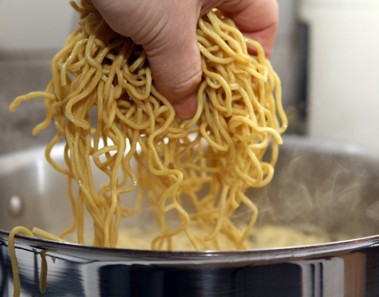
Nestle’s Maggi Noodles has now been withdrawn by East Africa’s biggest supermarket chain from five different countries (Kenya, Uganda, Tanzania, Rwanda and South Sudan) after news of a partial ban on the product emerged from India. Regulators in India described the product as “unsafe and hazardous”.

Food regulators in India said that tests carried out on the Nestle’s Maggi noodles revealed high lead levels in the product, describing it as “unsafe and hazardous”. This led to a ban on the product in several states of the country.

Following public pressure, the Kenya Bureau of Standards (KEBS) has grudgingly acted on the lead-poisoned Nestle “Maggi” noodles and issues a verbal recall after which Nestle was asked to recall the product.

Although Nestle maintains that there is nothing wrong with the noodles, claiming to have tested a batch of 1,000 Maggi noodles in the country and found “lead levels… well within the limits specified by food regulations”, more supermarkets continue to withdraw the noodles.

The Consumer Federation of Kenya (Cofek) has also asked Kenya’s port authority to prevent further imports of the product.

noodles cooking
Photo: davidlebovitz.com

Lessons to learn from this crisis;

Many company want to make profit at all cost but that is why we have regulatory and standards body to keep them in check. In Nigeria, NAFDAC is saddled with these responsibilities but I believe they are not doing enough in terms of inspection and frequent tests on food products available in the market. I’ve heard cases of companies sending samples that NAFDAC would analyze by themselves. This is not right, NAFDAC should go the factories and take part of the finished products that are going to the market for their analyses.

Being pro-active could have could have saved India of having products with lead in the market but they too have a lot of flaws in the system.

For example, Uttar Pradesh, where the crisis began, has a population the size of Brazil’s but the state’s Food and Drug Administration (FDA) has only five laboratories – or one per 40 million people. This is way way too few if they are serious about their responsibilities.

Lastly, I believe Government should do more in funding and appointments. When you want to appoint someone to head a parastatal that deals with food, don’t appoint a pharmacist, chemist or medical doctor. The same goes for every other parastatals too – appoint someone who is well-trained in that field with years of experience on the job.

Categories
News

Chocolate Royal, Allegedly Using Expired, Dangerous Products Shut

Chocolate Royale, a company that sells confectioneries and food in Lagos, located at Plot 267A Etim Inyang Crescent on Victoria Island has been shut down by the National Agency for Food and Drug Administration and Control (NAFDAC) for allegedly using expired and dangerous products.

NAFDAC also sealed off the residence of the company’s managing director, Lebanese businessman, Amin Moussalli, at 1 Karimu Kotun Street, also on Victoria Island, Lagos. Agents thoroughly searched the MD’s home and carted away frozen products deemed unsafe for consumption.

chocolate royal Lagos

NAFDAC’s Official Statement on Shutting Down Chocolate Royale

In a statement, NAFDAC’s spokesman, Anslem Okonkwor, said the agency sealed off Chocolate Royale “for various unethical practices and non-adherence to good manufacturing and hygienic practices.”

The agency said it acted on a tip-off that the company was engaged in illegal importation as well as the storage and use of expired ingredients and products to prepare food and confectioneries. According to Mr. Okonkwor, the company was serving unhealthy food “to unsuspecting customers.” He added that Chocolate Royale was operating and maintaining illegal cold-rooms at their MD’s residence “where large quantities of various expired and spoilt food ingredients worth millions Naira were uncovered.”

NAFDAC’s director of Investigation and Enforcement, Kingsley Ejiofor, said the seized products would “be sampled and taken to the laboratory for analysis, where the labels and contents will be properly analyzed. And at the end of the day when the results are out, that will determine the next of action.”

Chocolate Royale is a subsidiary of AIM Group owned by Mr. Moussalli. The Lebanese businessman also owns several broadcast stations including Cool FM, Nigerian Info FM, Wazobia FM, Cool TV, Wee TV and Wazobia TV. (Via: Sahara Reporters)

Categories
News

Scientists Found A Way To Cook Rice To Reduce Calories In It

Research has shown that a cup of the cooked rice has in it roughly 200 calories, most of which comes in the form of starch, which turns into sugar, and often thereafter body fat. Also, a study at the Harvard School of Public Health showed that cooked white rice contributes to the development of type II Diabetes. So now that we know this, are we going to cut down on eating rice? Are we going to stop eating rice totally? I don’t think this is possible.

white rice and stew

Rice is a staple food eaten all over the world because it is relatively cheap, easy to cook and can be cooked in several forms. Rice can be cooked white and eaten with soups/stews, cooked as Jollof, fried and coconut rice. In Africa and parts of the Caribbean, rice is mixed with beans to make it more delicious and nutritious but just like many carbohydrate foods, eating much of them as we eat rice can lead to intake of a large number of calories.

We all want to avoid taking in too many calories and thankfully scientists have discovered a simple way to cook rice that dramatically cuts the calories.

How To Cook Rice To Reduce The Calories Inside

I am going to use the words of the scientist, an undergraduate student at the College of Chemical Sciences in Sri Lanka to get you started and then explain in my own way to you after;

What we did is cook the rice as you normally do, but when the water is boiling, before adding the raw rice, we added coconut oil—about 3 percent of the weight of the rice you’re going to cook,” said Sudhair James, who presented his preliminary research at National Meeting & Exposition of the American Chemical Society (ACS) on Monday. “After it was ready, we let it cool in the refrigerator for about 12 hours. That’s it.

There are different types of starches that make up different starchy foods – some are easily digestible, while others are not (resistant types). The easily digestible one is broken down into units of glucose and ultimately glycogen. On the other hand, resistant starches cannot be broken down easily by the enzymes we have in our bodies.

The objective of this research was to reduce the amount of easily-digestible starches in cooked rice by modifying the way in which rice is being cooked.

“If you can reduce the digestible starch in something like steamed rice, you can reduce the calories,” said Dr. Pushparajah Thavarajah, a professor who is supervising the research. “The impact could be huge.”

This research is still ongoing and many other varieties of rice are being tested. Also, other types of lipids other than coconut oils will be used to see the impact on the reduction of calories in cooked rice. These tests may also be extended to other starchy foods such as bread.

My own concern about this research is what I know about having not easily digestible starches or carbohydrates in food. When we have carbohydrates that enzymes in our body cannot digest easily or digest at all, what mostly happens is that microorganisms break them down for us instead. This causes the formation of gas in our gut and consequently bloating, abdominal pain, and diarrhea.