Categories
Food & Nutrition

Cassava Leaf Nutritional Value; A Food Eaten In Some African Countries

In this part of the world, Cassava is mainly grown for the tubers but this definitely is not the only reason some African countries grow the cassava plant. Nigeria is the world’s highest producer of Cassava root tuber but it appears to me that no one in my country cares about the usage of the abundant cassava leaves either for nutritional or medicinal purposes.The leaves are mostly left to rot on the farm or packed to be given to animals as feed; the latter sounds better.

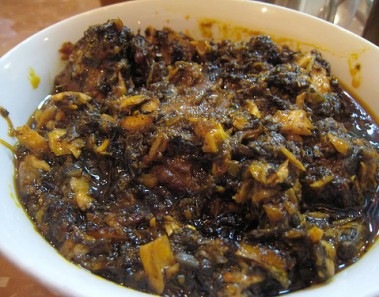
Sierra leone, Liberia and Guinea are some of the major African nations that include cassava leaves into their diets. In fact, in Sierra leone and Guinea, cassava leaf soup is a staple and usually enjoyed by both the old and young. According to some researches carried out on the leaf, it was found out that cassava leaves contains high amount of protein, minerals and vitamins. It was reported that consumption of 400g cassava leaves is equivalent to protein intake of 45 to 50 grams. For some of the rural communities in countries where it is majorly consumed, cassava leaves had been the major source of protein.

cassava leaf soup
Cassava Leaf Soup: multiculturalcookingnetwork.wordpress.com

As if that was enough,  It contains some amount of vitamin A, vitamin B1 vitamin C, calcium, phosphorus, protein, fat, carbohydrate and iron. Also, there is wide believe that the consumption of the leaves can be a cure for rheumatism, headache, fever, diarrhea and  intestinal disorder. The irony about this plant is; while the root tuber has been widely criticized by nutritionist as an unhealthy food item due to its high starch content and lack of nutrients, the leaves are loaded with many nutritional values but rarely consumed.

It is important to extend this note of warning to all and sundry that- never should you try to eat cassava leaf in its raw form while believing the leaves are been consumed in other countries. The poisonous cyanide in its leaves is a multiple of that in its tuber. However, cooking process eliminates the poisonous effects and that is why citizens of these countries had continuously enjoyed soup made from it without any long or short term adverse effect

In my opinion, if the leaves are of no economic value to us here in Nigeria, we should consider exporting the leaves to countries where it is enjoyed.

I will be sharing with you the Guinea way of  making cassava leaf soup. Keep checking this space for the recipe.
Categories
Food & Nutrition

Garri, Fufu, Usi With Vitamin A: What You Need To Know!

Vitamin A fortified cassava products: expect this healthy option soon on your tableAs an undergraduate studying Food Science, I had always questioned why Cassava products especially Garri was only known for its starch content. Just as I pondered about it, I never knew research was already on going on the bio fortification of cassava with Vitamin A. Not too long after graduation, all I read in the pages of newspapers was the first release of cassava stems that had been fortified with Vitamin A via genetic engineering process. Elated I was. Finally, Cassava, our own most consumed food can have its place in competing with other staples in terms of nutritional content.

A Brief Description Of Cassava

Cassava is scientifically called Manihot esculenta is a staple crop common to hundreds of millions of people in Africa. It is the third largest source of carbohydrates after Rice and Maize. Nigeria is the largest producer of Cassava in the whole world while Thailand is the largest exporter. It will also interest you to know that Cassava can be classified into sweet and bitter types. Both contain anti nutritional compounds with more in bitter type. That’s why the job of cassava processing is carried out by experienced people to avoid carcinogenic reactions.

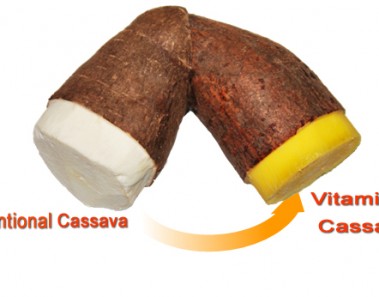
VitaCassava - Vitamin A fortified

Why Cassava Was Chosen For Fortification

Over the years many of us have consumed different processed products that had been fortified. Some include fortified salt with iodine, fortified flour with vitamin A and fortified milk with vitamin D. Clearly, this products fortified with different nutrients have not achieved the aim of reducing severe acute malnutrition as most of them are only consumed adequately in the urban communities leaving the rural communities with Cassava and Maize. Cassava was chosen because it is a staple consume majorly by rural communities where nutrient deficiency is highest. Fortifying a root tuber like cassava will actually make the goal of improving the health status of Africans improve as most of our meals come from cassava and yet only providing large chunk of carbohydrate with negligible amount of other nutrients. Some common Cassava foods are Eba, Fufu, lafu, Abacha and Usi.

Why We Should Support The Consumption Of Fortified Cassava Products

According to WHO Vitamin A deficiency (VAD) is the leading cause of preventable blindness in children and increases the risk of disease and death from severe infections. In pregnant women VAD causes night blindness and may increase the risk of maternal mortality. Vitamin A deficiency is a public health problem in more than half of all countries, especially in Africa and South-East Asia, hitting hardest young children and pregnant women in low- income countries. The body also states that an estimated 250 million preschool children are vitamin A deficient and it is likely that in vitamin A deficient areas a substantial proportion of pregnant women is vitamin A deficient. An estimated 250 000 to 500 000 vitamin A-deficient children become blind every year, half of them dying within 12 months of losing their sight. The need to fortify a major staple is necessary to reduce the prevalence of Vitamin A deficiency in Africa.

Which body carried out the research on cassava vitamin a fortification?

Vitamin A Cassava was bred by a conglomerate of partners, including International Institute of Tropical Agriculture (IITA), National Root Crops Research Institute (NRCRI), Umudike, and International Center for Tropical Agriculture (CIAT) with Harvestplus; an international organisation spearheading the project and released in Nigeria in December 2011.

Why Vitamin A Fortified Cassava Products Are Not Popular Yet

  • The production ability of the Vitamin A fortified cassava is still an issue as the white cassava ( Original type) yield between 30-35 metric tonnes per hectare of land while the yellow Cassava type ( Vitamin A fortified) yield between 20-24 metric tonnes per hectare. This is a serious concern for farmers due to low yields.
  • Some farmers love their cassava to stay in the ground for as long as they want usually between 12- 24 months after maturity but this new variant of cassava will rot after not harvested with 12 months. Farmers are clamouring for an improved variant that can make the specie compete with the convectional cassava tuber.
  • Asides the above mentioned reasons, regardless of how wonderful an idea or a product is, people’s mind set, especially rural dweller tend to be rigid. It will take a lot of sensitization and practical trainings for farmers and cassava processors to help eliminate any belief that has hindered them from trying the new variant of cassava which is healthier.

The Advantages Of Vitamin A Fortified Cassava Products

  • This is a novel development and I keep repeating to those who care to listen that children do not have to be blind because of lack of Vitamin A. Most of us do not believe this but a trip to rural community based missions to see how local people have been affected due to vitamin deficiency will shock you. With the proliferation of this variant cassava, all bye products of cassava would automatically have Vitamin A thereby nourishing the diets of children and women all around Africa and beyond. Through this initiative Vitamin A deficiency can be greatly reduced if not eradicated.
  • To processors and consumer, this variant of cassava is cost effective. This is because there is no need to buy gallons of palm oil to convert cassava products to yellow as seen in yellow Garri. Direct processing will produce yellow products which are not only attractive but reduces cost of processing.

So friends when you visit restaurants and request for Eba or Fufu and it turns out to be yellow in colour, do not attempt to reject it or call it “eba ibo”, it could be the Vitamin A fortified cassava that had led to the colour. You can simply ask if you do not like the ones made with palm oil. It is healthy and even tastes great based on the reports of the researchers. I have not been privilege to have a taste but if you had tasted it before, please share your comments and opinions on it as it will be appreciated.

#SUPPORT VITAMIN A FORTIFIED CASSAVA

Categories
Food Safety

Why It May Be Best To Only Eat Sour Garri

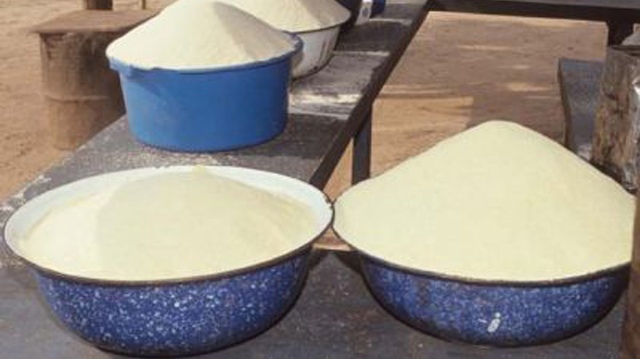
Gari is a creamy-white, granular flour with fermented flavour and a slightly sour taste, made from fermented, gelatinized fresh cassava tubers. It is usually eaten with various types of soups like ewedu, efo riro (spinach), Akwa-ibom’s afang soup and many more we cannot begin to mention here. Many people in Nigeria and other West African countries, where garri is very popular soak it in water, add sugar (sometimes with Milk) and eat with roasted groundnut, donkwa, fried or roasted fish, coconut and more.

I have seen jokes talking about how garri was never advertised and continues to best other foods in terms of sales in the market. This is to tell you how much garri is popular in these countries. Someone wrote on his twitter one day – “Garri, saving life since 1800s”. These things are so true about garri.

garriSo, what’s the fuss about Sour Garri?

Do you know what makes garri sour? Well, it is a process called fermentation which takes place during the production of garri and it is usually in two stages. I will try as much as possible not to use too much technical terms but when we have to mention scientific names, there is no way around it.

(i) The first involves a bacterium Corynebacteria manihot attacking the starch in the cassava roots, leading to the production of various organic acids (such as lactic and formic acids) and the lowering of substrate pH.

(ii) In the second stage, the acidic condition stimulates the growth of a mold, Geotrichum candida, which proliferates rapidly, causing further acidification and production of a series of aldehydes and esters that are responsible for the taste and aroma of gari (Odunfa 1985).

Cassava contains the cyanogenic glucosides, linamarin and lotaustralin which are hydrolyzed after peeling, cutting and pulverising the cassava; and end up as hydrogen cyanide [HCN](Conn 1969). The hydrogen cyanide is responsible for chronic toxicity when inadequately processed cassava products are consumed by humans and animals for prolonged periods.

The traditional processing of cassava into lafun, garri and fufu unsure that most of this HCN is removed. Apart from acute toxicity that may result in death, consumption of sub-lethal dose of cyanide from cassava production over a long period of time results in chronic cyanide toxicity. That increases the prevalence of goitre and cretinism in iodine deficient area.

COMING SOON: What To Look Out For When Buying Cooking Salt!

The symptoms of cyanide poisoning from consumption of cassava with high level of cyanogens include vomiting, stomach pains, dizziness, headache, weakness and charkha.

Many local processors of garri want to make as much garri as they can make because of high demands from the market. Instead of expanding production and engage more people and equipment, what many have done is to modify how they process garri. They cut on the period they should subject the cassava to, in order to ferment. They don’t know what they are doing.

As mentioned above, the liberated cyanide (HCN) will dissolve in the water when fermentation is effected by prolonged soaking, and will evaporate when the fermented cassava is dried. This can also be found in several published research works on garri. Prolonged soaking is the key phrase there.

How do you know that the cassava from which your garri was made had gone through this effective long soaking? It would normally be sour. Like I have explained above, fermentation produces low acidic pH which makes your garri sour. This acidity also helps eliminate some microorganisms in your garri making it safe for consumption and last longer on the shelf.

ALSO SEE: How To Make Afang Soup The Akwa Ibom Way (Recipe)

REFERENCES:

  • Conn, E.E. 1969. Cyanogenic glucosides. Journal of Agricultural and Food Chemistry 17(3): 519-526.
  • Odunfa, S.A. 1985. African fermented foods. Pages 155- 161 in Microbiology of fermented foods: Vol. 2, edited by B.J.B. Wood. Elsevier Applied Science Publisher, Amsterdam.