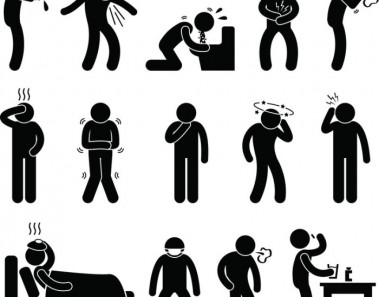
Often, when we write articles highlighting the dangers or potential hazards inherent in some foods and how they cause harm to our health when we consume them, we get a lot of abusive comments, telling us how “dirt cannot kill Africans”. On a particular article where we explain the potential dangers in eating Suya, someone — surprisingly a lecturer in one University of Technology commented in pidgin, “na over sabi dey kill pass” (meaning knowing too much kills more).
We would like to implore people to just try and take their health issues more seriously. When they see warning on foods they consume, even when they doubt the source, they should try to seek more information elsewhere to clear any doubts they might have.
People sometimes get food poisoning by eating foods prepared by themselves at home and sometimes by eating foods at eateries and restaurants. I have seen more cases of people having food poisoning after eating foods at eateries than in their homes.

Not long ago, we published articles, explaining what food poisoning is, and how to know if you have it and how to prevent its occurrence at home. Those articles are still available via their various links (clickable above), and this one, will give you tips and pieces of advice on preventing food poisoning when you eat outside.
First of all, let me share with you some statistics and information on occurrences and cases of food poisoning in Nigeria;
Professor of Food Science and Technology, Alfred Ihenkuronye, has said that more than 200,000 persons die of food poison in Nigeria annually. The sad thing is that, many would not even know it is food poisoning. They just look at the symptoms and try to treat that alone.
Managing Consultant at First HACCP System, Mrs. Zainab Akanji reported that 99% of Nigerians eat outside (eateries, restaurants, parties) and adverse effects are underreported.
She added,
So I feel there is need because most times a lot of people fall sick, there is high increase in diseases now traced back to food issues and when you compromise food safety it causes adverse effect on people ranging from cancer to stomach ache, diarrhoea. In fact almost everybody in the world has had food poisoning case at one point or another either from the minute one of frequent going to the toilet, to vomiting, to the acute one that sometimes people don’t live to tell the stories, which causes death sometimes due to the contamination of food.
Here are Tips For Avoiding Food Poisoning At Eateries
Click 2 (page 2) below to start reading the tips to follow… 1. Read the labels on the food container
One cannot overemphasize the importance of reading anything and everything written on food packs. I have mentioned the importance of reading labels in one article in the past and I can only hope people have learnt a great deal from it.
I travelled to Abeokuta some months ago and went to a popular eatery with branches all over the South-western part of the country. I ordered for food which included a container of vegetable salad. While waiting for my change, I just started reading things written on the container then I saw something boldly written on it;
Consume Salad Within 15 Minutes of Purchase
What came to my mind was, “why do they sell to people in take-away packs?” If you know that this food will only be in its best condition for only 15minutes after taking it out of the refrigerator, why sell to people to take away, when they may not get to their destination in one hour.
Forget the the organoleptic attributes of the food now, what about the safety. Raw vegetables (ingredients of salad), carry the risk of salmonella and E. coli – which can cause vomiting, diarrhoea and stomach cramps. When they are not well refrigerated and left under ambient temperature for long, these microorganisms multiply and cause problems for whoever eat them.
2. Make sure of the hygiene level as it affects the food
Although one cannot totally be sure of the hygiene level of a food you are buying in a restaurant or eatery, one should make effort to verify those he can. Whenever I want to buy food, I look at the environment, the food and the person that is going to serve it.
Sometimes, we cannot see what is being done to the food where it is being cooked but when we can, we should also check these things too — the neatness of the person cooking, how does he/she gets rid of sweat on their face, does the water used for cooking appear clean and things like that. I can scan to assess things like these within 30 seconds of getting to the eatery.
When I can, and have made sure of all these, what I do next is to monitor the serving. I wouldn’t allow any server to use bare hands to unwrap “moin moin” or “eba” for me, I am not going to allow it. When I see that’s what the server wants to do, I talk. If he/she goes ahead and uses bare hands, I am not taking the food.
When I gave some information about food poisoning above, some people would have started asking if I meant that food poisoning is just a Nigerian issue. No! It is everywhere in the world.
Norovirus, which is usually called “cruise ship virus,” is more often caused by infected restaurant workers than outbreaks on the high seas — this is according to U.S. health officials.
Just 1 percent of more than 1,000 food-borne outbreaks examined by the federal Centers for Disease Control and Prevention were traced to a cruise ship. Most outbreaks were caused by infected kitchen employees touching food with their bare hands, according to a new agency report.
3. Insist on microwaving/heating your food
When you buy food from a eatery and would either like to eat in there or take it away in a pack, please insist that they microwave it for you. We have previously explain how microwaving foods helps to kill microorganisms in food and make them safe.
Many people have complained about how microwave heating affect the taste and appearance of foods. Yes, this might be true but they usually don’t affect food that much, sometimes they are even unnoticeable. The only noticeable change I have ever noticed when I microwave my food is that it makes my fried plantain harder like it was first fried, then boiled.
Well, even if this happens, I would rather eat a harder fried plantain than end up lying up lying on hospital bed clinging to life.

The only thing you need to ensure is that your food is being microwaved in a container that has been made for use in the microwave. Don’t allow them to use just any plastic container.
4. Avoid foods displayed inside show glasses with bulb
When food are stored in show glasses with light bulbs (e.g meat pie, doughnuts, samosa, spring rolls, etc), the change of making the microorganisms present multiply increases. The temperature provided by this bulb is very good for survival and multiplication of many organisms.
I have been a victim of this before — eating burger displayed like this and ended not going forward for a presentation I should because I thought my bowel would come out that day. Fortunately, the course I was supposed to make the presentation for was a Food Microbiology course and the lecturer talked about food poisoning.
I raised my hand and explain what just happened to me. I was informed it could be food poisoning from the burger I ate. When I got home, I met my house mate in the same condition — we had bought and eaten the burger together.
Avoid foods that are displayed without cover, a lot of air-borne microorganisms might have found their way into that type of food. If restaurants want to customers to see what is inside the display containers, they should use covers made of clear, transparent glass.
5. Plates, Spoons, Food Containers and other utensils
Cooking and eating utensils are as important when it comes to safety of our foods as the food itself. You can cook a food in a very hygienic way, process it to remove most of the pathogenic microorganisms but end up serving them in contaminated plates. Restaurants should have a form of heater, where washed plates are kept for some time before they are used to serve food.
If I have not mentioned it before, this article is not just for people that patronize restaurants and eateries, managers and restaurants workers will also benefit a lot from this article because there is so much a customer can do to ensure safety of food. The most important parts lie with the processors and handlers of foods.
I was at a fast food joint last week to buy popcorn, to my dismay, the attendant was trying to increase the volume of the paper bag by blowing air into it with her mouth. I asked her if she was new on the job there and she asked me why I asked her that. I made my mind known to her that what she did was unhealthy and unsafe.
I demanded that she changed the pack and desist from that act.
6. Ensure that your own hygiene level is good too
The last of the tips I a sharing here has to do with your own hygiene. You need to make sure your hands are clean when you want to it. For me, it does not matter if I am going to use a spoon or fork and knife.
Washing hands, especially fingernails are even more important when eating foods that we use our our fingers for in this part of the world. Eba, amala, semo, akpu, tuwo are examples of foods people use their bare hands to eat in many parts of Africa and other places where they are consumed.
Finally, as we age, our immune systems become weaker. As a result, older people are more likely to suffer from foodborne illnesses or food poisoning than the younger ones. This does not mean that younger people should shun all safety tips that ensure food safety but to advise older people to be more careful in their choice of foods and restaurants.
I know I have only tried and may have left some tips out; if you have any other tip you wan to share with people, you are welcome to drop them as comments on this page. Thank you!