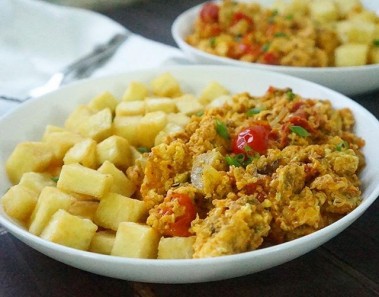
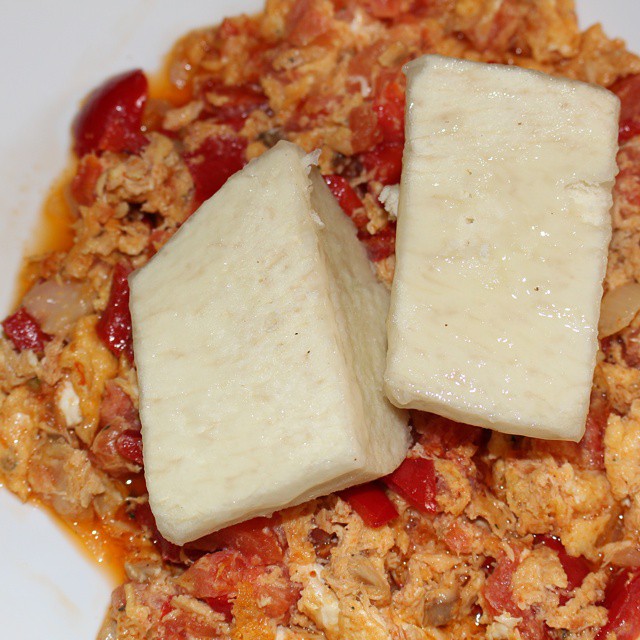
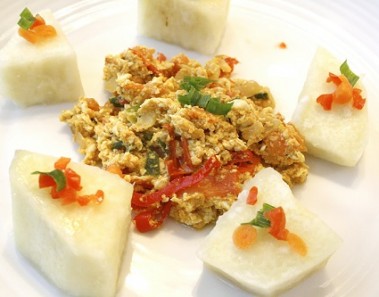
Yam and egg is a combination of foods many of us in this part of the world really love. Growing up, some of us only eat foods like Yam and Egg, Jollof Rice and the likes on special occasions. Yes, that’s the way it was then. But, let’s face the reason for this post? How do you like your yam and egg served?
How Do You Like Yam & Egg Dished?
Do you like your yam more than the egg or the egg more than the yam or the two in equal quantities? Do you like your eggs spread over the yam, side by side in same plate or served in different plates? Which of the following dished yam an eggs would you prefer?
1. Yam and Egg by @sizzlingflavors on Instagram
2. Yam and Fried Egg by @9jafoodie on Instagram
3. Picture of Yam and Fired Egg by @gloriousfingers
So, which do you like?
Share it too if you like these pictures of Yam and Egg…
Poor eating habits has been the major topic of discussion among many nutrition gatherings and symposia while neglecting the various cooking practices that many individuals have personalized thereby making them remain in the path of unhealthy living. It would even interest you to know how unconcerned these people are regarding their method of preparing certain meals and they keep neglecting whatever health issues this can result into.
Few days ago, I kick started a discussion in this area and I was completely shocked with the words spewing out from the mouth of some people, expressing the cooking practices performed by them. Let’s see some the very funny ones.
1. Adding Seasoning Like Maggi, Knorr To Beans
I was in a friend’s house, as we were discussion about football teams and matches, we heard a louder conversation from his neighbours in the ground flat. One of them who is a Hausa woman said with clear boldness that she can not cook beans for her family without adding 4 to 6 cubes of seasoning such as Maggi, Knorr, etc., with many containing Monosodium Glutamate. The other said she uses just two cubes. Immediately, we both became completely speechless. My friend later said she (Hausa woman) only has three children all below age 10.
Friends, food condiment like this does not have any nutritive value it supplies to our body. It is best to reduce the amount we add to our meals. Instead, use natural food condiments like ginger, garlic and onions that have been found to be helpful in human health.
2. Adding Sugar To Yam
Growing up in a family where we never used sugars in tea, pap, custard and garri, it became culture shock when I recently discovered that many house wives add some table spoons of sugar to yam when cooking in their quest to make it sweet. I can only laugh in Ijebu.
Yam is a calorie dense food. Adding some sugars to it will only increase the calorie. No wonder the sudden rise in the cases of diabetes. For me, it is only a bad cook who does this. I stand to be corrected.
3. Frying Two Eggs With A Whole Bottle of Oil
This apparently sounds like an exaggeration but the truth has to be told. During my undergraduate days, a friend of mine appeared to have made a joke out of this – he was serious. He explained how a lady fried 2 eggs for him with close to a bottle of vegetable oil. Then, I never believed him until something of same extent happened to myself and a friend when we both visited a lady who obviously wanted to impress us. Sincerely, it was in the ratio of two eggs to 1 bottle of vegetable oil. We managed to eat three slices of bread each. As she steps out to pick her clothes when it was drizzling, I quickly rushed to drain the oil. No wonder she is overweight.
4. Adding Salt To Garri
This does not taste nice at all. I cannot fathom why anyone would do this. You would probably think this is an habit for the young children but as I surprised to hear of individuals who still do this. There has been a lot of campaign concerning the effect of consuming high amount of sodium. Yet, some people still indulge in this habit of soaking garri of all foods with pinches ofsalt. Haba…..Take am easy.
No doubt, some of you are practicing some or all of the above listed habits. The need to avoid them is critically important as they can lead you to unwanted debilitating health conditions. As a practicing nutritionist, the conditions I see and hear of on daily basis are scary and some of these unhealthy habit could be the leading cause.
You could share some other ones you do or you are aware of.
A couple of FoodsNG’s readers have asked this question, but of course in different ways – “how do I properly store a cut yam?”, “how can I store yam after I cut it without spoiling?”. We are going to talk about this topic today in order to address their questions. Often we buy large tubers of Yam and need to only cook a small portion of it when we need to eat. So, what are you going to do with the remaining tuber? If you leave it that way, it grows mould and gets spoiled or turns brown and hard that you have to peel it off.
When the questions came, I though this should not be a problem for anyone because there is a way I saw mum do it while growing up and it worked every time. So, I took some time out and spoke to different people, asking them how they preserve their cut yam tuber. I got a lot of interesting answers and I will address the most shocking one first.
Someone told me she just leaves the yam that way and cut off the spoiled part when next she needs to cook the yam. Well, I would say that is not proper and safe for the following reasons;
Why waste that part of yam that you cut away? You could save that yam by preserving it properly.
When your yam grows mould and you cut the contaminated part away, do you think the remaining part of the tuber is safe?
You know why this is wasteful and unsafe? Mould is a fungi and when they grow on foods, fungi break the food down and make us of it. They grow their HYPHAE (the part that looks like microscopic roots) into the dissolved food. So, when you cut off the mould growth on the surface, you could still have the hyphae left in the remaining yam. The root is as unsafe as dangerous as the growth, sometimes more dangerous. Don’t cause Food Poisoning for yourself.
NEXT [2] :: Tip For Preserving Cut Yam To Prevent Mould Growth…
Photo Credit: afrolems.com >> Make Your Yam White Like This
Without doubts, I have also been bothered by this scenario each time I find myself in the kitchen to cook Yam. It was always dissatisfying noticing the discolouration that suddenly happens under my very eyes within seconds (they turn yellow, brown and sometimes black). Yam had been a major staple for centuries providing energy and other nutrients for the African people and beyond.
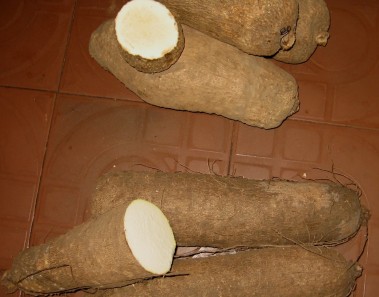
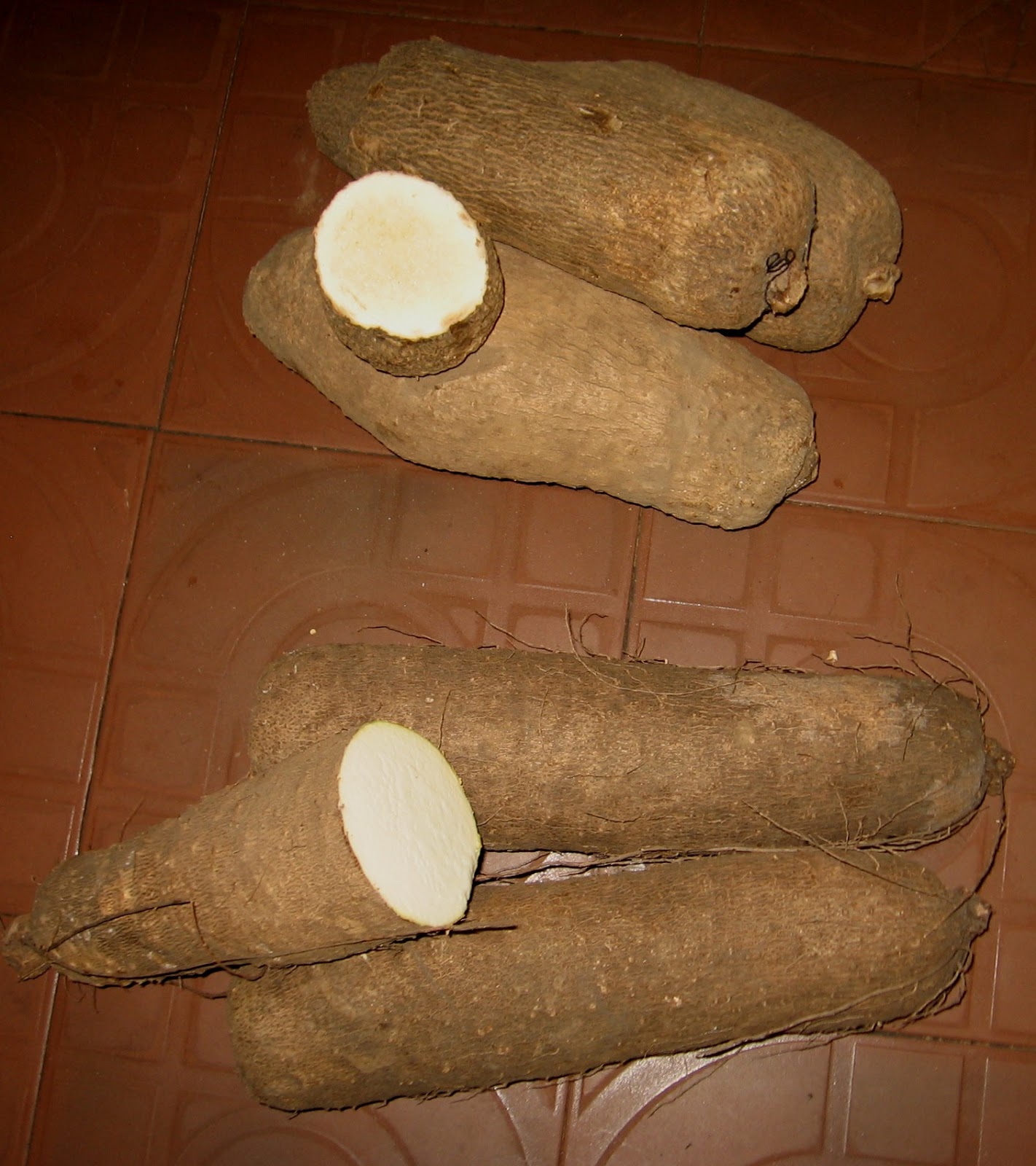
With its more than 600 documented species; edible and inedible, it remains a difficult task to identify which one would turn yellow, dotted green, brown or black during peeling.
Popular species of yam include Dioscorea alata (Water yam), Dioscorea rotundata (White Yam) and Dioscorea bulbifera (Aerial Yam). Many mothers and women have been forced to opt for other tubers or avoid yam in their diet because of this sudden reaction. Before writing this piece, I took the time to carry out a simple finding by speaking with mummies and grand mummies on the best ways to avoid discolouration of Yam during preparation and all the women gave their opinions about it. Quickly let’s check some of their advice.
Advice: Preventing Yam From Changing Colour While Peeling, Cutting
1. A few of the women said the best way to avoid yam discolouration during peeling is to “shine your eye well” when buying. They insisted some Yam types are naturally coloured and so there is nothing you can do to avoid obtaining a coloured yam. An example is a yellow yam with botanical name Dioscorea cayenensis which is a result of carotenoid in it. Try to peel the yam slightly with your finger and see if any discolouration quickly occurred when you are still at the market. If it does do not buy the Yam. It is best to buy only white yam.
2. The common one that more than 70% of them subscribed to is peeling the yam and submerging quickly underwater immediately. Some of them said they go further to peel the Yams beneath the water. I am aware that once yam is peeled and exposed to air, it is bound to undergo oxidation which causes discolouration. This, however, depends on the specie of the yam as some species do not change colour rapidly on exposure to air. White Yam remain same after exposure to hear
3. Some of the women then insisted that over the years they do not bother keeping their yams in store to be prepared when they want to eat it. They went further to say that once they had purchased the Yams, on getting home; they slice and peel off the entire yam tubers, quickly cut them into sizable portions under water, place them in a plastic container and keep them in the refrigerator to be picked whenever needed. They said keeping Yam tubers on bare floors and staying longer period before consumption may affect their colouration when peeled. Those fresh yams do not discolour like others that have stayed longer periods in storage. There is no scientific proof to this but if you do not mind, give it a try, it does not hurt.
When you look at the second opinion scientifically, I would opine that it really makes sense and it’s something I have tried myself too – it works but not 100% most times. There are times that the discolouration would just be mild but remains white at other times.
Yams contain enzymes that, on exposure to atmospheric oxygen react to give a brown colouration. When you immediately put yam underwater after peeling, you minimize the exposure time for this reaction. I have used warm water with great success.
You may want to ask, “What is different with warm water?” Let me tell you how using warm water has a place in science – oxygen dissolves in water and the amount of dissolved oxygen that the water can hold depends on the temperature and salinity of the water (how much salt there in the water). Coldwater can hold more dissolved oxygen than warm water and freshwater can hold more dissolved oxygen than saltwater.
I am certain a reasonable number of you would have other methods you practice to avoid yam discolouration. Do not hesitate to share those ideas. Thank you!