Categories
Knowledgebase

How To Know Pure or Fake/Adulterated Honey

Some few years back, when I was much younger, my dad was used to adding a few spoons of honey to most of his cereals. He does this very religiously that he never used any form of granulated sugar. His mother was the one who does the supplies but not too long, she stopped because she cannot move around as she does in the past due to aging. Dad decided to go buy a bottle of honey by himself.

As he added the honey into his pap (Akamu or Ogi), in less than 1hour after finishing his meal, he began to show some allergic reactions. It later became severe that he had to visit a pharmacist.

Those who do this business of adulteration are smart that they try to imitate the properties of original/pure honey from appearance to consistency as much as possible but if you dig deep enough you would be able to identify those that are pure. They have several ways of making honey “not pure” – they can add sugar syrup to increase the quantity or corn starch to manipulate the viscosity (increase thickness).

honey

Sometimes you want to use for one of its numerous medicinal purpose, this means that you have to get pure honey in order to actually benefit whatever you intend to benefit from it. You cannot afford to use the adulterated one or those ones made from brown sugar syrup, you won’t get the result you expect.

Methods for Identifying Pure or Adulterated Honey

Why spend your hard earned money on something that could be poisonous to your body system. Now let us check out the best methods to Identify pure honey. These simple tests listed in this article will help you to distinguish between fake/adulterated and pure/original honey.

1. Water test for Honey:

Water can be used to distinguish between pure honey and adulterated ones and it is so simple. Get a glass jar of water or a small pot half full of water. Add the honey into it at one point of the water using a table spoon.

If the honey spreads out and dissolves in the water, the honey is not pure. However, if it remains in its pasty form beneath the water while retaining the original colour, the honey is pure.

2. Fire test for honey:

Once you have gotten your honey, use a small piece of cloth and rub a portion of the honey at the edge of the cloth or you deep the wick of a candle into the honey, lit a fire over any of the cloth or wick for few seconds.

honey fire test
Photo: menaribo.com

If it does not burn, the honey is not pure as it likely contains water but if the cloth or candlewick burns/catches fire, the honey is definitely pure. You can also use a matchstick as shown below. Put the honey in the middle of the matchstick and light the stick.

3. The Thumb Test:

Any of your right or left thumb can be used. Place a drop of honey on your thumb, if the honey slips or spread easily over your thumb, the honey is not pure but it it stays and still forms the drop on your thumb then the honey is pure.

While it might be a bit difficult to carry out the fire and water test method at the place of purchase, the thumb test can help you.

4. Paper Towel for telling honey quality:

Place a paper towel or serviette paper on a table and add few drops of the honey on it. If it absolves the honey, the honey is not pure but if it does not, and the honey stays longer on the paper then it is pure.

IMPORTANT NOTE: Many people are quick to believe the claim that ants do not go near pure honey. The veracity of this statement does not exist. Ants go after anything that is sweet and taste good. From bread to rice ants go after them talk less of honey. Other methods that can be used to identify pure honey are requesting to taste and check the consistency (thickness) of the honey. Usually pure honey is not thin in its consistency. Although, these methods cannot guarantee that you are buying 100% pure honey, they help – manufacturers of adulterated honey have developed ways of making their honey appear pure.

It is advisable to use a combination of the above-mentioned methods to ascertain if truly your honey is pure.

To reduce your chances of obtaining adulterated honey, you might want to purchase them at a honey farm, in towns that are known for honey production or supermarkets that have a very huge reputation in selling quality products. These factors will really help you.

I hope you find this article helpful. Let us know if you have any method you have been using too.

Categories
Knowledgebase

Shocking & Fun Facts You Should Know About Milo (Drink)

Milo, produced by Nestlé, is a chocolate and malt powder which can be mixed with hot or cold water to produce a beverage drink that is consumed in many parts of the world. Milo is commonly as a powder in a green tin and sachets made of Polyethylene terephthalate, Aluminum foil, and Polyethylene laminated together. The packs often depict various sporting activities. Milo is available as a premixed beverage in some countries, and has been subsequently developed into a snack bar, chocolate cubes (choco milo) and breakfast cereals. Its composition and taste differ in some countries.

Some Shocking And Fun Facts About Beverage Drink, Milo

A lot of people consume this drink and don’t even know some facts they should know about what they are consuming. In this post, I am going to share with you some facts that may be shocking and other facts that are fun to know about Nestlé’s Milo.

1. Milo Was Developed In Australia, Not Switzerland

I thought there should be nothing surprising about this, but I found myself totally wrong when I asked so many people. A lot of people though Milo was developed in Switzerland, where the headquarters of Nestlé is located. No, Milo was originally developed by Thomas Mayne in Sydney, Australia in 1934.

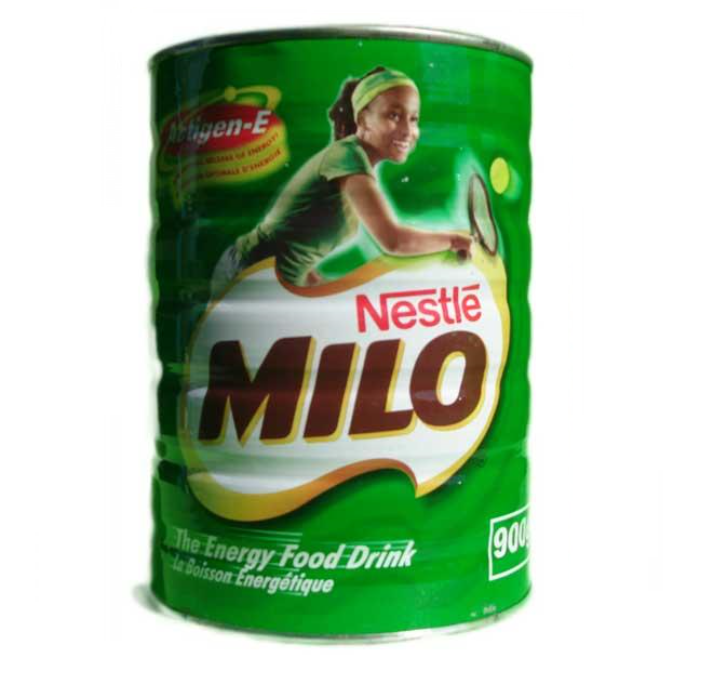
Nestle Milo Nigerian 900g

This is just by way of introducing Milo to you and letting you know its history. Other fun and shocking facts can be found on pages 2 – 10. Some will definitely make your jaw drop! I promise you. Just click on 2, 3, 4, 5 and so on below…

2. Not Everybody Can Drink Milo (Allergen Declaration)

The major ingredients Milo is made from are Cocoa, Milk, Malt and Sugar; it is there on the ingredients list on Milo sachets or cans. Malt is mostly made from Barley or Sorghum and these grains are known to contain Gluten, which some people are hypersensitive to. But is seems Nestlé may have found a way around their product such that it does not contain gluten. I am saying this because it is not declared on their package.

I have talked about allergies in one post, under which I mentioned gluten, eggs, milk, soy milk, etc., as allergens to some people. In another post, I mentioned that gluten-rich foods could contribute to abdominal bloating, causing stomach protrusion. Lactose-rich foods such as milk could contribute too, therefore, people that have lactose intolerance may be hypersensitive to Milo because it contains Milk.

milo ingredients and allergen declaration

Nestlé has done a good job by clearly stating the allergens that could be present in Milo as follows;

Contains milk and soya.

It is now left to you to develop the habit of reading food labels to find out all these things.

ALSO SEE: Allergens That Are Common In Foods We Eat (Opens in new Tab)

3. Milo contains more Malt than Cocoa by Weight

SURPRISED? I guess so! Many people have the impression that Milo is always referred to as a Cocoa beverage, therefore it should have more cocoa than any other ingredients in it. But from the labeling on cocoa cans and sachet, there is more malt by weight than cocoa inside.

You could say, “but their quantities/mass are not stated there…how did you know that?” Here it is, there are international standards for labeling food, which I am sure a company like Nestlé would comply with religiously. Below are the standards as stated by the Codex Alimentarius Commission (CAC);

4.2 LIST OF INGREDIENTS

4.2.1 Except for single ingredient foods, a list of ingredients shall be declared on the label.

4.2.1.1 The list of ingredients shall be headed or preceded by an appropriate title which consists of or includes the term ‘ingredient’.

4.2.1.2 All ingredients shall be listed in descending order of ingoing weight (m/m) at the time of the manufacture of the food.

What this means is that, under the ingredients list, the ingredients must be listed with the most massive one first, followed by the next one and so on to the least used ingredient. 

milo ingredients and allergen declaration

Did you read FACT Number 2 at all? It is just as surprising! It is implied on packs of Milo that not everybody can consume it for safety reasons? Want to know why? Then check number two!

4. The Name Is Pronounced As Spelt

Many people in this part of the world do not pronounce Milo the way it should be. The “i” should be pronounced as “ai” and not “i”. This will give us the sound /ˈmaɪloʊ/ instead of /ˈmɪloʊ/ that many people have been calling it. I hope people would be able to change that.

Many do not know they are not using the correct pronunciation while some others know but feel it is not worth it as it makes you look like a fool sometimes. Imagine walking into a grocery store where everyone calls it /ˈmɪloʊ/ and start asking for /ˈmaɪloʊ/, you would not only look wrong but also look like a fool when they try to ignorantly correct your “mistake” and laugh about it.

You can always make your point though, and let them know the right pronunciation but often, it usually falls on deaf ears, especially when everyone there are sure it is called /ˈmɪloʊ/. Although it is pronounced the right way in most parts of the world, the company looked like they have given up on this in countries like Nigeria as all their adverts call it /ˈmɪloʊ/.

Did you know you can get addicted to Milo?

5. You Can Get Addicted To Milo

Yes, it not only coffee one can get addicted to; you can get addicted to chocolate drinks such as Milo. This is not just about Milo but about foods containing cocoa, so don’t think I’m going to switch to Bournvita or something. In coffee, there is caffeine which causes the addiction to coffee, therefore if you buy any brand of coffee that has not being decaffeinated, you would still get that bad boy called caffeine in there.

Cocoa contains theobromine, a xanthine alkaloid similar to caffeine which is present in the cocoa used in the product; thus, like chocolate, it can become mildly addictive if consumed in quantities of more than 15 heaped teaspoons per day. This I guess is way too much for anyone to take in a day anyway.

milo drink

A research carried out in Nigeria to determine the caffeine and theobromine contents (mg/g) in samples of selected Nigerian beverage products found Milo and Bournvita to contain around the same theobromine. The beverages were cocoa (Milo, Bournvita, Rosevita and Enervita), coffee (Nescafe, Bongo, and Maxwell House decaffeinated) and tea (Lipton).

6. Milo Contains More Sugar Than Malt, Cocoa and Milk

Just as I explained before that the proportion by weight of ingredients in any food products are labelled in descending order – highest to lowest. This is the standards and that is what any reputable food manufacturer follows. If you take a quick look at any Milo can or sachet, you would see that sugar is listed first before milk solids (emulsifier: soya lecithin), malt extract (sorghum) then cocoa powder.

What is however not clear to many people that are aware of this fact is what they mean by sugar – is it just sucrose (the common sugar we use to sweeten food) or the total sugar that is present as a result of other ingredients. For example, milk contains a sugar that is called lactose and it is not sweet. There is also maltose from the Sorghum used to produce malt and this might have contributed to the total sugar.

Here is what Milo’s has to say about that;

Over half the TOTAL sugars in a glass of MILO® and trim milk, are natural sugars from lactose in milk.

There is less than 1 teaspoon of ADDED table sugar.

The remaining sugar naturally come from the milk powder and malted barley ingredients in MILO® powder.

milo sugar content pie chart

Findings have revealed that Milo made in Australia and New Zealand have Glycemic Indices (GI) similar to that of Coke. Surprised?

7. Milo’s Glycemic Index Is Same As Coke’s

Findings in Australia and Switzerland have revealed that Milo dissolved in water has a glycemic index that is the same as Coke. Milo dissolved in water has a Glycemic Index (GI) of 55, the same as Coca-Cola but this can be brought down by using Milk instead of only water. What is Glycemic Index?

Milk has a much lower GI of 30 – 33, so mixing a very small amount of Milo into a mug of milk yields an overall GI closer to 33, and mixing a large amount of Milo into a mug of milk will give a GI closer to 55.

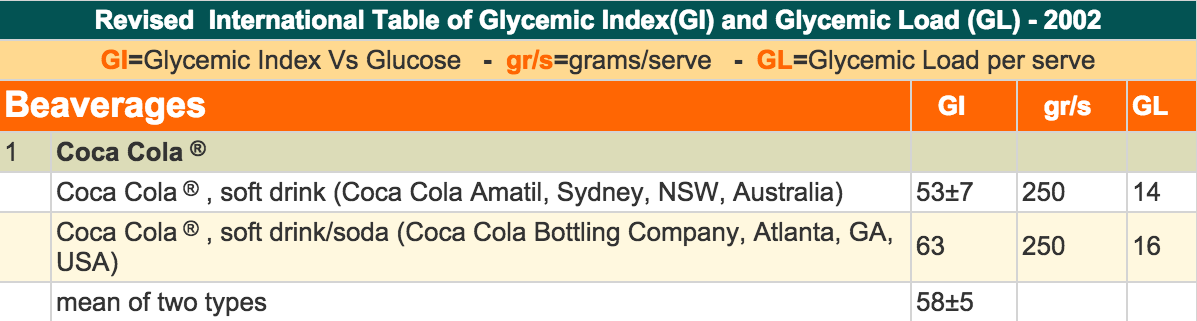
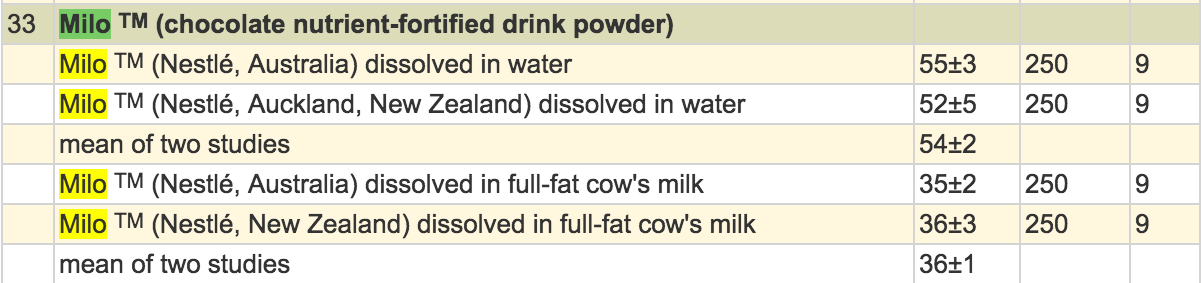
The International Table of Glycemic Index(GI) and Glycemic Load (GL) also listed them to have very close GIs. The following is what was listed for each of those samples;

Coca Cola ® , soft drink (Coca Cola Amatil, Sydney, NSW, Australia) has a glycemic index of 53±7 (250 g/serving) while Milo TM (Nestlé, Australia) dissolved in water has 55±3. Milo TM (Nestlé, Australia) dissolved in full-fat cow’s milk has a GI of 35±2.

glycemic index coke
glycemic index Milo

8. Malaysians Are The World’s Largest Consumers of Milo

Milo is very popular in Malaysia and Singapore. It is most popular in Malaysia where the brand name is synonymous with chocolate flavoured drinks, just like many people would refer to any noodle as Indomie here. Milo has a 90% market share in Malaysia and this is not the same as the often quoted 90% worldwide share of Milo consumption.

Milo is this popular in Malaysia because Milo was once used as a nutrient supplement when it was first introduced in the country, and has thus gained a reputation as a ‘must have’ drink for the old and the younger generations.

This post was compiled just to enlighten people on one of the foods that we consume, it is not an advertisement and it is not to critisize any product and make them look bad. In fact, many things shared here are pluses for Milo.

milo actigen-e

Finally, it is worth noting that the drink is high in calcium, iron and the vitamins B1, B2, B6, B12. Milo is advertised as containing “Actigen-E” – this is just Nestlé’s trademarked name for the vitamins in the Milo recipe.

Categories
Knowledgebase

The Differences Between Lager, Beer, Stout, Ale & Wine

Beer of course without doubt is the most consumed alcoholic beverage in the world and usually described as the most consumed liquid after tea and water. I bet it is fast catching up with tea and soon enough water. I guess you doubt that, but nothing is impossible in a beer drinking world of ours. Beer is dated back to years Before Christ (BC) when the world came up with the product through a process called brewing. Brewing is simply the soaking of a starch source like barley or wheat in water and grinding or mashing the result to produce a liquid called Wort which is then fermented.

beer wine lager ale stout

While the ingredients (Barley, Hop, Water, Adjunct and yeast ) of making the different types of beer can be the same, there is a slight difference in the method of production to bring about the different beer types. For the records, beer is majorly of two types- Ale and Lager. In this short post, I will be sharing with you the difference between the two types. Lets take them one after the other.

Here Are Details of Each Drink So You Can Differentiate

NEXT [2] Click to page 2 to continue reading…

Categories
Food & Body Knowledgebase

Thin People Could Be In More Danger Of Fat Than Fat People

You have heard about cardiovascular heart diseases and how fat people could be in danger of it and you just think, “I am not fat, so I have nothing to worry about”. Well, you may be right and you may be wrong. Thin people could be in danger of these diseases too — in fact, they could be in more danger of fat than people who are visibly fat. Yeah, mark the word “VISIBLY”.

I have explained in one of the posts published on this site that when we consume too much foods that are high in fat and carbohydrates, our body store the excess as fat. That is why we are always advised to minimize our consumption of foods that will make you fat (high calorie foods).

So, I Am Not Fat, How Could I Be In Danger of Fat-related Diseases?

I will try to explain this in simple and clear terms. Fats are being stored in different ways in our body and I mentioned this when I talked about some of the foods that cause fat belly and the common foods that can help fight fat belly. People with fat belly basically store most of their fats in tissues of their tummy. This is a fact that we are all familiar with.

visceralfat

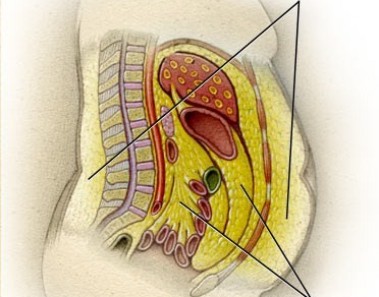
The way our body store fat and the hence the type of fat we have in our bodies can be classified into two – cutaneous and visceral. The former, which involves storing fat under skin tissues is better in my opinion. This way, you can tell that you are getting too much fat and fight it head on.

The latter involves storing fat around organs including the vital ones like kidney, liver, heart, etc. This is what makes it dangerous because from outside, you are looking all slim and without much fat but the organs are suffering inside. You would agree with me now that cutaneous (skin) fat is better than visceral fat.

You should endeavour to always check your weight from time to time. With this you can always calculate your Body Mass Index to determine if you are underweight, overweight or even obese. You can use our free online BMI calculator to do that now (link opens in new tab).

If you find out that you are overweight, obese or very close to overweight, you should start watching what you eat and also start exercising. You could also consult a medical doctor or a nutritionist to advise you on further steps to take.

I hope this post brings it to the awareness of everyone that anyone could be in danger of diseases that are caused by fats and their compositions. I am going to write about the types of fats that are dangerous to us and the foods they can be found in. I will also take time to write about the diseases that are caused by these fats and their symptoms.

You don’t want to miss them, do you? If you don’t want to then subscribe to our updates free.

Categories
Food Processing Knowledgebase

Should Rice Be Washed Before Cooking? The Myths & Truths

Many people have had this questions on their mind for a very long time. I have even seen some arguments about it among my male friends who try to know if it makes sense to wash or rinse rice before cooking. Those that wash rice prior to cooking try to explain that it is the right thing to do while those that don’t think it does not make sense but they have all been lazy to do a Google search on it at least to see what experts are saying. We are going to address this topic in this post today to make things clear to us.

So, Is It Necessary To Wash Rice Before You Cook It?

This is not a straightforward questions, so I would answer YES and NO. You ask why? Often, we only do things because that is the way it has always been done and do not bother to ask, “why?” Such is the case with the issue of rinsing of rice in water before we cook. Some people even soak or parboil the rice and change the water after some minutes of cooking – like we recommended you do with beans if you don’t want it to make you fart after eating.

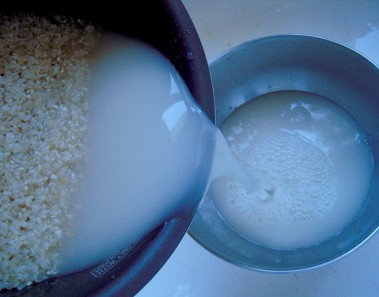
washing rice before cooking
Photo: blog.umamimart.com

To explain my YES to prior washing of rice...

Rinsing rice has been done for ages to rid the grains of surface starches, prevents clumping, and yields a clean, fresh taste. If you rinse rice very well, the cooked rice will have a reduced likelihood of clumping together because you have removed some of the total starch present (surface starch).

Some types of rice from some parts of the world are processed with talc -a mineral made up of hydrated magnesium silicate in order to give it a whiter and cleaner appearance. These types of rice need a rinse to remove this talc. Sometimes when rice has been packed and stored for long, you see some kind of dust on their surface when you take them out, washing will get rid of dusts like these and sometimes few weevils in the rice.

To explain my NO, which also answers “if you wash nutrients away when you wash rice”…see page 2 (click 2 below).

Categories
Knowledgebase

Top 5 Foods That Make You Fart Asides Beans

At exactly 8:50am on Saturdays morning, I was still lying in bed. Not too long from that time, I heard a loud sound from my brother’s room – “Poooooooouu”. I had to rush to know what exactly happened because it was repeatedly loud. On getting there, he gave another loud “Poooouuuu”. It was then I knew my big brother was farting. Then I couldn’t but burst into laughter. I have been with him over the weekend and he had not consumed beans – since beans are popularly seen as the food that causes flatulence. But far from it, his farting was as a result of other foods he ate.

When he woke up, he did not waste time to ask me – “What is the cause of my farting? I have not been indulging in beans, yet I have been farting; he said. I replied him in pidgin – “Bros, No be only beans dey make person fart ooo” It was then I thought it will be necessary to share an article on flatulence on this page. Let’s quickly see what causes flatulence.

What is flatulence?

This is commonly known as farting. It is the exit of gas through the anal. When someone farts, it could bring about a level of laughter or complete embarrassment depending on the type of gathering you find yourself. Hey! Do not get caught up in any mess.

fart smells

What Causes Flatulence?

Flatulence is usually caused due to incomplete digestion process followed by fermentation. Food substances that are not absorbed in the human intestines accumulate in the colon, where they are fermented by bacteria, leading to production of gas. The smell of the gas depends on the foods eaten and the types of bacteria that acted on it while the sound is as a result of the outward forceful flow of air that makes anal tissues vibrate. Some people also lack specific enzymes needed to break down certain foods, which then get acted upon by bacteria and create gas. You can read more on the article on how to cook beans so that you don’t fart after eating them.

So, What Are The Top Five Other Foods That Cause Flatulence In People?

Before sharing the list of the foods, it is important to let you know that – what causes flatulence in Mr. A may be completely different from that of Mr. B. It is sometimes based on body types and intestinal structure of each individual. At the end of this article do no forget to share the food(s) that you have identified which make you fart.

Click on pages 2, 3, 4… below to go to pages containing the list of foods;

Categories
Knowledgebase

The Brands of Yoghurt You Must Stop Buying

Many of us drink yoghurt and enjoy drinking it. Yoghurt is good for the body and if you recall, I mentioned it as part of foods that give you a fresh and younger-looking skin. Yoghurt is made from milk and it could be a very good source of calcium and proteins which we all need for our bones and body tissues. Some of them are even used as probiotics these days and consuming them only does one thing to the body – a world of good.

so called yoghurt bottles

Another very good thing about yoghurt is that, even though it is being made from milk, people that are lactose intolerant can take it and still derive all the important nutrients of milk from it. When yoghurt is being made, the lactose in the milk gets converted to lactic acid — making it safe for lactose intolerant people to consume. You can count on me to write about the full health benefits and nutritional facts of yoghurt.

Why should you stop buying some Yoghurt brands?

First of all, I am wrong to be calling them Yoghurt because many of them are not even what they say they are. To build a good premise for my argument, let me give you the definition and properties of yoghurt.

What is Yoghurt?

It is a custard-like food with a bit sour flavor, prepared from milk curdled by bacteria, especially Lactobacillus bulgaricus and Streptococcus thermophilus, and often sweetened or flavoured.

Many yoghurt brands that you would see in many developing countries including Nigeria make products that are called yoghurt, but not yoghurt in the real sense. This could be dangerous for someone that was given medical advise to consume yoghurt as part of his diet. Of course, he thinks he buys and drinks yoghurt but what he has been buying is something else. Our regulatory bodies should do more to ensure that our companies make labels that are correct, accurate and not misleading.

Many of these companies make their yoghurt the same way, but what is different is what they do to it after production.

What Defines A Good Yoghurt?

A good yoghurt should contain the live, active bacteria that was used to ferment the yoghurt after production. These beneficial active cultures promote a healthy intestinal environment. This is the reason any good yoghurt manufacture would write on their label that you keep the Yoghurt refrigerated to slow down or halt the activities of the microorganisms. If you do not do this, the microorganisms continue to ferment the Yoghurt outside the refrigerator and in no time, it spoils.

This is how yoghurt should be but what you often see here is “yoghurt” packed in bundles and left on the shelf at different stores. Some even pack them in stacks under the sun and leave them there until whenever they decide to refrigerate them. Of course, they are not going to get spoilt because the manufacturers have killed the microorganisms after production.

What Brands of Yoghurt Should You Stop Buying/Drinking?

I am not going to be mentioning brand names here but will only be telling you what to look out for on different brands of Yoghurt to decide whether to buy it or not.

Since the microorganisms have been killed, there is no bacteria to make it spoil at normal room temperature, therefore they can be stored anyhow. If you see any yoghurt that is not in the refrigerator, DO NOT BUY THEM — they are not yoghurt. However, if you just want to take something that tastes like yoghurt but do not have all the health benefits, go ahead and buy.

Check the labels of the yoghurt, if it does not contain a warning that you should keep refrigerated, you may want to avoid it. Some may include a statement like “best served chilled” but it is not the same as a statement telling you that your product remains in good state only if you refrigerate it.

Check the expiry date: when you see yoghurt with 6-month expiry date stored in the normal room temperature, don’t buy it. A real yoghurt can only stay for about 2-3 months if it is frozen and many manufacturers would not even want to honestly advise you to freeze yoghurt. It has effects on the texture and ultimately, the mouth-feel of the product. I’ll advise that you only refrigerate yoghurt if you want to enjoy it. It would only be able to stay for about 1-2 weeks in the refrigerator.

Finally, a one litre bottle of real yoghurt would normally be more expensive than one that has had its beneficial organisms killed.

COMING SOON: The Quick Way To Make Your Own Yoghurt At Home

Categories
Knowledgebase

See What Makes Us Cry When Peeling/Cutting Onions

Have you ever wondered why you cry and and feel this stinging sensation when you peel or cut onions? Or you just simply don’t care enough to know? As a student of Food Science and Technology, I did a little digging about it around 2008 and knew the reason why we cry when we peel onions. The chemistry is just very simple and I am going to make this article as short as possible. The stings and pains in the eye are caused by something in the onion but the crying is caused by our brain. You can’t blame the brain, it’s only trying to help reduce the pain.

So, What Causes Your Eyes Release Tears In Onion?

Peeling, cutting, dicing or crushing an onion means you are cutting the tissues. While doing this, several components in various cells mix together to produce the substance that causes the painful stings in the eye. That explains in to the layman.

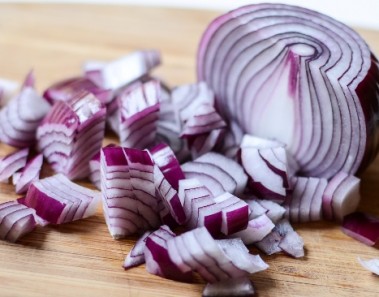
onion dicing

If we want to go a little bit technical, during the growth of onions on the field, it absorbs sulphur from the soil. When we cultivate and peel or cut this onion, it breaks the cells within the onion like I explained above. This action releases certain enzymes in the Onion. The enzymes react with the sulphur, creating amino acid sulphoxides.

When this happens, it creates the highly unstable syn-propanethial-S-oxide, which is a combination of sulphuric acid, sulphur dioxide, and hydrogen sulphide. Syn-propanethial-S-oxide in its gaseous state is able to diffuse out into and around the room where you are. It then comes in contact with the water in your eye, which triggers a burning/stinging sensation via the ciliary nerve of the eye.

How Our Eyes and Brain Reacts To This

Lachrymal gland, found just above the eyelids is responsible for regulating tears in the the eyes. When the irritation start and you feel the stings in your eye, the brain gets  the message and decides to react to help relieve the pain. The brain pushes the lachrymal glands into releasing the tears, trying to flush the irritant out of your eye(s) with the tears. This does not happen in onions that we have cooked because cooking heat already inactivates the enzyme needed to make the troublesome syn-propanethial-S-oxide.

So, now you know what causes the burning sensation in your eye when you peel onion and why you cry shortly afterwards.

COMING TOMORROW: 3 Tricks That I Use To Cut/Dice Onion Without Crying [Works]

If you don’t want to miss this article, please subscribe to our free to our updates now.

Categories
Food Safety Knowledgebase

Do Eggs Need To Be Refrigerated Or Just Stored At Room Temperature?

This is one question that was posed by someone to her friend while trying to buy egg in a mall last weekend. I passed by slowly and listened to their conversation. She wanted to buy two crates of eggs and keep it but her friends opined that some would definitely get spoilt before she is able to consume them. The woman then asked her friend, “what if I keep it inside refrigerator?” Then they both looked at each other with the face that says, “that should work just fine”.

For real, let’s ask ourselves these questions. Do we need to store eggs in the refrigerator or room temperature? How does refrigeration help the eggs we keep in there? Is it just a waste of time and space in the refrigerator? Let’s do the fact-finding job together.

What refrigeration does to eggs stored in it

Dr. Rosamund Baird and Dr. Janet Corry, two experts at Bristol University’s School of Veterinary Science say that storing a contaminated egg at room temperature will only allow the bacteria to multiply. So, storing the eggs in a refrigerator will slow down the multiplication of bacteria. But how do we know if egg is contaminated?

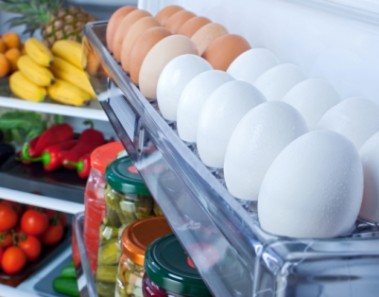
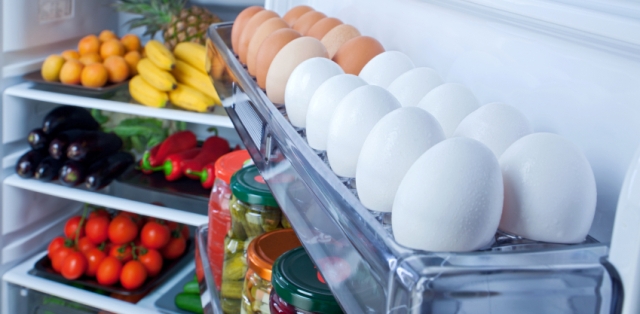
eggs in the refrigerator
Photo Credit: kiss1023.ca

Most of the times, consumers like us cannot tell until we fall ill from consuming the eggs or the bacteria have caused deterioration to the point of spoilage. In countries like the Britain for example, there are laws that require that all egg hens be vaccinated for Salmonella. The Salmonella National Control Programme (NCP) prevents egg operators and producers from marketing eggs infected with the bacteria or that have an “unknown health status”.

This is not so in countries like the United States and many developing nations where immunization of hens against Salmonella is voluntary. No law requires that farmers should do it but the U.S. Food and Drug Administration (FDA) recommends storing eggs in the refrigerator.

According to the American Egg Board, to minimize the risk of contamination and to extend shelf life, eggs should be stored in the case or carton in a refrigerator. If done so, they should last up to four to five weeks without a significant loss of quality

Since refrigerators keep our eggs from contamination, slows down the multiplication of bacteria in already contaminated eggs and prevent illness, why don’t we just keep them in the refrigerator if we have the means. Did I mention that it extends the shell-life of eggs? Yes, it does and that saves you money.

So to answer the major question posed above, it is safer to store our eggs in the refrigerator than the shelf.

Categories
Knowledgebase

Top Reasons To Stop Buying Meat The Way We Do

When we want to buy red meat, many of us just go to the market or to the butcher and as ask for the prices of pre-cut section of a meat carcass. The butcher or meat seller tells you a very high price and we continue to bargain until we think we have gotten a very good price. The meat seller usually disagrees with you, lifting the piece of meat several times to show you how big it is. And of course the piece of meat truly appears big. We agree at a price, open our purse or wallet and pay for the meat.

RECOMMENDED: All Meats Are Not Beef, See All Their Names

That is basically how many people in Nigeria buy their meat. What is wrong with this? You may be expecting me to talk about the improper way animals are being slaughtered at our abattoirs (which is a very big issues) or the unhygienic was they are being processed and displayed for sale. No, this is not what I am going to discuss. Today, I want to try to be a cost-saver by showing you that we often lose money when we buy meat the way we do.

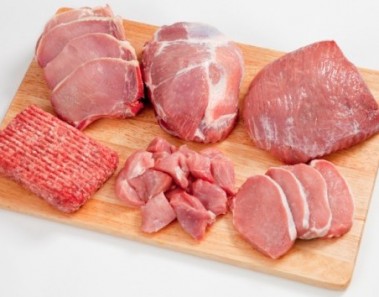
meats
Photo Credit: gab.giggle.com

Have you even noticed that when you buy the white meats – Chicken and Turkey for example, the sizes you get at different times for a particular amount varies. What I mean is that some chicken that you buy one some days for N1000 are smaller that some you buy on other days for the same N1000. This is because we buy by weight. That is how chickens and turkeys are being sold and that is the way red meat should be sold in the market too.

Meat Content of water, protein, fat, ash & calories

I will use the following data to show you how you lose money when you by red meat using size rather than weight.

A typical red meat flesh consists of roughly 75 percent water, 19 percent protein, 2.5 percent intramuscular fat, 1.2 percent carbohydrates and 2.3 percent other soluble non-protein substances as shown in the table below. When we cook meat, most of the water are either lost into the cooking pot or goes out as steam. At the end, our meat shrinks and become smaller.

Product

Water

Protein

Fat

Ash

Calories / 100g

F
R
E
S
H

Beef (lean)

75.0

22.3

1.8

1.2

116

Beef carcass

54.7

16.5

28.0

0.8

323

Pork (lean)

75.1

22.8

1.2

1.0

112

Pork carcass

41.1

11.2

47.0

0.6

472

Veal (lean)

76.4

21.3

0.8

1.2

98

Chicken

75.0

22.8

0.9

1.2

105

Venison (deer)

75.7

21.4

1.3

1.2

103

Beef fat (subcutaneous)

4.0

1.5

94.0

0.1

854

Pork fat (back fat)

7.7

2.9

88.7

0.7

812

Source: Food and Agricultural Organization

Some meat sellers even try to make meat swell by dipping them in water or blood for a long period so that they can ask us to pay more for it. If we had bought our meat by weight, water would have counted for little in the weight and we would have gotten more kilos of meat added. Therefore, when you get small meat with heavy weight, you know there is not much water in it.

Next time we want to buy meat, we may want to go to where it is being sold by weight so that we can stop paying more for water than meat. Insisting on buying our water by weight will really help everyone. This way, both the buyer and the seller gain; nobody is cheated.

ALSO SEE: Is The Red Juice From Raw Red Meat Blood? Is It Safe?

Categories
Knowledgebase

Is The Red Juice From Raw Red Meat Blood? Is It Safe?

Have you ever gone to the local butcher to purchase meat and on your way home you notice some red liquid dripping out of the meat? Have you ever been bothered if this is safe or not? is it blood? And considering the fact that zoonotic diseases could be in blood, what should you do? I am going to answer these questions in this post. So, this post is going to be short and straight to the point. This could make a lot of people extremely uncomfortable.

So, what is this red juice that drips from meat?

Let me tell you categorically that this juice is not blood. We can call this liquid a relative of haemoglobin in the blood. While haemoglobin gives the blood its red colour (due to presence of iron), myoglobin is what gives meat its dark red colour pigment.

RECOMMENDED: Every Animal Meat Is Not Beef! See All Their Names

This juice that drips out of the meat is actually water, sarcoplasm and trace amounts of myoglobin. This myoglobin also has iron it and that is why we get dark brown outside and grey inside – the iron atom is now in the +3 oxidation state. Myoglobin is not found in the blood stream of animals. The only time myoglobin is found in the bloodstream is when it is released after an animal sustains a deep muscle injury.

red myoglobin drip in meat
During slaughter, most of the blood goes out and only a small amount is left. Animals like mammals have more myoglobin and that is why they are called red meat. On the other hand animals like chicken have very small amount myoglobin, less red and hence the name “white meat”. The more myoglobin a meat has, the redder the meat.

Conclusively, this juice that comes out from fresh or raw meat is not blood. It is myoglobin and most of it are even lost when you cook the meat. It is therefore safe to consume in food.

Soon, I will write about more differences between red meat and white meat and which is better in terms of safety and the nutrient they give to out body. Some people also have concerns on whether it is safe to use the water in which the meat is being cooked for further cooking. I will answer all that soon.

ALSO SEE: What Are The Nutritional Values In Cow Skin’s (Ponmo)

If you don’t want to miss these articles when they are published, subscribe to our updates FREE!!!

Categories
Food & Nutrition Knowledgebase

Differences Between Full Cream Milk And Skimmed Milk

When many of us go to the market or grocery stores to buy our Milk, we buy based on the brands that we like and do not take nutrition into consideration most times. Many of us have the impression that milk is milk and do not know that different manufacturers pack different types of milk for sale. Maybe if we understand that the different milks are not the same in composition and hence have different effect on our health, you would consider looking at that milk container when next you hit the grocery store.

If you have ever bothered to check the containers/labels of milk, I am sure you would have come across terms such as skim or skimmed milk and full cream milk or simply cream milk. They mean different thing and thus have slightly different taste (if you can sense that) and different health benefits.

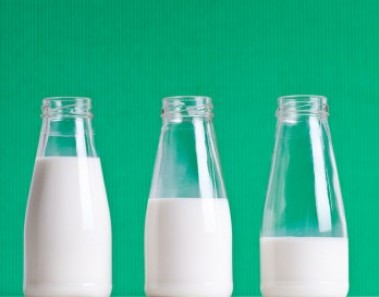
whole milk skim milk

The Differences Between Skimmed Milk & Full Cream Milk

Okay, let me start by giving a short description of milk. It is a whitish nutritious liquid secreted by the mammary gland of mammals and has a lot of health benefits. All mammals produce milk; however, the most common milk sold commercially is that of the cow. In some parts of the world, milk from sheep and goats are consumed and sold.

Full Cream Milk vs Skimmed Milk

1. Major Difference Between Skimmed Milk & Cream Milk

The full cream milk, also known as whole milk is the milk in the form we get them from animals while skimmed milk is whole milk from dairy cows that has had most of or all of its fat removed. So, if you are looking to burn down fat, you may not want to add to it by consuming more of whole milk.

ALSO SEE: Skimmed vs Full Cream Milk: Which Is Good (Better) For Your Health?

2. Saturated Fat Contained In Skimmed Milk and Cream Milk

A typical full cream milk would normally contain around 5 grammes of saturated fat per one-cup serving. This is 20 percent of the daily limit. Now consider that you may also eat other fatty foods such as cheese, butter, coconut oil and other foods rich in saturated fat in a single day. This makes it easy for you to overshoot 25 grams per day.

3. Nutritional Composition of roughly 236ml serving of milk

Full cream milk;

Protein: 7.9 g
Carbohydrates: 11  g
Calcium: 276.1 mg
Potassium: 349 mg
Cholesterol: 24 mg
Sodium: 98 mg

Same volume of skim milk:

Protein: 8.7 g
Carbohydrates: 12.3 g
Calcium: 349 mg
Potassium: 419 mg
Cholesterol: 5 mg
Sodium: 130 mg

4. Vitamin Composition of the 2 Milks

Some people prefer to take skimmed milk because it does not contain fat but what they don’t know is that, unlike full cream milk which contains both water soluble and fat soluble vitamins, skimmed milk lacks the fat soluble vitamins (A, D, E, K). This is because the Vitamins have been skimmed alongside with the fat during the production process. It’s simple, they are only soluble in fat, so they are dissolved in the fat. What happens when the fat is removed? The vitamins are removed too.

In conclusion, what you want from milk determines the type of milk that you choose when next you go shopping for milk. By the way, cream milk tastes better than skimmed milk. #JustSaying

ALSO SEE: Here Are The Brands of Yoghurt You Must Stop Buying

Categories
Knowledgebase

The Glycemic Indices Of Some Common Foods We Eat

The glycemic index of of a food is a number associated with that food; it indicates the food’s effect on a person’s blood glucose (also called blood sugar) level. We all have been given the impression at one time that all Carbohydrates are bad because they raise the level of our blood sugar. There are those ones with low glycemic index which only have little effect on out blood sugar.

However, there are also carbs that create sharp increase in blood sugar and they can raise the risk of Type 2 diabetes, heart diseases and weight gain. Carbohydrates with low Glycemic Index (GI) of (0-54) or GL (<10) help to curb hunger and also provide you with more energy. This way, you eat less than you would normally eat and you start to lose the weight that you have been dreaming of doing.

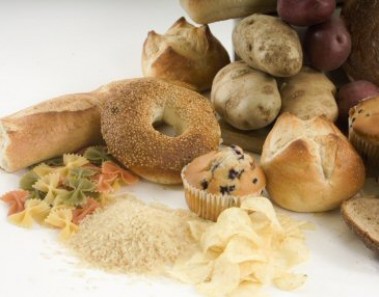
carbohydrates foods

A short Guide on Glycemic Indices of Foods

High GI Foods = GI of 70+ (Try to avoid these foods)
Medium GI = 55 – 69 (use caution in eating them)
Low GI = 0 – 54 (These foods are not bad, they are what you want; look for foods with a low GI score)

Common Foods That We Eat and Their GI

FOOD Glycemic Index (GI)
(glucose = 100)
Serving size (grams)Glycemic load (GL)
per serving
Sponge cake, plain46±66317
White wheat flour bread70±03010
Coca Cola®, average58±525015
Fanta®, orange soft drink68±625023
White rice, average64±715023
Ice cream, regular61±7508
Milk, whole milk27±42503
Milk, skim32±52504
Reduced-fat yogurt with fruit, average27±12007
Banana, ripe5112013
Kidney beans, average27±41507
Spaghetti, white, boiled 5 min, average38±318018
Spaghetti, white, boiled 20 min, average61±318027
Microwave popcorn, plain, average72±17208
Potato chips, average54±35011
Yam, average37±815013

Foods with high Glycemic indices give you high blood sugar level and can lead to the onset of diabetes. They also add more sugar to your blood which the body breaks down into smaller units of carbohydrates and ultimately fat. Fat is not what you want much of it to be stored in your body, especially belly. Almost everyone don’t like belly fat.

Categories
Knowledgebase

Every Meat Is Not Beef! See All Their Names

It is very common in this part of the world to refer to every meat from almost every animal source as beef or just meat. This is not only common amongst the not-too-educated but also among the well-educated. The exceptions are just meats that are totally different; of course, nobody would refer to chicken, turkey, snail and pork as beef.

The only distinction we seem to have gotten between meats that look alike in structure and appearance is that between beef and pork. These are the meats from cattle and pig respectively. They are the two we actually call their real names. It is hard to come across a person – even a stark illiterate, who would refer to pork as beef but when it comes to meats from goat, sheep and some other related animals, it is beef.

meats
Photo Credit: gab.giggle.com

Why am I writing article on names of Meat?

I was on a queue at a restaurant waiting to make my order when the man standing in front of me started raising his voice. I listened and found out that he was arguing with the waitress over names of meats.

The man already bought rice and plantain when this poor waitress asked what else the man wanted. “Put one meat”, the man replied. The waitress then asked him what kind of meat the man wanted to which the man replied, “What do you mean? Just put one meat”.

RECOMMENDED: Is The Red Liquid That Drips Raw Red Meat Blood? Is It Safe?

I could see the frustration on the face of the waitress but she calmly replied, “…but sir, we have different types of meat, like beef, pork…”. The man interrupted by asking one hilarious question: “why would you put pork? Is pork meat? Pork is pork and there is cow meat and goat meat!” I had to add my voice to save the helpless waitress. This was when I thought I should write about this because others joined the argument and I found out that people only knew what the meats from cattle and pig are called – beef and pork.

Special Names for the Meat of some Common Animals

Here are the special names for the meat of some animals that we may know and not know.

Animals Meat Name
Cattle (cow or bull) Beef
Calf (young cow) Veal
Pig Pork
Deer Venison
Sheep (Ram or Ewe) Mutton
Pigeon Squab
Water Buffalo Carabeef
Goat Chevon
Chicken Chicken
Turkey Turkey

Now that you know better, you should try calling these animal meats by their real names and you will definitely get used to it. This list is not exhaustive and we welcome contribution in form of comments.

If you think there is an animal meat we have missed here, you can share it with us using the comment section below.

ALSO SEE:  Is Cow Skin (Ponmo) Nutritional or Not? Questions Answered!

Categories
Knowledgebase

Signs And Symbols On Food Packs And Their Meaning

Many people just want to eat and do not care to know about what they are eating. This is one of the reasons people gain weight and later wonder why they are accumulating fat. We need to know the composition of the foods we eat so that we choose what is good for us and what is not. Some people have eaten foods that landed them in hospitals because they have refused to check the precautionary statements written of food packs.

Food laws have made correct and complete labeling a very important part of food manufacturing. Manufacturers are required by law to add labels to food packages to be a source of information that consumers like and trust. Since 2006, the major food allergens are required to be specifically noted on the Information Panel of the food label (i.e., fish, milk, soybeans, wheat, eggs, shellfish, tree nuts, and peanuts).

There are symbols that are printed on food packs to pass information to the consumer but often we either don’t check them or simply disregard them. This article will show you ten symbols or signs that you may have come across on food packages in the past. If you have not seen any of them before, you would likely come across it in the future. If and when you do, you would know the meaning.

11 Signs And Symbols On Food And Their Meaning

1. Microwavable or Microwave Safe Symbol

Manufacturers may use any of the above terminologies as they both mean the same thing. In one of my previous articles where I answered the question of “if microwaved foods are safe to eat or not“, I mentioned that there are plastics that are safe for use in the microwave. These plastics do not have toxic components that migrate into the food during microwaving.

microwavable symbol

So, how do you know if a plastic container is microwavable? The easiest way to confirm that a plastic container is safe for the microwave is to look for the Microwave Safe symbol on it. This stamp of approval, which includes three wavy lines to symbolize radiation (image above), basically says that the container can withstand the heat of the microwave without melting or releasing harmful amounts of chemicals.

2. Nutritional Compass or Nutritional Facts

Apart from the list of ingredients that make up a food product, most packaged food must have a listing of nutrients and related information on the Information Panel that is usually on the side or rear of the package. These would normally include such information as serving size, calories, fat, carbohydrates, sodium, protein compositions.

nutritional compass or facts

Claims such as “low fat,” “high fiber,” “reduced calories,” and “cholesterol-free” are also included on food packages as information to consumers who may have concerns about these components.

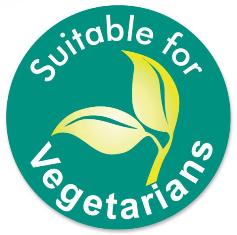
3. Suitable for Vegetarians Symbol

The Vegetarian Society defines a vegetarian as ‘someone living on a diet of grains, pulses, nuts, seeds, vegetables and fruits with or without the use of dairy products and eggs (preferably free-range).’ Having defined this, you should know that vegetarians try to stick with their veggies without adding animal foods to eat.

Since they are not part of the manufacturing of some of the foods they eat, they want to be sure that what they want to buy or eat is suitable for vegetarians’ consumption.

vegetarian label

However, the ‘Suitable for Vegetarians’ logo is not regulated. It is a ‘voluntary claim’, which means it is illegal for the labeling information to include anything that is false or likely to mislead. The symbol is shown above.

4. Treated with Irradiation (Radura logo)

For foods that have been treated with ionizing radiations, the Radura symbol comes along with the statement “Treated with radiation” or “Treated by irradiation” on the food label. With this, identifying irradiated food has been made very easy by binding food laws. These laws are also very strict.

There are many concerns over the consumption of irradiated foods and one of such is this that I shared on one of my recent posts assessing the safety of irradiated foods;

It states, “When food is exposed to high doses of ionising radiation, the chemical composition and nutritional content of food can change. Radiolytic by-products are often formed in irradiated food. Very few of these chemicals have been adequately studied for toxicity. One such chemical – 2-DCB – can cause DNA damage in rat colon cells at high doses.”

radura logo

Whether irradiated foods are safe or not is not the subject of this article, you can read further on that by clicking here. Whatever decision you make for yourself on irradiated foods – whether to eat it or not, identifying irradiated foods is easy with the above logo.

5. Allergen declaration

Allergen declarations are mostly precautionary statements on food informing consumers that the food may have a component that one could be allergic to. I wrote on allergies not long ago and also mentioned some of the common allergens in food.

Gluten in wheat flour could be an allergen, people could be intolerant to lactose and find it difficult to digest milk. Other common food allergens include Crustaceans, Eggs, Fish, Peanut, Soybeans, Tree Nuts, and Sesame seeds. You can read more about that here.

gluten free logo

There are instances where symbols are used to declare the absence of an allergen. For example, gluten-free symbol (above) is relatively common.

6. Organic labelling

These are used on organic foods and its use is totally voluntary. The food must be organic up to a particular percentage before an organic claim or statement could be made on the label. For example, In Canada the use of the organic logo is only permitted on products that have an organic content that is greater than or equal to 95% and have been certified according to the requirements of the Canada Organic Regime.

organic symbol

Above, is the organic food label! There are food that the manufacturer will want you to keep frozen. There is a logo that indicates that. See on next page.

7. Keep Frozen symbol

This symbol tells you to keep food frozen in order to keep the quality and shelf life for longer period. Some food materials will deteriorate rapidly if stored at normal room temperature. This symbol usually looks like the one below.

keep food frozen

Food such as butter and margarine can be frozen for 3 months. Grated cheese can be frozen for up to 4 months and can be used straight from the freezer. These are examples of common foods that we may see the symbol on.

8. Waste Disposal Symbol

This symbol is used on many products other than food packages also. It is usually called the Tidyman. It tells you to dispose of this packaging carefully and thoughtfully. Do not litter. Throw them in thrash cans after you and not litter the ground with it.

waste disposal logo

Above is the symbol telling you to properly dispose of your food packaging.

9. The Mobius Loop (Recycle)

The Mobius loop can be used for two different terminologies that should not be confused with each other because they both refer to recycling. I will explain the two briefly and put the symbol too.

recycle symbol - mobius loop

The Mobius loop indicates that an object is capable of being recycled – not that the object has been recycled or will be accepted in all recycling collection systems. Sometimes this symbol is used to indicate that the packaging is a product of recycling. It could come with a percentage figure in the middle to explain that the packaging contains x% of recycled material.

10. Halal logo

According to the Codex Alimentarius (Food Laws) of the Food and Agriculture Organization (FAO), Halal food means food permitted under the Islamic Law. The animal to be slaughtered should be lawful according to Islamic law. The food should be prepared, processed, packaged, transported and stored in such a manner that it complies with the Codex General Principles on Food Hygiene and other relevant Codex Standards.

Muslims don’t eat pork, Halal logo may also indicate that the food does not contain pork or a product of it such as fat. It generally tells Muslims that the food does not contain anything they are prohibited from eating.

halal logo

When a claim is made that a food is halal, the word halal or equivalent terms or symbol (as above) should appear on the label.

11. Bar Code on Food Pack

Just about every package of food you have ever purchased or seen has a bar code printed on it but we just don’t bother to check them or see the information they contain. The bar code has more information beyond what many people think.

barcode on foods

When the barcode is scanned, the computer system automatically determines if the product need re-ordering. This is a piece of information that could be very useful to supermarket owners. The price of the product appears when the barcode is scanned. It can also be used to determine if the product is genuine.

These are some of the important and relatively common symbols on our food packages that we should pay more attention to.

IN THE NEWS: Scientists Found A Way To Cook Rice To Reduce Calories In It

Categories
Knowledgebase

Stop Buying Margarine as Butter. See The Differences!

Many people don’t even know that butter and margarine are not the same. I have spoken to people that just believed they are just different names for a single food item. If you also do not know, butter and margarine are not the same thing. Some margarine manufacturers have capitalized on this by advertising their margarines as butter – you hear people call cooking margarine cooking butter. I am going to show you what differences they have between them so that you will never walk into that grocery store and just pick anyone.

Main Differences Between Butter & Margarine

1. How Butter & Margarine Are Made

Butter is made from cream which rises to the top of milk if it sits for a period of time. The process involves churning the cream, a chemical reaction takes place which makes the cream begin to solidify. It is not as simple as this but I do not want to bring in all the jibber jabber that are actually useless to you.

Margarine on the other hand is made from solidification of vegetable oil in the presence of a catalyst through a process called hydrogenation. The solidifying process begins when hydrogen is bubbled through the vegetable oil (liquid) at a high temperature and in the presence of a catalyst to solidify it.

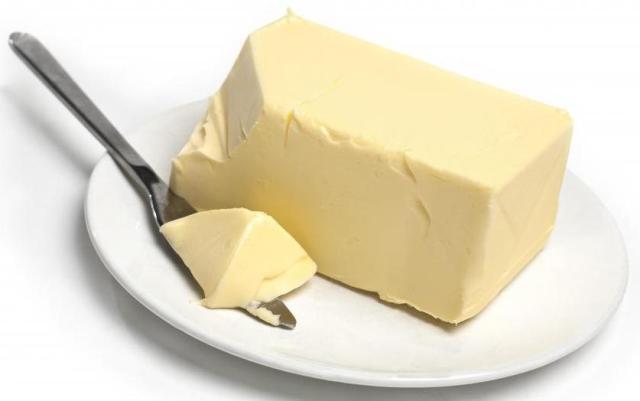
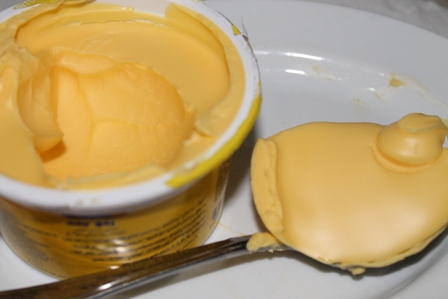
butter in a plate
Butter in a plate

The summary of all these is that butter is from animal source while margarine is from plant source.

2. The Price of Margarine and Butter

Butter are costlier than margarine. If you see butter and margarine of comparable quantity having the same price tag, please check very well as the butter might not be butter. Using taste as a factor might prove unproductive because the difference between butter and margarine can be very subtle, depending on manufacturers.

3. The shelf-life of Butter and Margarine

Butter and margarine have different shelf lives. Butter must be kept refrigerated in order to remain fresh for several days. Margarine should be refrigerated to maintain its solid form between uses, but it can remain stable much longer than butter.

margarine
Margarine. Photo Credit – amuslima.com

Colour could also be a determinant as margarines are generally more yellow than butter. This test can however, not be used on its own because I have recently seen some margarines that are not as yellow as margarines used to be in the past. This is just my own observation but it could serve as the 12th player in the team when you need to make a decision.

When it comes to their nutritive value and health benefits and hazards, they both have their their good points and bad points. I will discuss it under a new topic – Butter or Margarine: Which Is Really Good For Your Health? in the nearest future.