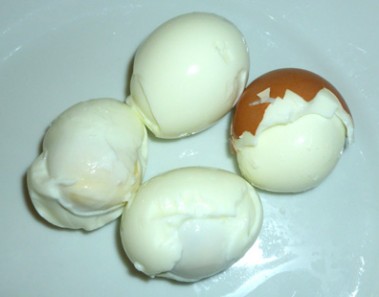
Removing the shells of boiled eggs can sometimes be a pain. If you cook and eat eggs often, you would instantly understand what I am talking about. Nobody really likes an egg that has been bruised all around while trying to remove the eggshell. I have tried several tricks recommended by people in the past to smoothly remove eggshells but they all did not work every time.
This trick I am going to share with you works 100% of the time. I have used it over and over again but I never thought of sharing with you here on FoodsNG until some days ago when a friend visit and said “Wow, this is cool”, while I was trying to remove the shells from two eggs I boiled. This was when I realized I should share it with more people.
So, how do I smoothly remove the shell from my boiled eggs?
Steps for smoothly peeling boiled eggshells!
First of all, you must have at least two boiled eggs to remove shells from. Boil your eggs and make sure they are hard enough before you take them off the burner.
Take a bowl of cold water and put these eggs in there, immediately after taking them out of the cold water.
Now, get a glass cup and fill about half of it with cold water
Put the two eggs in the glass cup and use your right hand palm to cover the open end
Place your left hand palm below the cup and shake the cup as seen in the video above
Now, remove your eggs and smoothly peel of the shells flawlessly.
How To Easily Peel Eggs With Iced Water
It is advisable to use older eggs for boiling. If the eggs were previously in the refrigerator, bring them to room temperature before boiling. Now it is time to boil your eggs, make sure they are boiled enough and then turn the stove off.
Leaving the cooking pot on the stove with the eggs still inside the water. After 14 minutes, place the eggs into ice water and it should peel easily inside.
There is also the microwave option but this does not come without its own dangers. It is one of the reasons we are not going to talk about it in this article.
If you like this and try it out, share the outcome with us. Also, if you have any Food Recipes, Food Tricks and Hacks, share them with us by sending to foodsng2015@gmail.com and we shall post them on FoodsNG.com, BBM Channel and give you credit for it.
Many people cannot differentiate between food roasting, grilling and baking, therefore, they use them interchangeably. This has led to the inappropriate use of these words — some know that they are different but just don’t care to know the differences while some others don’t know they are different food processing methods and mean different things.
In this article, we are going to explain the meaning of each in cooking and outline their difference. Maybe that “roasted corn” you say every time isn’t a result of roasted after all. While these cooking methods involving the use of dry heat are nearly identical in today’s kitchen and usage, there’ are still some few things that set them apart.
What are the differences between Roast, Bake and Grill?
I know this might come to many as a surprise, even though many people confuse grilling and roasting, it is actually roasting and baking that have more similarities. Grilling is very easy and should not be confused with any of the other two.
On the next pages, you will see the differences between grilling, roasting and baking of foods and examples of foods that we use each one for.
What is Grilling?
The grilling of food involves the application of dry heat from either below or above in order to cook food. Now think of those foods that you process this way — you are grilling them and not whatever name you have been calling it before. The heating of the food is by radiation.
A very common food we apply grilling to is meat where the meat to be cooked with dry heat is provided with high and direct heat from below with the help of smoking wood or hot coal or charcoal.
In countries like the United States and Canada, if the heat used to cook the food is provided from above, the process of cooking is called broiling. It is important to note that grilling pans are now used these days. The method of heating here is by conduction.
Common foods that we grill include meat and corn. So, do you think calling “roasted corn” by that name is right?
Roasting Vs Baking
The structure of the foods and the type of foods are the major factors that distinguish these two processing methods. Roasting involves cooking foods that already have a solid structure and shape outside the container before the cooking process starts at all e.g. meat and vegetables. Baking, on the other hand, involves foods that lack the definite structure before heating, then become solid during the cooking e.g. cake and bread.
Foods that are roasted are done in an open, uncovered pan, while food items that are baked may be covered and done inside an enclosed oven area or equipment. Also, the temperature for roasting is higher than involved in baking — about 205 degrees Celcius compared to about 175 degrees Celsius.
Now don’t get roasting and grilling confused because roasting is done in front of or over a fire or bed of coals while grilling involves placing food on a grill situated a few inches over the charcoal, where the intense heat cooks foods quickly. Roasting takes place at a slower pace since the food is not that close to the heating charcoal.
Since grilling is fast, it is possible to end up with a food that is ver brown outside and a bit uncooked inside, this is not the case with roasting as it makes use of slow heat over a long period of time.
I can confidently bet, a well made puff puff will surely make you ask for more any day, anytime. As this snack seem to be quite popular in all the cities here in Nigeria, it will surprise you to know that many people who are lovers of it do not know how to make it.
I must admit that a few have clues but many are in doubt of the simple steps in making the fluffy, brown tasty snack. I will be sharing with you how you can make puff-puff for your personal consumption or events. No doubt, it will surely wow your friends and family or guests.
How To Make Your Own Puff Puff At Home
What Are The Ingredients?
Flour (1kg)
Active dry yeast (20grams)
Water (As appropriate), 1 or 2 pinches of salt and sugar (between 150-200grams)
Nut meg (Optional)
Vegetable oil
In the quest of many to make puff puff rich, they have added eggs and milk. This most times does not produce good puff puff. I usually do not add them. They are not necessary. If you must, it must be in very small quantities.
Direction On How To Make Nigerian Puff Puff
Wash your hands clean with soap and water.
Pour all the dry items like flour, sugar, salt, active dry yeast and nutmeg into a bowl. Gradually pour warm water to make it rise quickly and mix thoroughly with your hands until the mixture turns pasty but not watery with no lump.
Cover the mixture with a foil paper or any other item that will make it air tight and keep in a warm place for about an hour. After the period, the batter would have risen to almost double its previous height and become thicker with foamy top.
Pour oil into a frying pot and place on cooker under low heat.
When the oil is hot, use your hand to shape the batter to form round like shape and drop into the hot oil. Do this until there no more space for more.
Allow to fry until all sides turns into golden brown colour. This can be achieved by flipping the puff puff using a folk or long spoon every 30 seconds on the average.
Scoop out and keep them in a sieve place over a bowl or plate to allow some of the oil to drain into the bowl.
Your puff puff is ready to be served.
For 1Kg flour as used above, you should get about 60 pieces of the size of puff puff seen in the picture above. It can be served with a chilled orange juice or Zobo drink. I particularly love it with Zobo. Learn how to make Zobo drink.
In recent weeks, we have discussed very serious food matters relating to food security, food safety, foods that help parts of the body and food recipes. Today, we are adding some sort of fun to our learning by talking about foods that look like the parts of the body they help.
Foods That Look Like Parts Of The Human Body They Help
I know you may be tasking your brain already, trying to think of one that you know already. Don’t worry, I am going to share some interesting ones with you here. You go through the pages to see all these foods and the part of the body that they help. Have fun while learning too.
1. The Carrot and The Eye
The cut section as seen in the image below has patterns of radiating lines that look like the pupil and iris of the human eye. It may not be a coincidence that the beta-carotene present in carrots help the eyes. The beta-carotene is good for our overall eye health.
When we eat foods that contain beta-carotene, our body converts it into vitamin A. The vitamin A ultimately gets converted into retinol that is being used by the eye for certain functions.
2. The Walnut and The Brain
This is the most striking of them all — the resemblance between the walnut and the human brain. Taking a look at the picture below, you would agree with me that they share this amazing resemblance between themselves and the former helps the latter — they (walnut) are often referred to as “the ultimate brain food”.
Walnuts have an abundance of with DHA, a type of omega-3 fatty acids, an essential fatty acid that helps keep the brain functioning normally. A large part of the brain is made up of what is normally referred to as “structural fat”.
It needs high-quality fats like the omega-3 fatty acids to function properly by keeping the brain fluid and flexible. Walnut is very rich in these omega-3 fatty acids.
3. The Ginger and the Stomach
Many forms of ginger that you will buy as a whole would have one part that has a shape looking like the shape of the human stomach. The resemblance is not as striking as that between the walnut and the brain but they sure bear some resemblance in their shape.
I grew up seeing adults using ginger ale drinks to help relieve stomach aches and upsets. Ginger on its own is also a helpful digestive that helps digest food. It is a known remedy that chewing on fresh ginger helps digest heavy foods.
4. The Celery and the Bone
Celery, when you remove the leafy part sure look like the bones of the forearm — ulna and radius. Celery, botanically known as Apium graveolens, is rich in calcium — the essential mineral for bone formation in the human body.
This is not just the end about how celery helps bone formation, it also contains vitamin K, which along with the essential minerals magnesium and phosphorus, helps make the proper absorption of calcium in the body possible.
5. The Avocado and the Uterus & Cervix
Cutting avocado horizontally as shown in the image below make sit shaped like the uterus and cervix together. It look like Uterus and helps the uterus in some ways — it has been reported to help with hormonal balance and work against the development of cervical cancer. The most interesting part is this…
Just as it takes 9 months for a baby to fully develop in the mother’s womb, it takes an avocado exactly the same 9 months to grow from a blossom into a ripened fruit! Isn’t that amazing.
There are more but these are the top 5 I found interesting and decided to share with you!
I love cakes and those that make cakes for me know my love for the chocolate flavour. I have friends that make cakes and I have a sister that does that too, so, it’s a kind of blessing. Don’t get me wrong I don’t eat cake every day and I don’t crave it, but I do eat it when I feel like.
I make orders for chocolate cakes at times like these and keep inside the refrigerator. Don’t copy me if you don’t exercise because you would only increase your chance of adding weight. I recently discussed with some of those that make cakes for me and they agreed to share some simple chocolate cake recipes but they haven’t. I learned some myself and I am posting them for those that might be interested.
Simple Chocolate Cake Recipe
There are so many recipes for chocolate cakes that turn out fine and delicious, but when I talk about simple chocolate cake recipes, I am referring to those that meet the following criteria that have been set by me:
Contain chocolate
Small in size (you can actually make into any size)
Have ingredients that are easy to get around
Will be ready in about an hour
Delicious
Hence, the reason for just 3 to be discussed in this article. This post has taught me that different people have different ways of making their foods. Therefore, if you have a good, delicious simple recipe for chocolate cakes, share with us and we will credit you for it.
Simple Chocolate Cake Recipe Number 1
Ingredients:
1 cup white sugar
1 1/8 cups flour
1/2 cup cocoa powder (use the unsweetened one)
1 teaspoon baking soda
1 teaspoon salt
1/2 cup butter or (margarine if you can’t get butter)
1 egg
1 teaspoon vanilla extract
1 cup cold, strong, brewed coffee
Instructions:
The first thing you need to do is to put on your oven and let it heat up to around 170-175°C.
Lubricate the inside of the pan you decide to use with butter, some groundnut oil or margarine
Sift the flour, cocoa, baking soda and salt together and set on one side.
Take a bowl and cream butter and sugar together until you get the light and fluffy texture.
Add the egg and vanilla to (4) above and beat well.
Add flour mixture in (3) above, alternating with coffee. Beat together.
Bake at 175°C for 40 to 45 minutes and you will get the cake pictured above.
How To Make A Chocolate Chip Cake
Ingredients for the cake
200g plain flour
220g dark brown soft sugar
4 tablespoons unsweetened cocoa powder
1 teaspoon baking soda
1 teaspoon salt
75ml vegetable oil
1 tablespoon vinegar
2 teaspoons vanilla extract
250ml milk
170g plain chocolate chips
Instruction for preparation
Preheat the baking oven as in the previous procedure to 175 – 18°C
Lubricate and flour the square tin you want to use (20cm for this)
Add all the flour, dark brown soft sugar, cocoa powder, baking soda and salt in the prepared tin.
Mix these ingredients well together with an eating fork.
Make three round holes in the mixture of the ingredients and pour oil in the first, vinegar in the second and vanilla in the third one.
Pour milk inside, over all the ingredients and mix with a fork until well blended.
You can now pour the chocolate chips over the top.
Bake in the preheated oven for 30 minutes and you will see that the case would have risen above the tin.
Allow the cake to cool in the tin for 15 minutes
Cut and serve from the tin.
If you try these out on your own, let us know how it turns out
If you have another chocolate cake recipe that is simple (easy to make), please share it with us by sending it to foodsng2015@gmail.com. We shall duly credit you for the recipe. Thank you!
Chefs all around the world have contradictory views as regards the timing of adding salt to foods during cooking. In fact, there is no record of any research that has shown and proven which time of salting is healthier or appropriate. Based on the controversies, I have decided to join the chain of food professionals to share my opinion in line with my training and experience as a food scientist.
Salting For Different Types of Food
I have also discovered that the process of salting actually differs for different foods but this time, my decision is only to write on these two meals (Meats and Soups) since they are regularly cooked in most house holds on daily basis. Before the emergence of refrigerator and other forms of preservation of foods, historically, the primary reason for adding of salt to food was for preservation. Flavour and taste was a secondary purpose. Lets see the appropriate timing to add salt to the two meals.
When, During Cooking Should You Add Salt To Meat?
I do not know if it is because we want to get things done quickly or it is the better way; what I see mostly is people adding salt to meat from the very start in addition to other additives like onions, MSG and other. When this is done, it tends to harden the meat. The addition of salt raises the boiling temperature thereby reducing the cooking time but less natural meat flavour is released as salting closes the pores of the meat.
Hey friends, I am particularly interested in the flavour of the meats when I am cooking. For me, I have adopted adding salt to my meats almost at the end of cooking. It provides an opportunity for the natural flavours of the meat to be produced. It also helps in reducing the amount of salt to be added which is healthier for high blood pressure patients.
The idea of adding salt at the start of cooking soups is fairly common among students but gradually creeping into the method of cooking by many house wives. In fact, it was in the University that I first notice this. Students are always in a rush. When you add salt at the start, as the soup thickens, only water is evaporated not salt, so you might likely end up with a slightly salty food as you would have added salt based on the initial volume of the soup.
It would be smarter to add salt much later into the cooking when the soup is almost at your desired thickness. That way, you will avoid salty food. Remember the daily requirement of sodium should not exceed 2300mg per day which is an equivalent of about 10grams of salt. To much salting due to adding at the start of cooking could raise your daily sodium level above 5000mg which is unacceptable.
I do believe some of you have contrary opinions and methods you have adopted for many years that have made your food a delight to your family. Please share with us if you agree or disagree with this write up.
In this era when the consumption of pastry foods and junks is on the rise, one or two servings of vegetables/week which remains the only source of vitamins and minerals for many has been made to lose most of its nutritional values, if not all. No wonder the immune system of many Nigerians continues to fail them at the slightest invasion of bacteria infections resulting in illnesses.
Aside from the fact that such single or double servings of vegetables/week are low, many housewives and cooks have only provided good looking vegetable soups to their families as against a more nutritious one. For me, I have come to realize that it is much more important to consume a less delicious food which is well loaded with nutrients than to funnel into my system a delicious meal with no or low nutrients. It is what actually prompted this article on how to maximize the nutrients in your vegetables.
Sliced or chopped leafy vegetable from market presents an avenue for a near-complete loss of nutrients even before preparation. As everyone would rinse or wash the chopped leaves once they are ready to cook, the broken cell walls of the leaves give way for loss of nutrients since the vegetable will be drained from the added water.
How To Know That You Should Not Chop Vegetables In The Market
A simple experience will surprise you. Buy both un-chopped and chopped leafy vegetables from the market. Rinse both vegetable types in the same quantity of water to clean. Pour the water drained out in both samples into different transparent glass cups.
You will see that the chopped leafy vegetable has darker drained water compared to the un-chopped one. A clear indication of a significant loss of phytochemicals and nutrients even before cooking.
A further experiment on the matter!
I would even ask you to take the experiment further buy buying vegetables in the market, ask the vendor to chop the for you and buy another fresh vegetable, leave uncapped and take home. When you get home, chop this vegetable and clean it with water.
Do the same for the one you chopped in the marker and do the clear glass-drained water experiment above. You will get a similar result as the one above, an indication of the loss of phytochemicals.
Have you ever wondered how clean the chopping board of these vegetable sellers are? That is completely left for you to judge. In most cases the chopping board is left outside over night for goats, insects and dogs to play with, only for them to resume the next evening, dust the board, maybe just clean with some water and start using for customers.
If vegetables are chopped with these kinds of boards, the sliced leafy vegetable becomes easily contaminated. No wonder many are faced with serious diarrhea after eating vegetable soups. Clearly, one cannot generalize in this matter but some of these vendors do it that way — and sometimes, it is hard to tell which is which.
The best option for you and your family is to buy these vegetable leaves un chopped, rinse them properly and have them chopped or sliced by yourself. Yes, you might not be as perfect in slicing the veggies as the market women but over time you can only get better. Remember, this is simply an action done for improved nutrition and you will definitely be better for it.
Yes, cashew nuts are calorie-dense but a whole lot of people are unaware of how calorie-dense food such as cashew nuts can be helpful in their weight loss therapy. Losing weight had been a thorn in the flesh of many. While exercises play a major role in ensuring you trim into your preferred size and weight, eating the right foods with appropriate portions based on your body chemistry and metabolism is also critical.
For many years, nutritionist, dieticians and many other food enthusiasts have promoted the need to avoid consumption of this high fat, no cholesterol and high fibre snack because it has been labelled as fattening but no one did spoke on how portion control of this tree nut can be effective in weight loss therapy. Let us see how helpful the nut is.
Many of my clients who approached me for a weight loss menu are somehow shocked when I included cashew nut into their diet especially when I discover they do not mind consuming it. Cashew nut is loaded with fats, some of which are the healthy mono and polyunsaturated fats. The digestion of fats starts in the stomach but majorly carried out in the small intestine. The idea is that it will take a longer period for this healthy food to be digested, thereby extending satiety and reducing hunger, unlike carbohydrate-based foods that keep you hungry due to the fact that they digest very quickly.
If you limit your consumption to 18kernels of the roasted, salted or unsalted cashew nut during snack time, then the entire calorie you would have added to your body would not exceed 170kcal. This is significantly small compared to snacking on a bottle of coke and popcorn or meat pie or sausage roll or sweetened chips which will eventually keep you asking for more in no time and providing less nutrition.
One advantage of Cashew nuts is that they are not only packed with fats, but they also contain a reasonable amount of fiber, magnesium, antioxidants, and vitamins which will serve to keep your body in state proper weight loss.
Don’t Throw Away Caution:
Even for vegetarians, an overdose of these veggies has been found to cause certain deficiencies. It suffices to say, no foods item should be consumed excessively, moderation does it. While the inclusion of a handful of cashew nut will improve your health and could help you lose weight, addiction to the nut might be counterproductive.
In weight loss therapy, portion control is imperative. I usually recommend eating no more than 150 grams of cashew nuts in a week. If you must eat daily for weight loss, just a few kernels would be okay as snacks.
Hey! I hope you are aware? Cashew nuts taste really nice too.
Pregnancy is always something of joy especially to young couples with the happiness boundless more to the woman. She is carrying her own baby- What else can be more exciting? The very hour the child is born, the baby is expected to be fed by her mother provided there was no complication during delivery. The quality of breast milk available for feeding the child is determined by the quality and quantity of foods consumed by the mother during and after pregnancy.
Yes, losing the weight associated with pregnancy might be a relief, but what is even more important for your body shortly after the arrival of your baby is eating foods that are nutritious and energy-dense to allow a breastfeeding mum to perform her God’s ordained responsibility to her child.
Photo: socialgradient.org
Here Are Some Foods Lactating Mothers Should Eat More
This short post came to bear when I realized how a mum who was always eating well, breastfed her baby exclusively for 4 months. The result on the child is clearly impressive.
1. Watermelon:
No lactating or breastfeeding mum wants to be dehydrated. Aside from advising them to drink enough amount of water since they constantly produce breast milk which should contain more than 90% water, I prefer breastfeeding mum to consume fruit like a watermelon that will not only hydrate them but also provide adequate vitamins and antioxidant that will directly improve the nutrition of the child. The good health of the mother is also very critical during breastfeeding.
2. Milk While Giving Out Milk:
Yes, Milk. As a breastfeeding mother who needs to provide calcium loaded breast milk to her child, there is a need for her to consume milk products that will help replenish the lost calcium. Depending on the preference of such women, options like yoghurt, whole milk, skimmed milk, cheese, and homemade ice cream can be helpful.
For those that are lactose intolerant, options like bananas and plant-based foods like orange juices and tofu that are fortified with calcium can provide some replacement.
3. Salmons And Other Fish Types:
It is no news talking about the importance of omega 3 fatty acid even in the lives of every one of us. For breastfeeding mum, there is a need to supply this healthy fat to the child for proper brain function and growth.
The produced breast milk also contains some amount of protein. Consuming healthy protein from salmon and sardines that are low in mercury is a good way to start.
4. Leafy Vegetables:
When I say vegetables, I do not mean overcooked neither am I talking about undercooked ones. It has to be moderately prepared to make the nutrient more bio-available while avoiding the loss of these nutrients due to high heat. In the diet of an Infant, the supply of Vitamin A is key for improved nutrition.
Green and leafy vegetables are excellent sources of vitamins and nutrients like vitamin A, calcium, vitamin C, and iron. Spinach and broccoli are good examples. According to a study conducted by researchers from the Johns Hopkins School of Public Health found that a single, oral dose of vitamin A, given to infants shortly after birth can reduce their risk of death by 15 percent.
5. Sweet Potatoes:
Every lactating mum needs to consume an extra 500kcal of food to complement the food requirement by the child. This vegetable provides healthy calories and a rich source of vitamin A, carotenoids and potassium. I chose to recommend sweet potato over other tubers because it contains an array of nutrients. Other foods to be consumed by breastfeeding women are those rich in folate. Okra is a typical example.
Lactating mothers would find this article useful. If you are a lady, someday you will be pregnant and have your own children. Do adhere to some of the tips highlighted in this article.
Watch Out For Foods Lactating Mothers Should Avoid
Have you noticed how a large population of Koreans (Asians in general) keep looking slim and healthy throughout their lifetime? Well, their diet plays a significant role in how they look and their health. You can try some of their foods once in a while and see how delicious and nutritious they can be. We will mention a few of these Korean foods in this article and give you recipes for them in some of our future articles.
Korean Foods To Help You Lose Weight / Body Fat
The low-calorie soups and foods eaten in Korea are probably one of the reasons obesity is still relatively rare in South Korea. We learned from a 2010 estimate that just about 33% of adults are overweight or obese — this was against the 68 percent figure in the United States of America.
One of the foods and eating traditions that probably help keep Koreans slim and healthy is one that involves including soup at every meal. This single act means that they get filled up on a relatively low-calorie but satisfying food. Studies show that soup eaters tend to eat less high-calorie fare later.
Here are some simple Korean foods that have ingredients that have been proven to help lose weight. You should check them out and maybe try them out in Korea restaurants or check out their recipes and make it yourself at home if you are the type that doesn’t like eating outside — maybe because of risks of food poisoning in restaurants or cost of the foods.
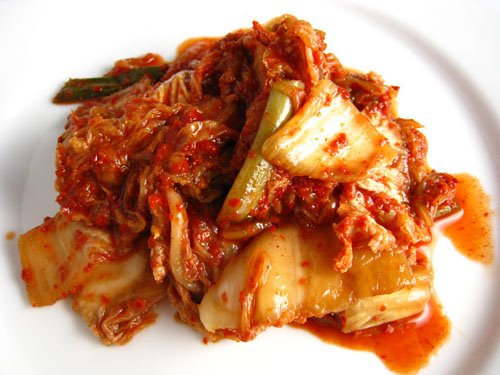
Kimchi is a Korean food — it is a fermented spicy cabbage that has health benefits in people who consume them. The benefits include a lower risk of flu and improved cholesterol levels. It has now also been revealed now that Kimchi could help you lose weight.
Kimchi does this by helping to lose some weight and with its abundance of good gut bacteria. Researchers believe that these good gut bacteria may help fight digestive problems caused by obesity. This Korean food is spicy — it contains Chilli pepper, which naturally contains Capsaicin.
Proponents of Capsaicin also claim that the compound can help speed up metabolism and reduce fat tissue, as well as curb overeating by reducing appetite.
A study from 2009 also revealed that capsaicin helped decrease a hunger hormone called ghrelin. This will help reduce the desire to eat, thereby taking in fewer calories. The other ingredients such as the vegetable — cabbage, and others like ginger will contribute their quota too.
“If a person eats some kimchi with every meal, it’s possible for them to lose five kilograms (about 11 pounds) in a month,” says a professor from Seoul Health College, Korea.
Doenjang jjigae is a type of Korean food consisting of tofu, vegetables and soybean paste. In case you do not know what Tofu is — it is the coagulated soy milk. You can easily make this or buy it. The tofu stew is low in calories and fat while also rich in essential nutrients including calcium and potassium.
A 1-cup serving of the stew contains just about 90 calories. Considering that this food also has a high filling effect, you get filled up easily while eating less calories.
A recent 12-week study on subjects consuming this Korean food revealed that the Doenjang supplementation group had significant reductions in body weight (kg), body fat mass (kg) and body fat (%). As this soup is very low in calories, it makes a good choice for people that are trying to limit their calorie intake for weight loss.
The European Union (EU) has banned some Nigerian foods from being exported into Europe, PunchNG reports. The food items banned from Europe till June 2016 are beans, sesame seeds, melon seeds, dried fish and meat, peanut chips and palm oil. This is a setback for a nation that desperately needs to expand its export basket to boost domestic agricultural activities and create jobs.
Why Did The European Union Suspend These Food Exports From Nigeria?
The first answer someone gave to is that “they hate us and don’t want us to prosper. They look for every opportunity to make us look bad.” I don’t know about this but what I know for sure is that they need these agricultural products for their own food too and would not want it to stop coming to them.
What is now the problem? Why did they ban these agricultural foods?
First of all, it is not that they hate us. They don’t!
According to the European Food Safety Authority, the rejected beans were found to contain between 0.03mg per kilogramme to 4.6mg/kg of dichlorvos pesticide, when the acceptable maximum residue limit is 0.01mg/kg. The embargo is a reflection of our inability to adhere to global standards, and this has come to haunt us at the international level again.
For some time, the EU has been warning Nigeria that the items constitute a danger to human health because they “contain a high level of unauthorized pesticide.” The pesticide is applied when the products are being prepared for export. The EU said it had issued 50 notifications to Nigerian beans exporters since January 2013. It is baffling that the Nigerian authorities didn’t take any significant steps to reverse the situation.
Likewise, the United Kingdom also issued 13 border rejection alerts to Nigerian beans exporters between January and June 2015.
The question on my mind is, “how do we preserve these foods for our own local consumption?” We really need to know this. Is it the same way as those we export? If so, don’t you think NAFDAC should ban the use of these pesticides too?
Paul Orhii, the Director-General, National Agency for Food and Drug Administration and Control said that exporters caused the problem by not complying with regulatory requirements for semi-processed and processed commodities.
The money you saved while buying those damaged, deteriorating (esha) tomatoes could eventually be used to cure the illnesses that come with them.
Food products or items of a lower quality are usually what some people prefer to purchase regardless of their financial status. In fact, It could be said to be in their genes.
One food product that falls into this category is tomato.
In many popular markets in Lagos and other parts of Nigeria, there has been visible popularity in the purchase of deteriorating Tomato (popularly called Esha tomato) even among people who appear comfortable purchasing fresh tomatoes.
This I have seen countless times in the popular Lagos mile 12 markets.
I have always said to people who care to listen that you do not need to be a ‘Bill Gate’ to buy fresh food produce like tomato for your family.
Usually, poor quality food might not necessarily translate into low prices. All these ideas are only in our perception.
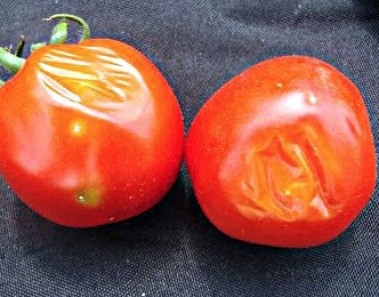
Deteriorating or partially rotten tomato commonly called Esha among the Yorubas is a sure way of depriving your body essential nutrients that are needed for growth and development.
In the process of spoilage, bacteria begin to utilize the nutrient content of tomatoes in order to increase in number and to further cause more deterioration.
When this happens, tomato loses its firmness and nutritive value. Many of the spoilt tomatoes result due to far distance between the farms and markets.
It further exposes the lycopene loaded vegetable to bacteria and fungi attack.
Have you ever wondered why you are faced with diarrhea after eating from a local food store or mama put joint?
Asides from the unhygienic method of food preparation, it will surprise you to note that most of the cases of food poisonings that occur are due to poor quality food ingredients like spoilt tomatoes used in the cooking.
The future implication of consuming this kind of meal cooked with deteriorated or rotten tomatoes is damage to the internal organ due to released toxins which might not be noticed in a short term.
Some of the associated illnesses with the consumption of rotten tomatoes are liver inflammation, diarrhea and vomitting. These conditions are life threatening when there are severe.
Opt for fresh tomatoes and not rotten/Esha in order to benefit from the good nutrition that the vegetable can provide.
Both the deficiency and too much intake of Calcium into the body have severe health effects — both negative — and we have to eat just the amount needed by our body. Don’t get this wrong, we need Calcium to help form and maintain healthy teeth and bones. It is one of the most important minerals needed by the human body.
This article will highlight the important functions of Calcium in the body, the benefits of calcium and side effects of “too low” and “too high” intake of Calcium. This will be outlined when we discuss the Recommended Dietary Allowance (RDA) for every class of people — children, adults, pregnant women, lactating mothers, etc.
We will also talk about “what is too low” and “what is too high”, as well as common foods high in calcium.
Benefits of Calcium to the body you should know;
Calcium helps our body with:
Building strong bones and teeth
Clotting blood
Sending and receiving nerve signals
Squeezing and relaxing muscles
Releasing hormones and other chemicals
Keeping a normal heartbeat
So, what are the conditions that could arise from not consuming enough calcium and those that could arise from consuming too much calcium;
Side effects of Calcium in the body
The body needs enough supply of Calcium to perform the functions listed earlier in this article. Increased intake of calcium for a short period of time does not normally cause side effects but this could change over a prolonged intake.
Consuming higher amounts of calcium over a long period of time raises the risk of kidney stones in some people. There is also a side effect when you don’t take enough. People who consume an inadequate amount of Calcium over a long period of time can develop osteoporosis (thinning of bone tissue and loss of bone density over time).
Recommended Daily Allowance of Calcium
The Recommended Dietary Allowance (RDA) for this mineral called Calcium is telling us how much Calcium most people should get each day. The amount of calcium we need hugely depends on some factors such as age and gender. Other factors, such as pregnancy, illnesses, bone mass, are also very important in determining the RDA.
Infants (Adequate Intake)
0 – 6 months: 200 milligrams per day (mg/day)
7 – 12 months: 260 mg/day
Children and Adolescents
1 – 3 years: 700 mg/day
4 – 8 years: 1,000 mg/day
9 – 18 years: 1,300 mg/day
Adults
19 – 50 years: 1,000 mg/day
50 – 70 years: Men – 1,000 mg/day; Women – 1,200 mg/day
Over 71 years – 1,200 mg/day
Pregnant and Breast-feeding women
14 – 18 years: 1,300 mg/day
19 – 50 years: 1,000 mg/day
Up to 2,500 – 3,000 mg a day of calcium from dietary sources and supplements appears to be safe for children and adolescents, and 2,000 – 2,500 mg a day appears to be safe for adults.
The following list can help you determine how much calcium you are getting from food:
Calcium-rich Foods List
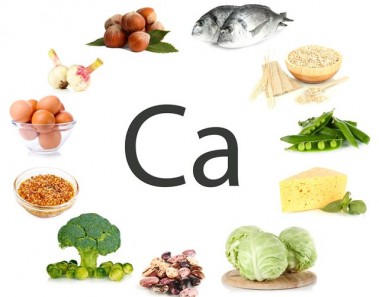
Some foods high in calcium include:
1. Cheese
2. Yogurt
3. Milk
4. Sardines
5. Dark leafy greens vegetables
6. Fortified cereals such as Corn Flakes (they can have a lot of calcium in one serving, make sure to check the “Ingredients Listing” and “Nutritional Compass” on the food pack)
7. Soybeans
8. Fortified soymilk (check the label)
For those that are lactose intolerant, you only need to go for dairy food options that do not contain lactose e.g yoghurt, in which the lactose had been converted to lactic acid.
Sardines and dark leafy vegetables are also easy to get and not costly. Soybeans and fortified soy milk made from the beans can also be very good sources of calcium. Not all soy milk is rich in calcium, so check the label to see if they are fortified.
Sleeplessness is a condition that is fast becoming common in the lives of many and a whole lot of the people struggling with these are completely unaware that foods can actually be helpful in triggering drowsiness or sleepiness. The unhealthy thing about this condition which is technically called insomnia is that it affects the entire body function and activities.
Tiredness, sluggishness, and moodiness could become your daily expressions. It has even been reported based on various researches that certain minerals are critical in the remedy of insomnia.
Photo: health.usnews.com
Ask a few of your friends or colleagues – How was your night? Did you sleep well? I bet many of them will tell you that they had a difficult time sleeping. Usually, so many factors are involved but foods can be a good remedy especially if you consume the foods at dinner. Let’s check some of the foods that can help induce sleep.
1. Herbal Tea:
Herbal Tea is one of the foods that has been helpful in making people get some sleep for many decades. In fact, there are many tea varieties that make people be more sleepy. These teas are known to put the body in a relaxed state. A popular herbal tea known to be effective is chamomile tea.
A cup of tea before bed will help you relax and fall asleep faster. Lemongrass tea is also known for helping you fall asleep. Caffeinated teas should be avoided as you all know they work in the opposite direction.
2. Yoghurt:
Dairy products are loaded with calcium and yogurt can be helpful in removing the stress out of your body and this helps you fall asleep more easily. Calcium helps the brain make use of a certain amino acid called tryptophan to manufacture a sleep-inducing substance called melatonin.
This explains why dairy products, which contain both tryptophan and calcium, are one of the top sleep-inducing foods. It is not advisable to consume whole milk products because they are not better tolerated at bedtime compared to healthy bacteria loaded yoghurt.
Banana is a super night snack particularly for those hoping to gain few pounds of flesh. Asides this, research has shown that a certain mineral such as magnesium is effective as a natural remedy for insomnia.
A lack of this mineral may cause you to wake up after a few hours and not return to sleep. Other magnesium-rich foods include spinach, nuts, seeds, fish and whole grains. Fortunately, it is one of the foods you can healthily snack on at night.
4. Fish
We have said so much about fish before. As a person, I prefer fish to meat. They contain more nutrients and the fats in many of them are the healthy type and more beneficial. There is no way we want to look at it, eating fish is better than eating meat.
Most fish—and especially salmon and tuna—have a significant amount of vitamin B6. Vitamin B6 is needed to make melatonin – a sleep-inducing hormone triggered by darkness. This has also been confirmed by an article published in the Annals of the New York Academy of Sciences.
5. Almonds and nuts rich in Magnesium
Almonds contain tryptophan and magnesium. These two components help to naturally reduce muscle and nerve function while also steadying your heart rhythm. You would note that many of the foods we have mentioned above too either have magnesium or tryptophan.
Other nuts and seeds that are rich in magnesium include, almonds, sunflower seeds, Brazil nuts, cashews, pine nuts, flaxseed, and pecans.
You may want to add these nuts to your diet. They are even easy to snack on at night before you go to bed. They will relax you and help induce a good night sleep.
6. Sound Night Sleep? Eat Cherries!
I have heard and read uncountable times that the best way to get a good night’s sleep is to increase your melatonin intake. We talked about this melatonin under yoghurt as a sleep-inducing substance. Some other foods foods other than yoghurt contain it too.
Cherries, along with nuts and oats, are a natural source of melatonin and, when eaten regularly, can help regulate your sleep cycle. I guess this is why some people would ask that you add coffee to their oat when they take it as breakfast – they don’t want to be sleeping about.
People have reported that alcohol and milk chocolate help them sleep but I wouldn’t recommend that. Alcohol makes you wake up with a hangover and you don’t want to eat chocolate just before going to bed.
7. Honey
It has been found that honey contains glucose, which tells your brain to shut off orexin. Orexin is the chemical that is known to trigger alertness. So, when glucose tells your brain to stop the supply of orexin, you become less alert (somewhat dull) and feel sleepy.
When you are taking honey for this purpose, you should not overdo it. One tablespoon for a good night’s sleep is more than enough. Make sure you get the real honey though. See how to identify real honey.
Please note, you should avoid eating heavily at night particularly close to bed time as it will affect your sleepiness. Other foods that I find to be effective in inducing sleepiness include garri, potatoes and some other carbohydrate loaded foods.
Understand the saying “different strokes for different folks”. What works for someone might not work for the other. So, we would like to hear from you to share foods that you eat which triggers sleepiness.
UPDATED [More foods added] – One common issue about the difficulty in producing babies amongst married couples is the low sperm count and sperm quality. If you doubt this information please schedule a meeting with a medical laboratory scientist who has records on those who come for testing. The statistics will shock you. Based on our tradition and cultural values, women have been erroneously labeled as the reason behind the lack of babies in many homes and as such called barren while in truth sometimes it is the hefty looking man with a low-quality sperm that needs to be checked.
It is on record that low sperm count affects approximately one in 25 men. Stress, obesity, hormonal conditions and poor nutrition have been found to impact sperm health. If you and your partner are planning for a baby, a nutritional overhaul is a good place to start, to support healthy sperm production and development – although other approaches exist.
Two things are important in sperm quality; First is sperm motility which is the ability of the sperm to move in the female reproductive organ or through the water to reach the egg and second is sperm morphology which is also called teratozoospermia. It describes what the shape and size of sperm should be for proper fertilization. The foods listed below have been found to be effective in proper motility and morphology of sperm.
Ginseng for Boosting Sperm Quality
The popular Asian Ginseng plant has been used by the Chinese in the cure of many ailments. No wonder it is making this list. It is a powerful herb known for its extraordinary effects on improving virility in men. It increases s*x drive and also enhances your s*xual performance.
It has been found to be quite effective in men with erectile dysfunctions, increasing semen volume and sperm production. Ginseng can be obtained in Nigeria from marketers of nutraceuticals and supplements.
Garlic
As a lover of garlic, the all-round health effect is laudable. It is a very effective condiment that has been used for many years in the treatment of various physical ailments including heart problems and respiratory infections. What most people don’t know is that it is also a potent aphrodisiac and very effective in boosting sperm volume.
It contains a compound called allicin which improves blood flow to the male s*xual organs, increasing sperm production and semen volume. Garlic also contains Vitamin B6 and selenium which controls the secretion of s*x hormones and reduces sperm damage.
Walnuts:
Walnuts had been one nut I love to eat as a young child but never knew of its numerous benefits. It is the only nuts with appreciable levels of omega-3 fatty acids, which many studies of male infertility have linked to better sperm quality, says researcher Wendie Robbins, Ph.D., of the UCLA Fielding School of Public Health.
A daily consumption of this nut has the ability to aid proper sperm production.
Fatty Fish
A study published in the Journal of Nutrition found that men eating a higher amount of oily fish experience a boost in their sperm count by a massive 65% and the interesting part is that getting result is almost immediate because when you eat a fatty fish containing about 10% fat, you can get the boost by the night of that same day. Amazing? Yeah, I thought so too.
The best fish for fats that contain the DHA and omega-3s include salmon, swordfish, tuna and sardines. This post was updated to include these sources of sperm boosters because some of them are common here, easy to get and also inexpensive.
Carrot and Leafy Vegetables:
If you are truly serious about improving your fertility and sperm quality then a diet rich in vitamin A must be regularly consumed by you. Carrot is one vegetable loaded with this nutrient.
According to a study which was carried out by researchers from Harvard School of Public Health and Universities in Canada, Copenhagen, Murcia, and New York, it reveals that there is an association between higher dietary consumption of food that contains more carotenoids and better sperm motility and a greater number of sperm cells.
They looked at young men’s diets and analysed their sperm samples. They found that men who ate a higher amount of three antioxidants found in fruit and vegetables had sperm with better motility and morphology. The three antioxidants in question were: beta-carotene – found in carrots, lutein – found in lettuce and spinach and lycopene – found in tomatoes. It is also critical for you to make sure that you’re getting enough folic acid, because low levels may lead to birth defects such as spinal Bifida and hydrocephalus.
Men with low levels of folate have more sperm with chromosomal abnormalities. The need to increase your sperm count, production, and motility is important and to do this, eating lots of dark green veggies and fruit may help.
Thanks to the new breathe of fresh air in the recent regular supply of few hours of power provided to major towns and cities in Nigeria which is seemingly better than what it had been about a decade ago. Asides these few weeks, Nigeria is notable for constant blackout or incessant power supply, so the need for housewives and our mothers to preserve their foodstuffs lies in the use of other alternatives to prevent these items from deteriorating.
How To Store Some Common Foods Without Refrigeration
In this short post, you will be learning how best to preserve some of our common food items without necessarily affecting the quality to an unacceptable level.
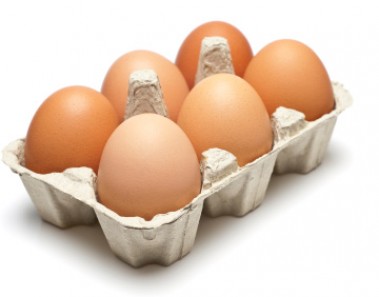
1. EGGS:
There has been a serious debate particularly between the Americans who believe eggs are to be refrigerated to prevent bacteria proliferation and the Britons who disagree and feel that eggs can be stored at room temperature long enough without leading to bacteria infestation.
As this argument continues, a research center took time to subject these claims to a test and found out that after a period, both storage forms of eggs were free from bacteria and safe to consume. In view of this, it is clear that you can keep your eggs at room temperature on the shelves of your kitchen particularly the Nigerian types that had been vaccinated against salmonella and other bacteria.
My simple advice is that without refrigeration, do not buy eggs you do not plan to consume within two weeks. Although, eggs stored at room temperature have been found to store longer than two weeks.
2. MEAT:
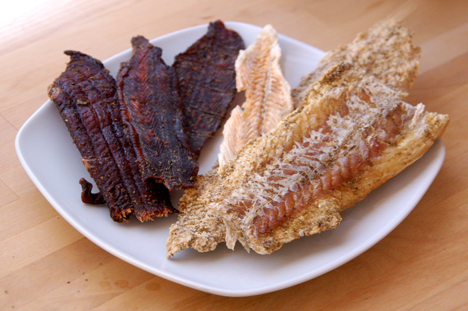
Staying at quite a distance to the market seems to make many households to imbibe the culture of storing meat as they can not dash out to the meat stores whenever they feel like to purchase fresh meat. So, they buy in bulk. While you cannot trust the electricity situation in Nigeria, the tested ways that can prevent meat spoilage are salting and drying.
As a young boy, my mum practices this method when we newly relocated to another environment. The salting inhibits the growth of microbes and pushes out more moisture while the drying eliminates the moisture which usually acts as a conducive environment for bacteria multiplication leading to spoilage.
The truth is, nothing tastes better than fresh food items. However, avoiding spoilage while still retaining some nutritive value is key. My advice is when you are ready to cook your meat, wash it well in water to remove or reduce the salt concentration. Usually, you do not need to add salt to the soups or stews.
3. VEGETABLES:
The way to follow in storing vegetables is quite broad and one needs to be extra careful. If you go to the grocery store and pick up any vegetable you find; then, you seem unserious in your quest in keeping vegetables as most of the vegetable displayed are either too ripe or have been infested. You have to be picky.
Also, particularly in the superstore where vegetables are sold, some of them have been refrigerated in the past. So, no form of other storage will help apart from refrigeration. It is advisable to choose your veggies with varying degrees of ripeness so that they can be kept at room temperature and last a week or two.
It should be noted that vegetables store differently. For leafy veggies, it is smarter to remove the coloured ones to avoid the spread of the colouration. Aerating them will also help in moisture loss and this method can keep them from a few days to a week.
Do not hesitate to share how you preserve your food items asides from refrigeration.